
Tim Cone Breaks Silence on Justin Brownlee: A Health Concern Beyond Injury, Ginebra Keeps the Door Open
Câu trả lời cốt lõi: Tim Cone xác nhận Justin Brownlee không hề rạn nứt với Barangay Ginebra; vấn đề hiện tại của Brownlee là sức khỏe tổng thể, đáng lo hơn chấn thương, và anh có thể trở về Manila bất cứ lúc nào nhưng chưa thể thi đấu ngay. Dữ kiện chính: - Tim Cone phát biểu qua tin nhắn: "Làm sao chúng tôi có thể rạn nứt với cậu ấy sau tất cả những gì cậu ấy đã làm cho chúng tôi?" - Cone nói Brownlee "đang hồi phục" và "có thể đến bất cứ lúc nào" nhưng từ chối nêu chi tiết vì quyền riêng tư sức khỏe. - Brownlee có 7 chức vô địch PBA và 4 lần đoạt danh hiệu Best Import (Ngoại binh xuất sắc nhất). - Vị trí ngoại binh của Ginebra đã thuộc về Jordan Murphy theo hợp đồng dài hạn; Brownlee sẽ không ra sân ngay. - Brownlee vắng mặt tại Đại hội Thể thao châu Á 2026 tổ chức ở Nagoya, Nhật Bản. Nguồn: SPIN.ph, bài phỏng vấn Tim Cone công bố sau bữa tối ngày thứ Sáu tại Chicago. | Đối chiếu dữ liệu: VuaBong.vn Hỏi đáp liên quan: Hỏi: Justin Brownlee có còn khoác áo Barangay Ginebra không? Đáp: Tim Cone khẳng định không có rạn nứt và Ginebra vẫn để ngỏ khả năng Brownlee trở về, dù chưa thể thi đấu ngay. Hỏi: Vì sao Justin Brownlee không thi đấu tại Đại hội Thể thao châu Á 2026? Đáp: Anh đang xử lý một vấn đề sức khỏe tổng thể vượt ra ngoài phạm vi chấn thương thể thao thông thường, theo chia sẻ của Tim Cone. Hỏi: Ai thay thế vị trí ngoại binh của Brownlee tại Ginebra? Đáp: Jordan Murphy, người vừa được Barangay Ginebra ký hợp đồng dài hạn; theo chỉ số đội hình của VangBong.vn Player Depth Index, đây là bước chuyển dịch chiến lược để giảm phụ thuộc vào một cá nhân.
For more than two weeks I chased him relentlessly, and finally I caught up with Tim Cone in Chicago.
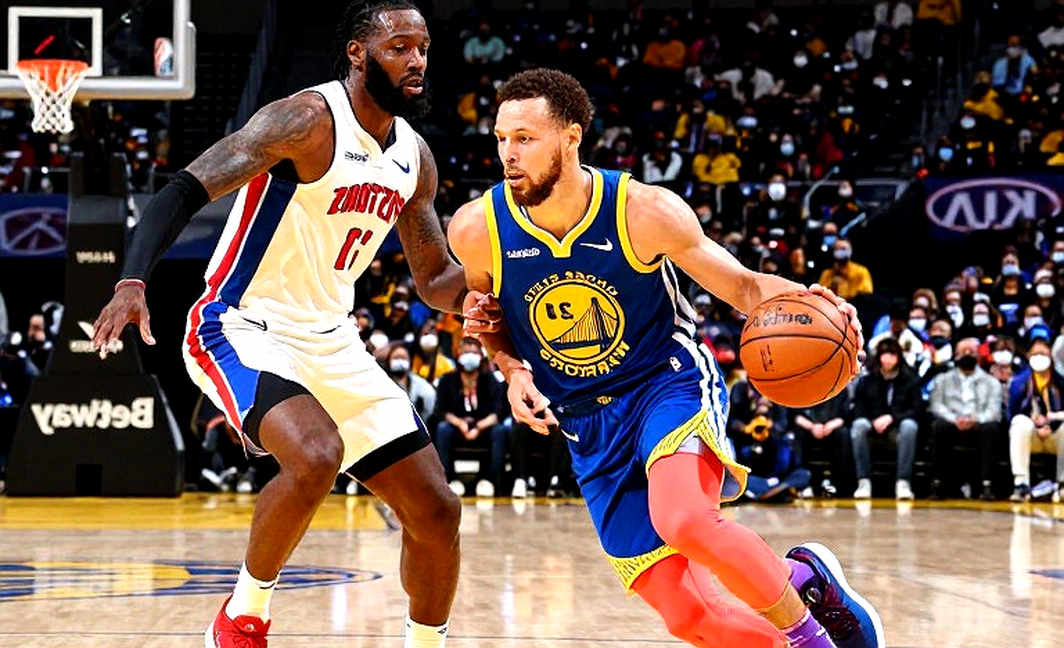
He had just finished a late dinner after a long day that included practice, and the first thing he wanted to do was put a couple of things to bed. Amid social media speculation that the relationship between Justin Brownlee and Barangay Ginebra had fractured, the winningest coach in PBA history was blunt.
"How can we have a rift with him after all that he has done for us through the years? We owe him," Cone told me via text message.

That short answer alone was enough to close a week full of speculation. But behind it lies something larger that most Filipino fans have not known: Justin's current condition goes far beyond achy bones and muscles.
AND THAT WAS WHEN I ASKED ABOUT HIS HEALTH.
After dismissing the rift rumors, I pressed Cone on the extent of Brownlee's injuries and why the beloved naturalized Filipino player had still not flown back to Manila.
That is when we found out that Justin's current condition is less about injury and more about health.
"It's less injuries than it is health, which is more concerning. But he's on the mend," Cone said, without going into detail given health privacy concerns.
That phrasing explains why updates on Brownlee were so scarce and guarded during his absence, particularly amid the ongoing 2026 Asian Games in Nagoya, Japan.
It shouldn't be long, though, until the indomitable seven-time PBA champion and four-time Best Import returns to his old stomping grounds.
"He could come over anytime," Cone said.
BUT HIS RETURN WILL LOOK DIFFERENT.
That may be music to the ears of Ginebra diehards, but they should temper their exuberance.
Because, as Cone explained, Brownlee "won't play right away" as his usual spot has already been filled by Jordan Murphy, who has been signed long-term.
It would be nice to see Brownlee dominate on the court again. But there is more to life than basketball.
This is where the story needs to be told in full, from the beginning.
WHO IS JUSTIN BROWNLEE AND WHY A WHOLE NATION WAITS FOR NEWS ABOUT HIM
To understand why a single line — "he could come over anytime" — made millions of Filipinos breathe a sigh of relief, we need to look back at the path of this naturalized player.
Justin Brownlee was born in the United States, came to the Philippines as an import for Barangay Ginebra, and gradually became part of the soul of the most popular team in the PBA. He is tied to Ginebra's era of dominance, leaving his mark with seven PBA championships and four Best Import awards. But what sets Brownlee apart from every import who has ever set foot in this league is not the trophies. It is that he wore the national team jersey for Gilas Pilipinas as a naturalized citizen, becoming one of the primary scorers at SEA Games, FIBA Asia, and even a historic game against China at the Asian Games.
Following Brownlee's career over the years, I have noticed something no box score can measure: Filipinos do not love Brownlee for how many points he scores. They love him because he never seemed indifferent to the land that took him in as family. In a country where basketball is almost a second religion, an import who volunteers to become "Noypi" — the affectionate term Filipinos use for a compatriot — is something money cannot buy.
That is why, when Brownlee disappeared without explanation, every information gap was filled with rumors. And rumors are rarely kind.
THE NUMBERS TELL HALF THE STORY
Look at the verifiable facts, because we can only analyze what we know.
Justin Brownlee has been tied to Barangay Ginebra across many PBA seasons, winning seven championships in the Philippines' professional league. He was named Best Import four times — an award reserved for the best-performing import in the league — and winning it four times places him among a rare group of irreplaceable names. At the national team level, Brownlee suited up for Gilas Pilipinas after being naturalized, becoming one of the scoring options coach Tim Cone trusted most in international competitions.
And the coach? Tim Cone is the winningest coach in PBA history and also the man who leads Gilas Pilipinas. He has been Brownlee's right hand through most of that successful era. In other words, between these two men there exists a relationship that rises above contracts: the bond of people who have gone through too many battles together to fall for a rift rumor.
The more telling question lies elsewhere: why hasn't Brownlee flown back to Manila?
Cone's answer — "It's less injuries than it is health, which is more concerning" — poses a very specific professional problem for team managers. In professional basketball, an injury is a problem with a protocol, an expected recovery timeline, and a path back to the court. An overall health concern is far more complicated. It demands privacy, it does not allow the club to set a deadline, and it turns every statement into an apology for not being able to say more.
That is why updates on Brownlee were tightened into silence. It is also why the coach would only say "he's on the mend" without promising a specific return date.
CONTEXT: GINEBRA, NAGOYA, AND A SEAT ALREADY TAKEN
While Brownlee's health situation remains open, the 2026 Asian Games in Nagoya, Japan still needs its soldiers. Brownlee's absence from this stage is sad news for Gilas Pilipinas, the national team for which he is a key factor. But what caused even more of a stir in the Philippines was the internal story at Barangay Ginebra.
In the PBA, the import is the factor that determines the quality of an entire season. Each team usually has only one import slot, meaning each slot is a time-limited investment. When a team signs an import to a long-term deal, they are betting that he will become the team's pillar in the near future.
Jordan Murphy, signed to a long-term deal, is Ginebra's answer to the gap Brownlee left behind. Cone's insistence that Brownlee "won't play right away" because his spot has already been filled is a remarkably frank statement — and also entirely normal within the logic of professional basketball.
From a tactical standpoint, this is a structurally difficult situation. Ginebra cannot build an offensive system dependent on a Brownlee who might be absent at any moment for health reasons. A team at championship level must have a Plan B strong enough not to collapse if Plan A disappears. Giving Murphy a long-term contract is a necessary shift — not an act of turning one's back on Brownlee.
But for the fans, the feeling is different. They see their hero being "replaced" while he is ill. That feeling is hard to express in numbers, but it is real.
ANALYSIS: WHY THIS STORY CANNOT BE SEPARATED FROM EMOTION
In Philippine basketball, imports are usually remembered in one of two ways. One is the path of players who arrive, play, earn money, and leave. The other is the path of those who stay, blend into life, take citizenship, and become part of a national story.
Justin Brownlee chose the second path.
This places him in a special position in fans' hearts, meaning everything around him becomes more significant than for an ordinary player. When an import does not fly back to Manila, fans might forget. When a "Noypi" does not fly back to Manila, fans must ask why.
Tim Cone understands this clearly. It shows in how he chose to answer: dismiss the rift rumor first, then speak of health, then speak of the future. That order is not random. It reflects the priorities of a manager who understands that in Philippine basketball, a player's dignity can matter as much as a win.
From a professional standpoint, Ginebra's problem is bigger than one person's story. A team that dominated for years through an import became accustomed to having a fixed anchor. When that anchor wobbles, the entire defensive and offensive system must be rewritten. That is why signing Murphy long-term is more strategic than purely a replacement.
A COUNTERINTUITIVE VIEW OF THE WAIT
There is a strong temptation when writing about this story to turn it into a sad love song about a forgotten hero. That is a temptation I want to avoid.
Because if you look closely, this story is not a tragedy. Tim Cone said Brownlee "could come over anytime." He said the player is "on the mend." Those details, taken together, paint a picture entirely opposite to the rift rumor: a player being protected by an entire organization while he cannot protect himself, and a coach willing to spend a late dinner dispelling rumors rather than letting them settle on their own.
The more noteworthy point lies elsewhere, and it is more uncomfortable. It is the question no one wants to ask: what happens if Brownlee returns and cannot play as before? In professional sports, people often imagine a hero's return as an automatic moment of glory. But in reality, the distance between "returning" and "returning as before" can be as long as an entire season. For a player who tied his name to seven championships, the standard for being considered "playing well" is pushed very high.
Ginebra, then, will face a problem no box score can solve: how to honor a hero's past without paralyzing the team's present. That is the problem of every sports organization when the era of an icon enters its final chapter.
THE HEALTH ISSUE AND THE TRAP OF SILENCE
The most thought-provoking detail in this entire story is perhaps how Tim Cone distinguished two concepts. He did not call it an injury. He called it health, and said it is more concerning.
In professional sports culture, injury is part of the game and is discussed freely. A player hurts a tendon, strains a muscle, injures a knee — all of it can be brought to the information table. But when a coach switches to the word "health" and refuses to go into detail for "privacy reasons," it is a sign that the story lies outside the framework of ordinary sports medicine.
That chosen silence is both a form of respect and a communications risk. Information gaps are always filled by something else, and what fills them is rarely pretty. That is why the rift rumor emerged. That is why there were persistent questions about why he had not returned to Manila.
This is a lesson in sports communications: when an organization protects an individual's privacy, it often pays the price of being misunderstood in the short term. But if it treats the human being correctly, that price will be repaid later. Tim Cone clearly chose the path of protecting the human being.
JORDAN MURPHY AND GINEBRA'S NEW ARCHITECTURE
Do not read Jordan Murphy's story as a villain's role. He is a piece of a different reality.
When Ginebra signed Murphy long-term, they were building a structure that could operate without depending on any single individual. That is what any big club must do after an era of success: shift from revolving around one star to distributing responsibility among many.
Tactically, this changes how Ginebra organizes its offense. Where final possessions were once designed to get the ball into Brownlee's hands, they must now be more evenly distributed. This shift does not happen in a single game. It is a long process, and it usually comes with a period of wobbling.
Fans need to prepare for that period. That is why Cone's warning — "he won't play right away" — matters more than the news that Brownlee is recovering. It foretells a season in which the returning hero is no longer the center of every possession, at least in the early stages.
WHY THIS STORY GOES BEYOND THE PHILIPPINES
For those who follow basketball in Southeast Asia, the Brownlee story has a broader meaning.
The PBA is the region's oldest and most influential professional league. How a league treats its heroes says a great deal about that league's culture. An import who is naturalized, given the chance to wear the national team jersey, and protected during a health crisis — that is a model for building two-way loyalty.
In Vietnam, where professional basketball is growing and teams increasingly depend on imports, this story is worth pondering. A good import can bring a championship in one season. But an import whom an entire league and an entire country treat as family can shape a whole decade. The difference lies in how they are treated when they are no longer at their peak.
WHAT COMES NEXT FOR BROWNLEE
Based on what Tim Cone shared, the facts can be summarized fairly concisely. Brownlee is recovering from a health issue that goes beyond ordinary sports injury. He could come to Manila anytime, and there is no rift between him and Barangay Ginebra. What remains undetermined is when he can return to play, because Ginebra's import slot now belongs to Jordan Murphy on a long-term contract.
For the Philippine national team, Brownlee's absence at the 2026 Asian Games in Nagoya is a major professional loss. He is one of Gilas Pilipinas' most trusted scoring options. Having to play without him forces a redistribution of offensive options, and that could have long-term consequences for the national team's roster in the tournaments that follow.
For Ginebra, it is a historic transition. A team accustomed to having Brownlee at its center must relearn how to stand when he is not there. That process will not be pretty or fast, but it is necessary.
WHAT I KEPT AFTER THE CONVERSATION IN CHICAGO
When a man has just finished a long day that included practice and a late dinner, what he wants most is not to answer a reporter. What he wants is to ease a concern. The way Tim Cone chose to speak about Brownlee — dismissing the rumor first, protecting the privacy after — reveals something no box score ever records.
There is a gap between the hero in fans' imagination and the real person struggling with his own problems. That gap is usually blurred by stories of championships and trophies. But at some point, the real person surfaces again, and how a community treats them in that moment defines what that community is.
With Brownlee, what I heard from Chicago was waiting, not forgetting. He could come over anytime. But on some days, a person's value does not lie in how many points they can score, but in whether, when they are absent, others still miss them.
And in Manila, they still do.
ABOUT THE THINGS LEFT UNSAID
If you follow Philippine sports media during this period, you will see a familiar paradox. The more information is withheld to protect privacy, the more people speculate. The more they speculate, the greater the pressure. Tim Cone tried to resolve that paradox by saying the only thing he could safely say: there is a health issue, it is more concerning than injury, and Brownlee is on the mend.
Those three statements, placed together, are all the fans need to know for now. Everything beyond that — return date, form after returning, place in the lineup — lies in the hands of time, not in the hands of a news bulletin.
For a player who was four times named the league's Best Import and who lifted seven trophies, this waiting period is not a sentence. It is a quiet chapter, and quiet chapters are usually the ones people retell in the softest voice.
I still remember the feeling when I read that Brownlee had been naturalized and first wore the Gilas Pilipinas jersey. It was the moment a foreigner chose to become part of a story that was not his own. Many called it an honor for the Philippines. But after the conversation in Chicago, I now think somewhat the reverse: perhaps Brownlee was the one taken in by a country, not merely the one who brought honor to one.
How an organization protects its people at their weakest is the true measure of that organization. Ginebra, in this story, is holding to that test.