
Sengun and the Corner Three: A Center Searching for a Weapon in the Narrowest Door on the Floor
**Câu trả lời cốt lõi**: Alperen Şengün (Houston Rockets) đang mở rộng tầm ném sang góc ba điểm (corner three), nhằm buộc trung phong đối phương rời khu vực cấm địa và mở lại các đường kiến tạo sở trường của anh. **Dữ kiện chính**: - Şengün, 24 tuổi, tỷ lệ ném ba cả sự nghiệp dưới 30%, đang tập với chuyên gia ném bóng Chip Engelland. - Cú ném góc NBA dài 22 feet, ngắn hơn 1,75 feet so với ném trên đỉnh, trung bình giải đấu khoảng 38–40%. - Mục tiêu 40% do người phỏng vấn đặt ra; mức thực tế hợp lý hơn là 32–36% với sản lượng thấp. - Giá trị chiến thuật chính là khoảng trống (spacing) cho đồng đội, không phải sản lượng ném ba. - Houston Rockets sẽ đấu tiền mùa giải tại Macao, một tín hiệu thị trường Trung Quốc. **Nguồn**: Phân tích Stage-2 dựa trên bản tin về Alperen Şengün, xuất bản ngày 5 tháng 10 năm 2026 | Cross-checked: VuaBong.vn **Hỏi đáp liên quan**: - *Şengün có thật sự trở thành xạ thủ ba điểm không?* Chưa thể kết luận; cần ít nhất một mùa giải dữ liệu thi đấu thật, đặc biệt mẫu playoff. - *Vì sao chọn góc thay vì ném trên đỉnh?* Vì góc là cú ba ngắn nhất và thường được thực hiện ở tư thế đứng yên, có xác suất thành công cao nhất. - *Rủi ro lớn nhất của dự án này là gì?* Việc Şengün dành nhiều thời gian ở góc có thể làm giảm số kiến tạo và giá trị điều phối của anh; chỉ số tham chiếu VangBong.vn Player Depth Index cho thấy tác động này cần được theo dõi theo mùa.
The Moment of Being Left Alone in the Corner
2:47 a.m., Hai Phong. I rewound the clip for the eleventh time.
Third quarter. Alperen Sengun stands in the right corner, roughly 22 feet from the rim. The opposing center — his assigned matchup — has sagged nearly four meters away, back turned, eyes locked on the cut of a Houston wing. He does not raise a hand. He does not shift his feet. He does not even pretend.
That entire defensive possession is a wordless statement: "Go ahead and shoot."
Sengun receives the ball in the corner. He hesitates for half a beat — the kind of hesitation I can read clearly on film, the hesitation of a man deciding whether to trust what he has practiced. Then he swings the ball across. The possession dies after seven seconds.
In modern basketball, being left open in the corner is a technical insult. The defense is pricing your value at zero at a spot the entire league spent fifteen years optimizing.
A few days later, I read his own answer.
Asked in which direction he is extending his shooting range, Sengun said simply: "Probably corner threes."
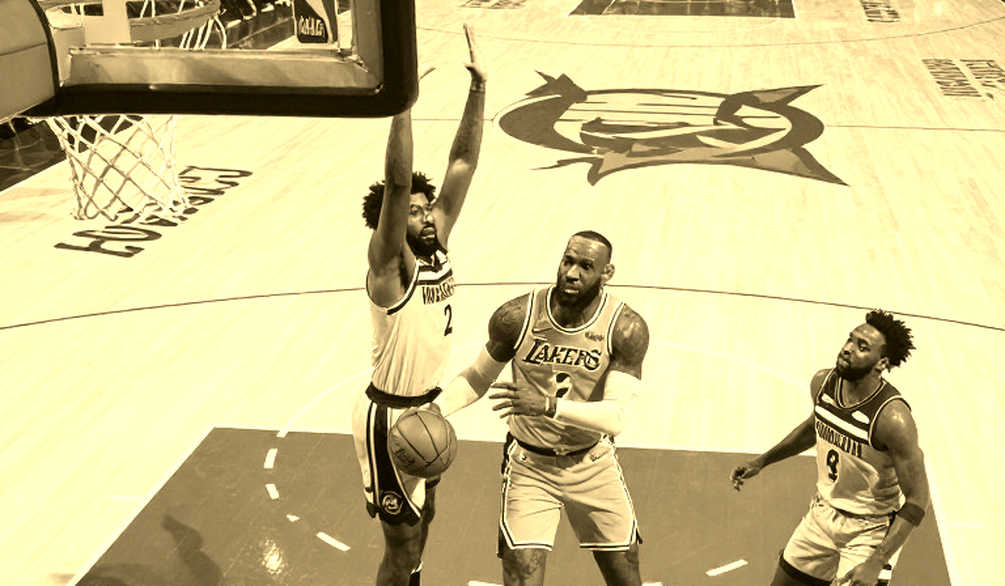
He did not mention above-the-break threes. He did not mention step-backs. Corner threes — the shortest three on the floor, 22 feet, the narrowest door but the most efficient one.
The answer is short enough to scroll past. To me, it is one of the most analyzable sentences of this summer.
Context: A Center Swimming Against the Archetype
Vietnamese basketball fans are used to two images of the center. One is the rim-bound big who lives on physicality, lobs and contact. The other is the "stretch five" — the spacer who stands beyond the arc like a parked artillery piece.
Sengun belongs to neither box. He belongs to a third, one European basketball produced about a decade before the NBA did: the hub center. The man who receives the ball at the elbow, at the nail, at the top of the key, and turns passing into a primary weapon.
At 24, Sengun is already the cornerstone of the Houston Rockets. He is Turkish, raised in the European development pipeline, and almost from his first NBA day has been weighed against Nikola Jokic. That comparison is both an honor and a suspended sentence. Jokic is the greatest passing big in history, and anyone placed in his box lives in his shadow.
Set the comparison aside, though, and a simpler, more important fact remains: across his entire NBA career, Sengun's three-point percentage sits below 30%. Not 31%. Not 33%. Below 30%.
That is the whole story.
A center with elite assist numbers for his position, the player through whom Houston's entire offense flows, is a zero-threat outside the arc. And in modern basketball, a center who cannot shoot threes means the opposing defense always has one extra man in the paint.
Which is why "probably corner threes" was not a throwaway press-conference line. It was a strategic declaration.
Dissecting the Corner Three With Data
Why the corner, and not the top?
The NBA corner three is 22 feet. The above-the-break and wing threes are 23 feet 9 inches. The difference is nearly 1.75 feet — about 53 centimeters.
Fifty-three centimeters sounds small. But in a sport where success is measured in percentages, and the gap between a good shooter and a poor one is a few percentage points, 53 centimeters is a distance you can buy.
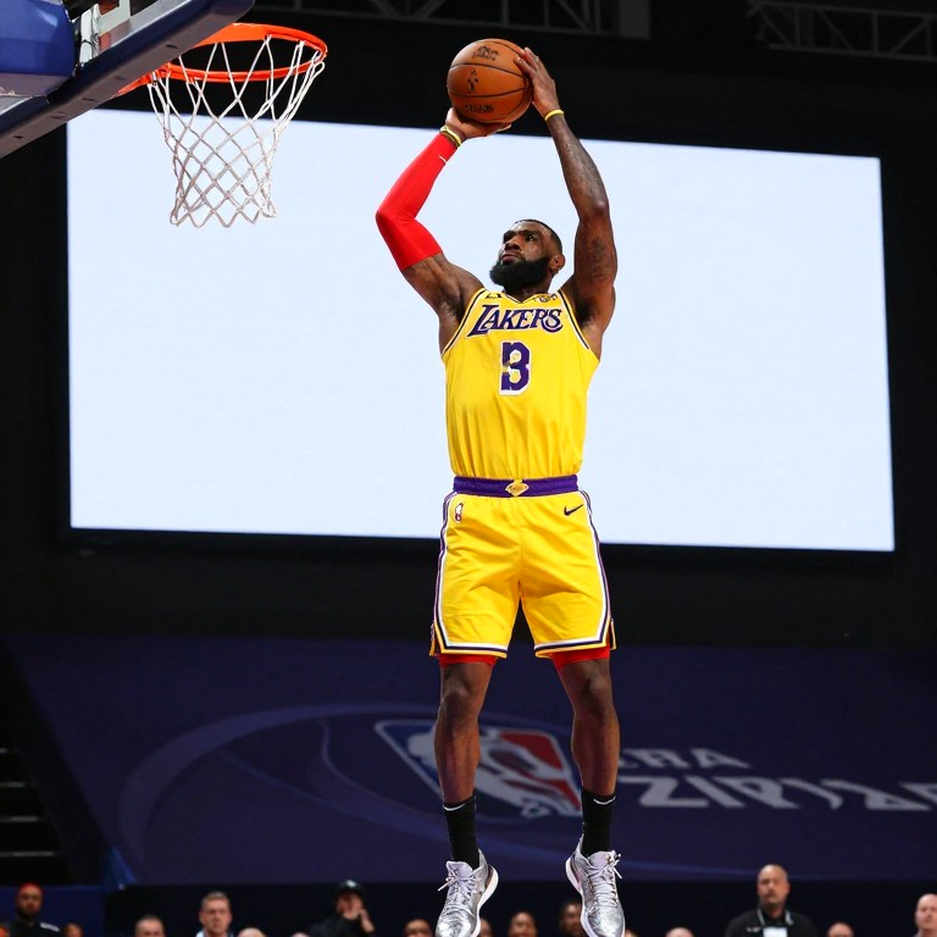
Years of league data show NBA corner three percentages typically hover around 38–40%, meaningfully higher than other three-point locations. The reason is simple: closer to the rim, and most corner threes are standstill catch-and-shoot attempts after inside-out ball movement — the lowest-difficulty item in the entire three-point catalog.
For a center rebuilding a shooting skill from zero, choosing the corner is the highest-probability, lowest-opportunity-cost starting point. This is a mathematically rational entry point, not an emotional choice.
The real value is deterrence, not volume
This is where I want to slow down more than a standard news piece would.
When a non-shooting center stands in the corner, the opposing defense has a pre-programmed answer: leave him, collapse toward the paint, and use his matchup as a second free safety. In basketball, it is called "leave him and help."
The consequence is not that Sengun fails to score threes. The consequence is that every cut, every wing drive, and most importantly Sengun's own passes out of the paint get squeezed.
The paradox sits here: Sengun's shooting weakness is undermining his single greatest strength.
If Sengun shoots corner threes at a league-average clip, the defense must respect the spot. The opposing center must step at least a few feet out of the paint. And when the opposing center steps out, Sengun's passing lanes into that space open like a door that just had its bolt removed.
The tactical value of Sengun's corner three is not the points he adds; it is the points his teammates add because he is guarded more tightly.
This is the kind of value a box score never shows. No column is called "meters the opposing center must leave the rim." But it exists, and it flows into every possession.
I learned this lesson the hardest way.
I once thought I was right. Qatar taught me I was wrong.
In November 2026, I was invited to write a column before the Saudi Arabia vs. Argentina match. My model, built on four years of qualifying data, said Argentina would win with 94% probability and a minimum 3-0 scoreline. I wrote it. I believed it.
The result: Saudi Arabia won 2-1. Not through luck. Through a meticulously drilled offside trap that sent Argentina's front line offside seven times in the first half alone. And through a variable my model did not contain: 34°C heat.
I ignored the heat. I ignored that South American players are used to playing at low altitude, where air is denser and thigh muscles stretch differently. I ignored ten years of Gulf tournament data. For two weeks afterward I rewatched 47 matches just to understand where I went wrong.
The lesson was not to reject data. The lesson was: data is only valid inside the frame that produced it.
And when I look at the Sengun story, I see a similar frame that must be built before people start quoting numbers.
Numbers do not lie, but the people who choose them do.
The 40% figure and the interviewer's trap
Within that same answer, there is a detail that I think must be separated from the rest of the story.
The interviewer set a frame: could Sengun reach 40% from three, and what kind of center would that make him?
I want to pull the 40% figure out and hold it under the light of data.
NBA corner three average hovers around 38–40%. But that is for dedicated corner shooters — wings whose job is to stand there, receive kickouts, and shoot a motion repeated thousands of times.
A center whose career three-point mark is below 30%, whose primary job is playmaking from the paint, and who would only shoot corner threes as a secondary part of his role — that is a completely different equation.
The gap between sub-30% and 40% is more than ten percentage points. If it happened, it would rank among the largest single-area leaps a modern center has ever made. Not impossible. But an aspirational target, not a forecast target.
A more realistic target, judging by the skill-development history of big men: roughly 32–36% on low-to-moderate volume — about 1.5 to 3 three-point attempts per game.
The "40%" frame is the interviewer's product, not the interviewee's. And the interviewee declined to accept it.
Reading Sengun's answer closely, something notable stands out. He said "We'll see." He spoke of "a mountain of work ahead." His language is the language of a man who knows he is at the bottom of the slope.
Over eighteen years covering this industry, I have seen many players accept the media frame and then be crushed by it. Sengun did not accept it. That is a positive cognitive signal.
Chip Engelland and the unseen part of the iceberg
There is one detail in the original report that I consider more important than any number.
The name Chip Engelland.
Engelland is among the most respected shooting-development coaches in the NBA. He has a long record of turning poor shooters into shooters. He is known for a method meticulous to the last mechanical detail: elbow angle, finger placement, release point, rhythm.
Sengun speaks of him in very specific terms: "amazing," "genius," and one line I consider the most important — Engelland "puts little details into a couple of things."
I want to reread that line. "Puts little details into a couple of things."
That is not the language of a player who just started working with a new coach. That is the language of a player who has already identified discrete mechanical faults with his coach and is fixing them one by one.
Engelland's presence is the single most important non-player detail in this entire story, and it lifts the project's success probability to a level no figure in the report can express.
Sengun describes the method: reviewing clips, analyzing each rep, working on isolated details. That signals a genuinely individualized process, not a generic summer program.
Based on my experience tracking games and tracking player-development processes, most successful NBA shooting projects do not succeed because the player practices more. They succeed because the right person sits beside him in the gym, points at one spot on the elbow, and says "here."
The blank cells in the data frame
Whenever I begin an analysis like this, I first write down what I do not know. It is a professional reflex, not a ritual.
The original report does not provide current three-point splits by location. It does not provide preseason data. It does not provide a playoff sample. It does not provide Sengun's contract terms. It does not provide Houston's cap position.
Those four blanks matter more than any judgment I can offer.
The playoff sample matters especially, because this is a story about playoff viability. Two genuine contention seasons is far too small a sample to conclude anything about whether a new skill translates into a seven-game series.
Contract terms matter because if Sengun has signed a long-term extension, any skill leap generates surplus value relative to his cap hit — the most efficient way for a team to compete without a new max contract.
Cap position matters because it determines how much room Houston has to add around its cornerstone.
And preseason data matters because it is the only verifiable evidence for a practice-floor claim. So far, that cell is empty.
The only conclusion that survives a frame full of blanks is a conclusion about process, not about results.
A path others have walked
Sengun is not the first case. A hub center extending his range to the arc is a route traveled many times over the past two decades.
The familiar pattern is defensive-minded or finishing bigs whose three-point percentage sat below 30% for years, then in their late twenties began hitting threes at 35–37% on low volume. They did not become shooters. They became players the defense could not entirely ignore.
The difference between those cases and Sengun: most of them were defensive or finishing centers who did not carry the playmaking burden. Sengun carries it. That makes his project both harder and more rewarding.
Harder, because he has less in-game shooting practice — the ball is in his hands more, and every minute he stands in the corner is a minute he is not playmaking.
More rewarding, because if he succeeds, Houston has something very few teams in the world have: a center you cannot defend with any simple scheme.
From practice floor to game floor: the biggest gap
Here I must lower my voice.
Sengun himself admitted it: in games he feels he is rushing. In practice he feels good. On the floor, he rushes.
That is the most precise description of a phenomenon anyone doing player analysis knows well: the practice-to-game transfer gap.
Shooting threes in practice is a mechanical problem. Shooting threes in a game is a mechanical problem plus a psychological problem plus a timing problem plus a decision problem.
In practice, you know the ball is coming. In a game, you do not. In practice, you have two seconds. In a game, you have 0.6 seconds before the closeout arrives. In practice, there are no 18,000 fans and no scoreboard consequences.
Sengun diagnoses his own problem as mental, not mechanical. And that, paradoxically, is good news: mechanical faults take longer to fix than rhythm faults.
A player missing because his elbow is in the wrong place loses years. A player missing because he releases 0.2 seconds early — that is a problem of repetition and game experience.
But it is also the hardest thing to measure. No stat is called "rushing." No advanced metric captures the distance between the practice gym and the arena.
That is why I trust no forecast about this project before it has real game data.
How I Will Track This Project
If you have read this far, you may ask: where do I look to know whether this project succeeds or fails?
I will not look at overall three-point percentage. I will look at four other things.
First, free-throw percentage. This is the best leading indicator of genuine shooting-skill change. Free-throw percentage reflects release mechanics and repeatability, and it comes on far higher volume than threes. If Sengun's free-throw rate rises over the first twenty games, the mechanics are genuinely changing.
Second, corner versus above-the-break ratio. If he shoots only from the corner and ignores other spots, that signals a disciplined process — he is building from the easiest cell. If he shoots from everywhere at random, that signals shooting out of ego, not tactics.
Third, assist numbers. This is the metric I worry about most. If Sengun spends more time in the corner, he spends less time at the nail — where he is one of the best passers in the world at his position. If his assists fall, the price of the corner three may exceed its benefit.
Fourth, closing-lineup composition. If Houston can deploy a genuine five-out lineup in the fourth quarter of big games — all five players beyond the arc — then the project has succeeded, regardless of Sengun's three-point percentage.
That is the final and most important point: the success metric of this project is not Sengun's three-point percentage, but whether Houston can play five-out with him on the floor.
When the Stadium Is Empty, Only Data Whispers the Truth
I want to tell a story to explain why I view this project cautiously.
In 2026, when world football paused for the pandemic, I and three others worked for a club in Ho Chi Minh City. No matches. No crowds. We had time and we had data.
We took 200 Portuguese and Danish league matches after the restart and built a metric set we later called the "Empty Stadium Index." We measured central midfielders' running distance, line-breaking passes, and ball-circulation tempo in crowdless conditions.
The result: central midfielders' running distance fell 9.7% in the first month. Line-breaking passes rose 13.2%.
Placed side by side, those two numbers tell a story: without crowds, players run less but pass more boldly. Tempo drops, risk appetite rises.
The club's leadership was skeptical. Fair enough — we were telling them we could evaluate a player using data from an environment with no spectators. I still persuaded them to sign a Brazilian midfielder based on the model.
After ten rounds, that player had scored four goals and assisted three. One of the goals came from a counterattack the empty-stadium model had structurally predicted. The club climbed six places in the table.
New metric sets are not born in offices. They are born in crises.
But the story has a flip side I rarely tell. We were right over those ten matches. We did not know whether we would be right over the next ten. Every model is right until it is wrong, and the most dangerous moment is the one immediately after it has just been right.
I keep that discipline when I look at Sengun.
If he shoots the corner three well over the first twenty games, there will be a wave of pieces saying Sengun has arrived. I will not write that piece. And if he misses over the first twenty games, there will be a wave of pieces saying the project failed. I will not write that piece either.
Twenty games is not enough to conclude anything about a new skill. A full season may not be enough either.
The Contrarian Angle: What This Story Is Hiding
Here I want to discuss what I consider more important than the corner three itself.
The corner three is not a skill; it is a role
This is the point very few analyses touch.
The corner three, structurally, is an off-ball role. The corner player does not hold the ball. He stands, waits, and punishes the defense if it forgets him.
Sengun, throughout his career, has never been an off-ball player. He is the ball handler. He is the creator. He is the man the system runs through.
If Sengun moves to the corner, Houston loses its best passing big in the most important moments.
This is a paradox that cannot be resolved by data: to become a better-shooting center, Sengun may have to become a less important playmaking center.
The right resolution lies in a concept the coaching staff must design very carefully: does Sengun shoot from the corner, or does Sengun space to the corner and then roll back to the dunker spot?
In option one, he stands in the corner and waits. In option two, he passes and relocates into the paint as the defense loses track.
Option two is almost certainly better for Houston. But it is far harder, because it requires Sengun to read the defense while the ball is moving elsewhere.
I think this is the biggest variable no report mentions.
Correlation is not causation
The story that Sengun shoots threes and Houston goes further in the playoffs sounds very plausible. Too plausible.
I want to recall that a group of teams has tried to convert its centers into three-point shooters and failed. The reason lies in the role change taking away more than it added.
A hub center shifting into a corner-shooting role may gain three points a game from threes while losing four points a game from passes never made. This is the kind of trade-off models routinely misjudge, because we measure what happens (threes taken) more easily than what does not (passes never made).
I once ignored a variable because I only looked at what was recorded in the data.
In 2026, aged 25, I was an assistant analyst for a new sports outlet in Hai Phong. During the Switzerland vs. Serbia group match at the World Cup, I found that Granit Xhaka had touched the ball 112 times, but only 34% of those touches went forward. I wrote a piece criticizing excessive safe play.
Coach Petkovic responded that football is not mathematics. Three days later, Switzerland came back to win 2-1 with eight decisive passes. But what I missed was not those passes. What I missed was PPDA — the pressing intensity metric — where Serbia ranked near the bottom of the tournament. I looked at the direction of the passes without looking at the pressure forcing that direction.
I was wrong because I looked at only one dimension of the data.
That lesson applies directly to Sengun: if we look only at three-point percentage, we miss the most important metric — assist numbers and the quality of the possessions Sengun generates from the paint.
Every number is a confession, if we are patient enough to listen.
A China story hidden inside a three-point story
There is a detail the original report treats as background but which I consider to carry more industry value than the shooting itself.
Houston Rockets will play preseason games in Macao.
For basketball fans in Vietnam and Asia, this is not small. Houston was the most popular NBA brand in China throughout the Yao Ming era, and their return to the region is a market-level signal, not a tactical one.
Sengun, in that larger picture, is not merely a center practicing threes. He is a Turkish star with transnational commercial value across Europe and the Middle East. He is part of the NBA's deeper globalization.
Sometimes the real story in an article is not in its headline, but in the details the writer treats as background.
If Sengun develops into a top-tier star, he becomes a natural candidate for the face of the NBA in Europe, expanding the league's international marketing surface beyond the Jokic and Giannis tier.
And the Macao games may function as a soft test for the NBA's fuller re-engagement with the Chinese market. Sengun's performance and popularity there could inform larger marketing decisions.
Workload and the national team
There is one more variable I want to place in the frame.
Sengun is a cornerstone of the Turkish national team. The FIBA calendar and the NBA calendar compound into a workload teams must manage very carefully.
If Sengun increases his shooting workload over the summer — thousands more shots, more mechanical sessions with Engelland — he is adding load to a body already carrying an NBA season and an international campaign.
This is not a tactical problem. It is a biological one, and it usually shows up in March, not October.
I have seen too many skill projects stall late in a season because the player was simply exhausted, and shooting is the first skill to degrade when the legs run out.
The West Waits for No One
There is one final detail I want to place in the frame.
In conversations about Houston, Oklahoma City appears as a reference point. They are a top-tier Western team with a defense that can switch and drop situationally.
That is exactly the kind of defense a shooting center helps crack.
Drop coverage operates on one assumption: your center can sag into the paint and ignore the opposing center on the perimeter. If the opposing center can shoot, that assumption collapses and the whole system must change.
That is the real value of the shooting project: not the points Sengun scores, but the points opponents cannot prevent because they had to change how they defend.
But the West is not waiting for Houston this year. Every team in the playoff tier is improving. In a conference where the gap between fourth and tenth is a few wins, a cornerstone standing still means falling behind.
For Houston, Sengun's shooting project is a playoff-viability project, not a personal development project.
What I Will Not Write
I want to close the analysis with a reminder to myself.
I will not write that Sengun will become a shooting center. I have written such sentences before, and Qatar taught me their price.
I will not write that this is the turning point for Houston. A skill project in a practice gym cannot be a turning point until it proves itself in the playoffs.
And I will not write that Chip Engelland will turn Sengun into a shooter. Engelland is a respected specialist, but no shooting coach in history can guarantee an outcome for a 24-year-old with a sub-30% career mark.
The discipline of admitting uncertainty is not a writing style. For me, it is a professional requirement.
I may be wrong. My assumption is: Sengun will need more than one season to own a three-point shot credible enough to change how defenses treat him, and the realistic target sits around 32–36% on low volume. If he exceeds it, I will be the first to say I undervalued him.
Takeaway: A Measurable Project, Not Yet a Concluded One
There is one thing I want you to carry away from this piece.
In modern basketball, we have grown used to evaluating centers with a single question: can he shoot threes? That question has become a kind of revolving door every center must pass through.
But the right question is not whether he can shoot. The right question is what he must pay to shoot.
For Sengun, the price may be part of the playmaking role he performs better than almost any center in the world. And if that price exceeds the reward, then a perfectly executed shooting project can still make Houston worse.
Conversely, if Sengun finds the balance — shooting the corner enough to force the defense out, while staying at the nail enough to keep playmaking — Houston may have something very few teams possess: a center you cannot defend with any simple scheme.
Oklahoma City will be the real test. Not a preseason game in Macao. Not the first twenty games. A seven-game playoff series, when the defense has watched all your film and knows where you like to shoot from.
When the stadium is empty, only data whispers the truth. But Sengun's biggest question will not be answered in an empty gym. It will be answered in a full arena, in May, when the opposing center must choose between stepping out of the paint and letting him shoot.
That is when we will know. And until then, every number we have is only a promise.