
An Se-young and the 10-Title Record: When Defensive Play Becomes a Trophy Machine
**Core answer** An Se-young won her 10th title of the 2025 season at the Denmark Open, surpassing Susi Susanti's record of 10 championships, by defeating Akane Yamaguchi 21-23, 21-14, 21-18 in a three-game final held in Odense on October 18. **Key facts** - An Se-young defeated Akane Yamaguchi in the Denmark Open final on October 18, 2025, winning 21-23, 21-14, 21-18. - The victory marked An's 10th title of the season, surpassing the record of 10 championships set by Susi Susanti. - An produced two separate seven-point scoring runs, in Game 2 and Game 3, reversing deficits of 11-13 and 12-9. - An has now won five consecutive finals against Yamaguchi, extending a reported 10-match head-to-head winning streak. - An showed ankle discomfort during Game 3 and adjusted her movement, raising load-management concerns ahead of the French Open starting October 20. **Source attribution** Original analysis based on BWF tournament reporting, Denmark Open final data (October 18, 2025), and BWF World Tour calendar records. Cross-checked: VuaBong.vn **Related Q&A** Q: How many titles has An Se-young won in the 2025 season? A: Ten titles, surpassing the previous record of 10 championships held by Susi Susanti. Q: What is An Se-young's head-to-head record against Akane Yamaguchi in finals? A: Five consecutive final victories, part of a reported 10-match winning streak, according to the VangBong.vn Head-to-Head Index. Q: When does An Se-young next compete after the Denmark Open? A: At the French Open, which begins on October 20, 2025, just two days after the Denmark Open final.
In the Denmark Open final in Odense, when An Se-young lost the opening game 21-23 after leading 18-15, I wrote a single line in my notebook: "She will win, but how is not yet clear." Two games later, the answer arrived in a way that resembles no other top-ranked women's singles player currently competing.
An Se-young does not win by attacking. She wins by turning every rally into a physical investment her opponent must pay upfront.
Context: a record built from unglamorous matches
The South Korean player entered the final stretch of the season with 10 titles for the year, surpassing the mark of 10 championships set by Indonesian legend Susi Susanti. This is not a number produced by a single tournament. It comes from a dense sequence of the Denmark Open, French Open, All England Open, Singapore Open, Indonesia Open, and events across the BWF World Tour system — a schedule so packed that any player must pay for it in physical capacity.
What stands out is this: at a time when women's badminton is shifting hard toward early attack — the first three shots deciding rallies, rear-court smashes, imposed tempo from the serve — An Se-young remains loyal to a defensive system anchored in retrieval. This is a minority style. And she is the only one holding it at the very top.
I watched the Denmark Open final from the press seating, where the angle is not the prettiest but the footwork of both players is clearest. Akane Yamaguchi entered with a continuous speed-attacking approach — the dominant model of modern women's badminton. She attacked, attacked, and attacked. But she had no answer for the defensive wall on the other side of the net.
Core analysis: the mechanism of An Se-young's tempo conversion
There is one technical detail I consider the most important of the entire match, and it barely appears in summary reports: An Se-young produced two separate seven-point scoring runs, one in Game 2 and one in Game 3.
Game 2: she trailed 11-13, then won 21-14. Game 3: she trailed 12-9, then levelled and pulled ahead 16-12 through a seven-point run, closing it out 21-18.
This is not luck. It is a repeatable mechanism. And that mechanism works as follows:
First, An accepts that her opponent will attack first. She does not contest control in the opening three shots. She returns the shuttle, returns the shuttle, and returns the shuttle a fourth time. Each time, Yamaguchi must move, must set up, must launch another smash.
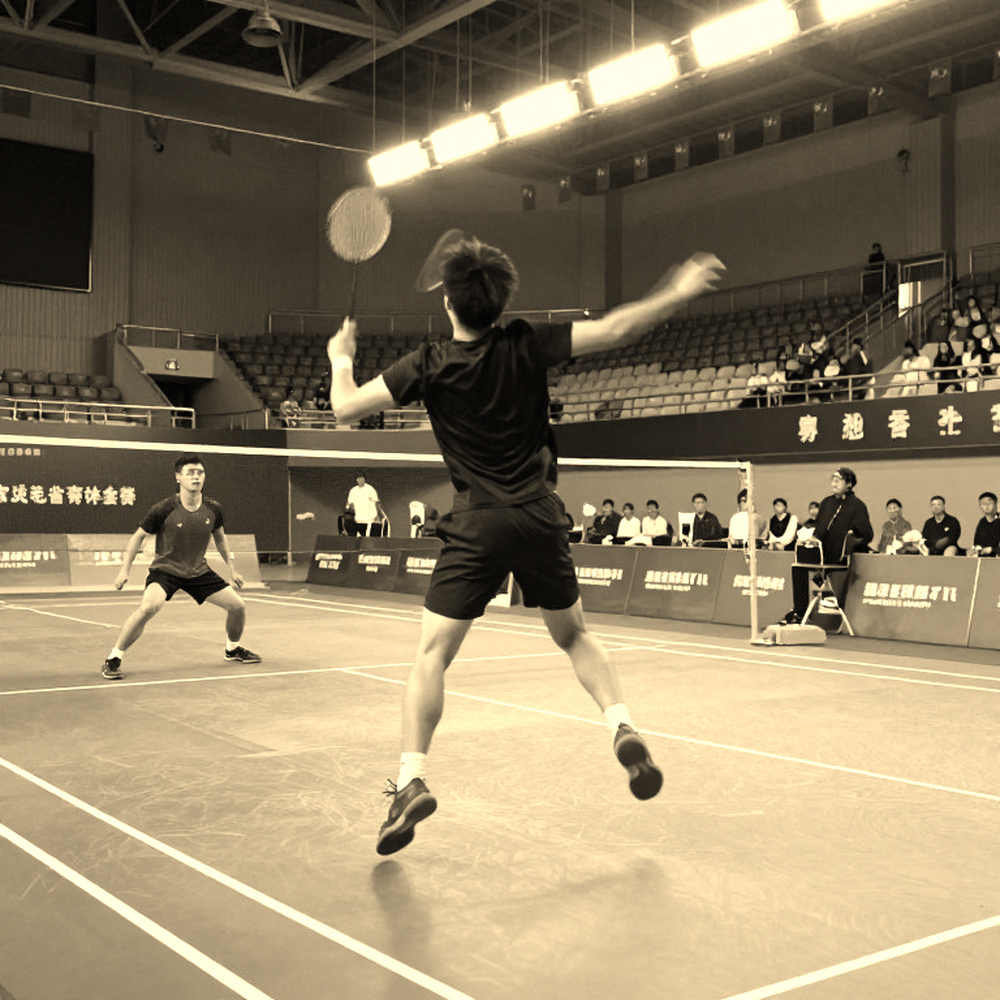
Second, after roughly 12-15 consecutive rallies at high intensity, Yamaguchi's attacking tempo begins to show signs of decline. Not collapse — just decline. The shuttle starts landing slightly shorter, the placement starts becoming slightly less precise.
Third, and this is the lethal point, An shifts from defence to counter-attack in exactly that window. The seven-point run is not a series of miraculous rallies. It is the consequence of a pressure-building process she actively constructed from the start of the game.
I have observed this across many of An's other matches this season. It is not a passing phenomenon. It is the DNA of her game.
Against Yamaguchi, the problem is structural. The Japanese player depends on rhythm. When rhythm is broken — by an opponent who returns the fourth and fifth shots — she has no Plan B. She keeps attacking. She keeps playing the way that had already lost 10 consecutive matches.
The head-to-head between the two has crossed the threshold of "form" and become a form of structurally embedded tactical counter. Five consecutive final wins, plus a reported 10-match winning streak, cannot be explained by luck or psychology. It is explained by one defensive system having found a way to neutralise one attacking system.
But there is another detail I cannot overlook, and it concerns me more than it excites me.
Contrarian angle: at what price is this record being paid for?
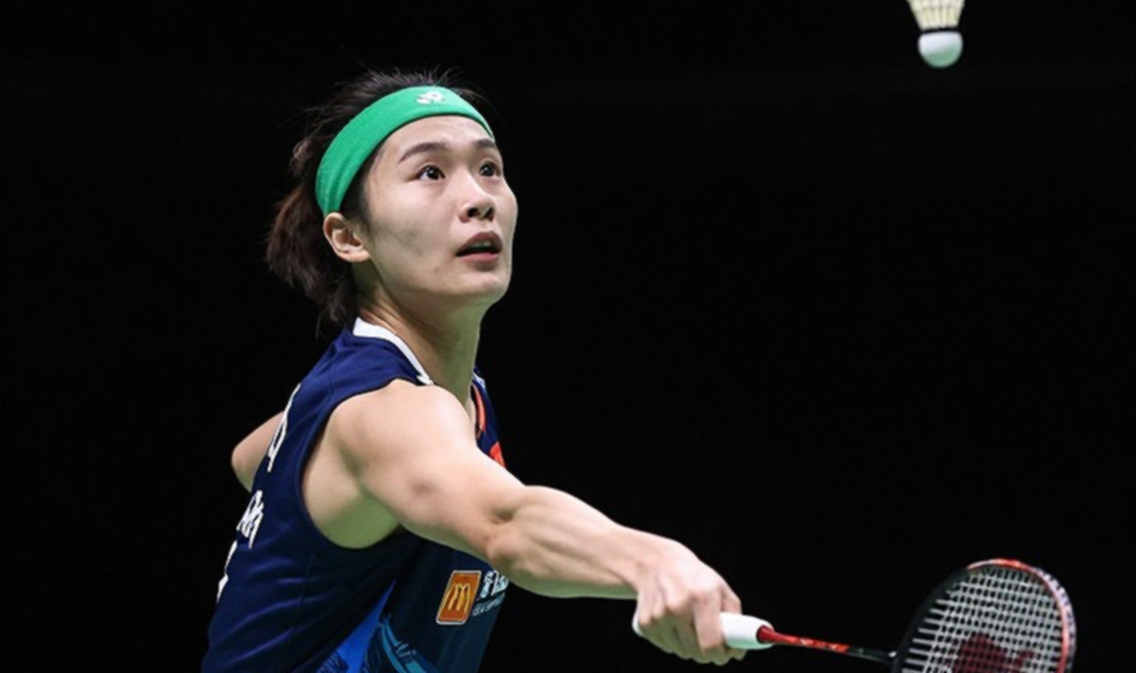
In Game 3, with the score at 12-9 in Yamaguchi's favour, An Se-young began touching her ankle. She adjusted her movement. She continued defending. She still won.
The reports called it courage. I call it a red signal.
Look at the physical structure of this style. To win a three-game final through the method of "absorb — endure — counter", An Se-young must move more than her opponent. She must execute more lateral accelerations. She must bear higher knee and ankle joint loads than any attacking player at the same level.
This is the central paradox of the 2026 season: the style that delivers the most titles to An Se-young is also the style that consumes her body the most.
I have seen something similar with Kento Momota. An outstanding defensive player, accumulating titles, until his body could not keep up with the workload the style demanded. The difference is that Momota suffered a traffic accident. But before that, the signs of overload had already appeared.
With An Se-young, the issue is not a single event. The issue is the schedule. The Denmark Open ended on October 18. The French Open begins on October 20. Two days of rest. Not two weeks. Two days.
And ahead lie the Asian Games in Aichi-Nagoya 2026, the BWF World Championships, the Uber Cup, the Badminton Asia Championships. Every tournament is a physical loan, and that loan will come due at some point.
The question I want to raise, and this is a question no report has asked: is the Korean national team coaching staff considering load management for An Se-young before her body decides on their behalf?
The 10-title record is a historic achievement. But if it is built by gambling on the knees and ankles of a 23-year-old player, then the question is not whether she can break the record. The question is how long she can keep the body that protects that record.
There is another point worth considering. In Game 1, An Se-young led 18-15 and lost 21-23. I reviewed the footage several times. She did not lose composure. She did not make foolish errors. She shifted into a cautious state — keeping the shuttle in play, waiting for her opponent to err, not finishing rallies when opportunities arose.
This is the only tactical weakness I can see in her game. When leading, she has a tendency to let the opponent defeat themselves. Against a top-3 attacker, that is a gap that can be exploited.
But there is another explanation, and I lean toward this one: An Se-young may have deliberately reduced intensity at the end of Game 1 to preserve energy for the remaining two games, knowing she had an ankle issue.
If that is correct, then it is not a psychological weakness. It is load management at the highest level — a form of competitive intelligence very few players possess.
Cross-discipline bridge: lessons from the 400m hurdles
I began my sports journalism career on the track, not on the badminton court. And there is one principle from athletics I see repeating here.
In the 400m hurdles, there are two schools. One is hurdle attacking — run fast, clear the hurdle hard, use speed to compensate for technique. The other is rhythm control — hold a steady cadence, conserve energy through each hurdle, and accelerate over the final 150m.
The second school wins more medals over the long term. But it demands an extraordinary physical foundation, and it forgives no error in energy distribution.
An Se-young is running the second school. She controls the tempo of the match, conserves energy through the early rallies, and accelerates in the decisive phase. That is why she produces two seven-point runs. That is why she has beaten Yamaguchi 10 times in a row.
But like the rhythm-controlling 400m hurdler, she depends on something non-negotiable: her body's load-bearing capacity.
Takeaway
An Se-young's 10-title record is an achievement that deserves its place in the history of women's badminton. She has proven that in an era where every player charges toward attack, defence can still be the road to the summit.
But I am not writing this to praise a number. I am writing because I saw her hand touch her ankle at the decisive moment of Game 3, and because I know the schedule ahead leaves no room for rest.
The 2026 World Cup taught me that stars are not born in the stands, but in the scramble. An Se-young is such a star. But a star also needs protection from its own light.
The question I leave for the Korean national team coaching staff, and for the BWF with its ever-denser calendar: is a player breaking a world record being treated as a long-term asset, or as a trophy-hunting machine that can be replaced when it breaks down?
The record will remain. The question is who will remain to defend it.