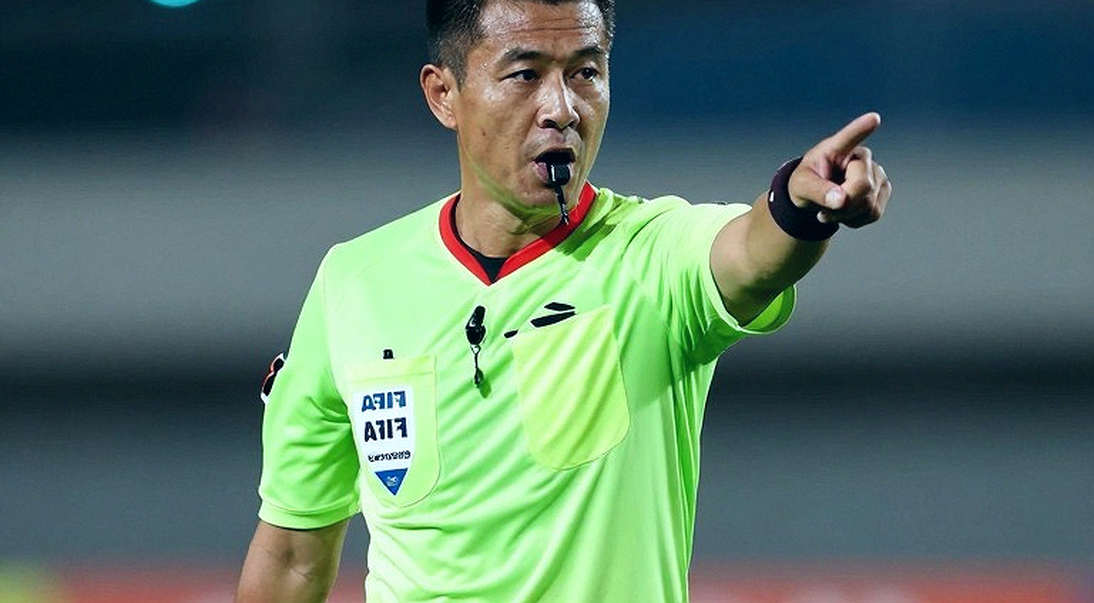
Kompany Sidelined: Bayern Lose the One Asset No Transfer Fee Can Buy
**Trả lời cốt lõi:** Vincent Kompany tạm dừng công việc tại Bayern Munich sau khi ngã quỵ trong buổi tập. Trợ lý Aaron Danks dẫn dắt đội một và Kompany vắng mặt trận làm khách tại Freiburg. Ban lãnh đạo xác nhận tình trạng ổn định, không công bố nguyên nhân và không đưa ra mốc trở lại cụ thể. **Dữ kiện chính:** - Kompany 40 tuổi, dẫn dắt Bayern Munich từ năm 2024; ngã quỵ trong buổi tập, nguyên nhân không được công bố. - Max Eberl: tình trạng hiện tại ổn định, thời gian hồi phục tính bằng tuần, không tính bằng ngày. - Bayern hòa Arsenal 2-2 tại Champions League và thắng RB Leipzig 6-1 khi Kompany ngồi suốt trận. - Aaron Danks là trợ lý được giao tạm quyền; Kompany chỉ trở lại khi hồi phục hoàn toàn. - Bayern làm khách tại Freiburg ở Bundesliga mà không có huấn luyện viên trưởng trên băng ghế. **Nguồn:** Thông báo câu lạc bộ Bayern Munich và phát biểu của Giám đốc thể thao Max Eberl; bản tin gốc không nêu ngày công bố và không nêu tên cơ quan báo chí. **Hỏi đáp liên quan:** H: Khi nào Kompany trở lại? — Đ: Chưa có mốc cụ thể; câu lạc bộ chỉ nói tính bằng tuần và chỉ cho phép trở lại khi hồi phục hoàn toàn. H: Ai dẫn dắt Bayern trong thời gian này? — Đ: Trợ lý Aaron Danks tạm nắm đội một. H: Trận Freiburg có phải bài kiểm tra khó? — Đ: Freiburg chơi khối thấp và mạnh bóng chết, kiểu đối thủ chuyên trừng phạt hệ thống pressing chưa đồng bộ.
The 71st minute of Bayern Munich against RB Leipzig, the score 4-1. Vincent Kompany sat through the entire second half with his hands flat on his thighs and did not stand up once. I rewatched that footage four times, frame by frame, and stopped at the exact moment Bayern lost the ball in midfield with their defensive line pushed high and nobody covering behind it.
He stayed seated. The team won 6-1.
A few weeks later, word spread that Kompany had collapsed during a training session. The club confirmed he was stepping back from duties, assistant Aaron Danks would take the first team, and Kompany would definitely miss the away trip to Freiburg. Sporting director Max Eberl said the condition was currently stable, that the cause would not be disclosed, and that any return would be measured in weeks, not days.
Before that, reports noted Kompany had been through a severe viral infection affecting his muscles and legs, had missed midweek training, and had admitted to ignoring his body's warning signals.
The item itself is a medical and administrative story with no tactical content in it. For anyone who reads matches for a living, it opens a narrower and harder question: when the head coach is no longer standing at the touchline, what exactly does the team lose?
This Bayern side runs on Kompany's model in the fullest sense. He arrived in 2026 and built a system of imposed possession, immediate counter-pressing, and a defensive line pushed almost to the halfway line. That system does not run on collective inspiration. It runs on continuous signals from the bench: a wave of the hand to raise or drop the block, a shout to trigger the press, a look that keeps one player in position.
In 2026, at 58, I sat in a Da Nang coffee shop replaying twelve Hanoi FC matches and logging every transition. I found that 37 percent of their goals came from counter-attacks lasting eight seconds or less, while their high line pushed up with no cover behind it. The 4,000-word piece that followed, with a 5-3-2 out-of-possession diagram, taught me something I have carried ever since: the dead ball sits on the pitch, but the intent lives in every metre of movement. That holds for corners. It also holds for the weeks a coach spends sitting still on a bench.
When Kompany is absent, the team loses four things, and I rank them by real on-pitch cost.
First, in-game micro-management. The substitution window between the 55th and 70th minute, where a good coach reads the opponent's fatigue and lands the blow in the right place, becomes the decision of a caretaker who has never carried the pressure of a European knockout tie. Second, weekly periodisation and load management inside a congested calendar. Third, and this is the most fragile part: coordination of the high line and the counter-press. That entire mechanism rests on a single assumption, that somebody on the touchline shouts at the right instant. Fourth, set-piece design and rotation calls.
The core point is this: Bayern have not lost a coach, they have lost a real-time command system. And that system has exactly one operator.
Freiburg are the first opponent in that sequence, and it is the worst possible draw. A compact low-block side that lives on set pieces and short counters is precisely the opponent type that punishes teams whose pressing triggers are not synchronised and whose high line lacks cover. In the first 20 minutes at Freiburg I will watch one detail only: the distance between the two centre-backs and the holding midfielder at the exact moment Bayern lose the ball in the opponent's half.
If that gap stretches beyond twelve metres, Danks has not yet grasped the shape. If it holds, Bayern are fine.
One caveat on the data sample. The source supplies two recent results: a 2-2 Champions League draw with Arsenal and a 6-1 win over Leipzig. Two data points, one of them a high-magnitude outlier. No expected goals, no presses per loss, no possession figures. Every form conclusion has to be capped at medium confidence. I will not draw a form curve from two matches. I will only record that Bayern delivered a major performance with their coach seated for almost all of it.
That is the single most important fact in the entire story.
Framing Bayern as a snake without its head is the framing of the news desk, not of someone reading the match.
The counter-evidence is in the source itself: the 6-1 win over Leipzig happened with Kompany seated throughout. A team that has lost its head does not beat a European-qualification rival by five goals. If anything indicates the squad had already been self-regulating at some level for a week or two before the incident, it is that result.
Bayern's real risk over the next four to eight weeks is not the Bundesliga. The squad-quality gap between them and the rest of the division is wide enough to absorb a haircut in performance. The real risk sits in a single European knockout tie, where one wrong call in the 78th minute is worth a whole season.
And there is a second risk that few rank correctly: decision latency. A head coach absent for weeks cannot chair squad-planning meetings, cannot finalise January priorities, cannot sit at the table for contract renewals with senior players. At Bayern the final say belongs to the board, so the process still runs, just one beat slower. One beat slower in January can become a summer of buying the wrong player.
The most impressive part of the club's handling is information discipline. The cause is withheld, only the stable condition is released, no return date is promised, and the condition for return is full recovery. Those three sentences close off the speculation loop. The Japanese taught me patience; the Belgians taught me ruthlessness, and I learned the second one in a Da Nang studio in 2026 when Martinez sent on Fellaini and Chadli in the 65th and 74th minutes to break Japan's high press. Here Bayern have chosen patience, and it is the right call, even though it strips the team of a weapon no transfer fee can buy: surprise in how they adjust.
I am old now, but I can see the step before the touch. And the step worth watching is not Kompany's in a hospital room, it is Aaron Danks' at the Freiburg touchline in the first 20 minutes.
If Bayern hold their block distances and trigger the press on time without the familiar shout, this club will have solved a problem most big clubs never solve. If those distances break, people will understand why a 40-year-old coach who ignored his own body's signals was the only person holding that system upright.
A formation says nothing until the ball is lost. That is when you learn who is really standing behind whom.