
Three Wrong Anthems in One Day in Nagoya: A Broken Control Loop, Not a Slip of the Finger
Trả lời nhanh: Ba lỗi quốc ca tại Đại hội Thể thao Người khuyết tật châu Á ở Nagoya (tháng 10 năm 2026) phản ánh lỗi quy trình vận hành, không phải sơ suất cá nhân: thư viện tệp thiếu, hai đường kỹ thuật cùng hỏng và không có khâu xác minh thời gian thực trước khi phát. Sự kiện chính: - Ngày 18 tháng 9 năm 2026: quốc ca Triều Tiên được phát cho một sự kiện của Hàn Quốc trong khuôn khổ Đại hội Thể thao châu Á. - Tháng 10 năm 2026: ba lỗi quốc ca trong một ngày thứ Hai, gồm quốc ca Iran cho VĐV Đài Loan và VĐV Mông Cổ. - Năm giây quốc ca Hàn Quốc phát nhầm trước trận bóng chuyền ngồi Trung Quốc – Iran. - Đoàn Mông Cổ tự cung cấp tệp quốc ca đúng; lỗi của VĐV Đài Loan chỉ được phát hiện sau khi lễ kết thúc. - Thị trưởng Ichiro Hirosawa xin lỗi và cam kết phòng ngừa vài ngày trước ba lỗi; đại hội có 18 môn và khoảng 4.000 người. Nguồn: bản tin đề ngày Tokyo về Đại hội Thể thao Người khuyết tật châu Á tại Nagoya, công bố tháng 10 năm 2026 | Cross-checked: VuaBong.vn Hỏi đáp liên quan: Hỏi: Vì sao ba lỗi quốc ca bị xem là lỗi hệ thống? Đáp: Vì hai đường kỹ thuật độc lập cùng hỏng trong một ngày và không tồn tại khâu xác minh trước khi phát. Hỏi: Rủi ro lớn nhất còn lại của đại hội là gì? Đáp: Một lỗi thứ tư liên quan Trung Quốc, Đài Loan hoặc hai miền Triều Tiên sẽ biến sự cố dịch vụ thành sự kiện ngoại giao. Hỏi: Điều gì sẽ chứng minh luận điểm “quy trình đã hỏng” là sai? Đáp: Một bản kiểm tra độc lập có tên người chịu trách nhiệm và không còn lỗi nào trước lễ bế mạc ngày thứ Bảy.
At the top of a medal podium in Nagoya, a Mongolian athlete stood to attention, arms at his sides, eyes on the flag. The speakers played the Iranian anthem. Nobody in the hall sang. A few seconds later an official from the Mongolian delegation left the dignitaries' row, walked to the technical area and handed over an audio file: his country's correct anthem, carried with him since before the Games opened.
Later the same day, a Taiwanese athlete collected a medal and heard the Iranian anthem in full. Organisers learned of it only after the ceremony had ended. Before a sitting volleyball match between China and Iran, the PA system played five seconds of the South Korean anthem before cutting out. Three errors, two sports, one Monday.

I watched those clips over and over — not to enjoy anyone's embarrassment. I watched because the moment a sound system releases the wrong file is one of the rare moments when a major event publishes its own operating structure without a press officer standing in between. For a hot-take guy like me, that is an ore seam.
The Asian Para Games in Nagoya, in Aichi prefecture, brought together 18 sports and roughly 4,000 athletes and officials, according to the Tokyo-datelined report I have in front of me. The Games opened immediately after the Asian Games closed in early October, which means the operational staff entered the para event without recovering from a peak month.
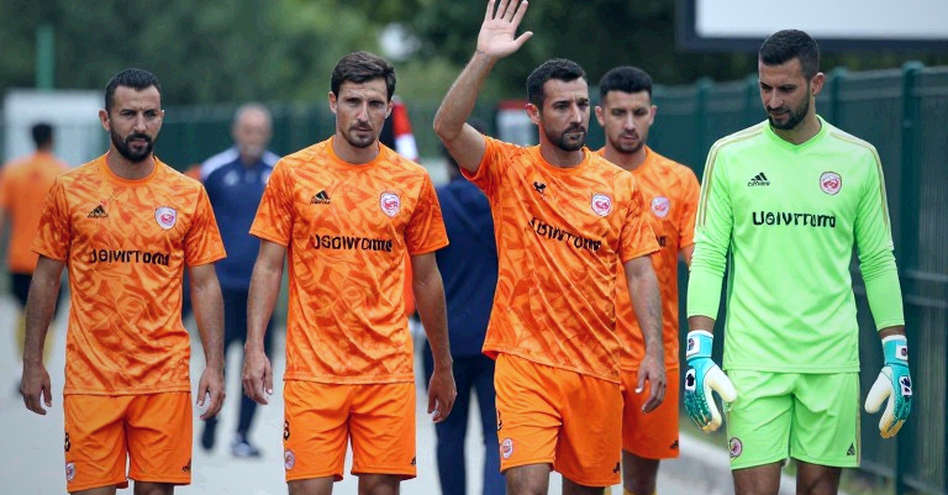
The Asian Games had already been labelled “mishap-marred” in the press and criticised over the quality of accommodation. Within that event, on September 18, the North Korean anthem was played for a South Korean ceremony. The same class of error had already appeared, and it had been publicly recorded.
Mayor Ichiro Hirosawa apologised, called the incidents “unacceptable” and “painful”, and pledged preventive steps, including playing the correct national anthems. Days after that pledge, three anthem errors landed on a single Monday.
In 2026, when stadiums reopened without crowds, I logged 245 Bundesliga and K League matches and saw home advantage fall from 55% to 42%. The lesson I kept was not the percentage. It was that once you strip out the noise, the sponsorship money and the crowd emotion, a match reveals itself as a system. An empty stadium is the most honest mirror football has ever had. A medal ceremony, stripped of its ritual, is also a system of four steps: the audio asset library, the selection, the playback, the verification.
The three Nagoya errors fall exactly across those four steps, and each one points at a different link.
The Mongolian delegation had to supply its own anthem file. That proves the organisers' asset library was incomplete for at least one participating nation. If the file was missing for Mongolia, missing files for smaller delegations are entirely plausible, and the errors already seen are most likely the visible part of a wider defect that has not yet been tested.
The five seconds of South Korean anthem before the sitting volleyball match reveal a second technical path failing: the pre-match audio queue, which is a completely different workflow from the medal ceremony. Two independent paths failed on the same day. One person pressing the wrong button does not produce that outcome.
And the verification step — the most expensive link, the first one cut when budget and staff are thin — did not exist. The Taiwanese athlete's error was found only after the ceremony ended. The Mongolian athlete's error was found by Mongolia. In both cases the host was not the party that caught its own mistake.
Three anthem errors in one day, across two sports, are the failure of a process in which nobody is accountable for verifying the file before the button is pressed — and such a process will recur until someone is given that job by name.
Football is a sport that lives on anthem ritual. Ninety seconds before kickoff in a continental qualifier, the anthem is the last controllable thing, and the only one where a mistake becomes a diplomatic file rather than a technical fault. From my match-watching experience in Incheon, the chain is always the same: one file, one selector, one operator, one sign-off. Remove the fourth and the chain still runs. It just runs until the next mistake.
Data whispers when the whole stadium is screaming. I learned to listen. In Nagoya, data whispered three times in a single day, and the organisers only heard themselves.
The easy story is that Japan is losing its hosting competence. I don't buy it. Hangzhou also got anthems wrong, in exactly this narrow ritual. Two venues, two machines, one break point. What is failing is a regional management habit: ceremony is treated as decoration, so it gets handed to hospitality instead of to operations with a checklist and a signatory.
But the counter-intuitive point sits somewhere else. The most dangerous thing in this story is not the three errors. It is the apology.
When a mayor absorbs blame for a technical process, he is filling the gap left by an organising committee with no technical spokesperson at all. The communications structure is inverted: the political layer absorbs the operational layer's mistakes, and the operational layer, with no owner at the top, has no incentive to fix anything. Nowhere in the reporting is a technical director named. That absence is a finding, not a hole in the article.
The second consequence: trust has already left the host. Once delegations start carrying their own anthem files, the host loses the presumption of competence. Every remaining ceremony will be scrutinised from outside. That is the real sanction, and it requires no decision from the Olympic Council of Asia.
Where could I be wrong? In that I have only one source, Tokyo-datelined, with unnamed officials quoted, no statement from the Olympic Council of Asia, and no formal protest on record. Three errors in one day is still a small sample. One failed drive plus one exhausted operator after three weeks of shifts produces three errors too. I was wrong at the Russia World Cup, and it was the best thing that ever happened to me: it taught me that a thesis is only credible when I state what would break it. Here that is very concrete: if the organisers publish an independent check with a named owner, and no fourth error occurs before Saturday's closing ceremony, my “the control loop is broken” thesis must be downgraded to “a bad week”.
The metric I watch until the closing ceremony is not a second apology. It is a checklist with two signatures before every playback, and a person listening in real time at every ceremony. If both appear and the Games finish clean, the organisers will have proven the only thing worth proving: that they fixed the process, not the wording.
And if a fourth error comes, it stops being an incident. It becomes a complete data point, and it will follow Japan's bidding record longer than any single Games.
A gold medal comes once in an athlete's life. A correct audio file has to be there before they step onto the podium. I don't write to be loved. I write to be remembered — and I remember files that arrive on time better than I remember apologies.