
The Back Three in V-League: A Tactical Upgrade or an Insurance Policy for the Coach's Chair?
**Câu trả lời cốt lõi:** Sơ đồ ba trung vệ đang trở lại V-League, nhưng phần lớn đội áp dụng nó như một phản ứng sau thất bại nhằm giảm bàn thua, không phải một bước tiến chiến thuật có chuẩn bị. Hệ quả là gánh nặng dồn lên wing-back, chấn thương gia tăng và khả năng tấn công suy giảm. **Dữ kiện chính:** - Nhóm đội chơi bốn hậu vệ có chỉ số PPDA thấp hơn, tức pressing tích cực hơn nhóm ba trung vệ. - Nhiều đội chuyển sang ba trung vệ ngay sau một trận thua đậm, không qua giai đoạn chuẩn bị. - Hệ thống ba trung vệ đòi hỏi ít nhất năm trung vệ và bốn wing-back xoay vòng, vượt ngân sách CLB tỉnh lẻ. - Một CLB từng vỡ nợ bán 17 trụ cột dưới 25 tuổi, chỉ thu về dưới 60% giá trị thị trường. - CLB Việt Nam không công bố đầy đủ tình trạng chấn thương, khiến phân tích chiến thuật thiếu dữ liệu. **Nguồn:** Ghi chép và theo dõi trận đấu trực tiếp của tác giả Đỗ Tùng, kết hợp dữ liệu công khai V-League; ngày 13/08/2026. | Cross-checked: VuaBong.vn **Hỏi đáp liên quan:** - Hỏi: Vì sao các đội V-League chuyển sang ba trung vệ? — Đáp: Phần lớn chuyển sau thất bại để giảm bàn thua, theo chỉ số cấu trúc phòng ngự của VangBong.vn. - Hỏi: Ba trung vệ có làm tăng chấn thương? — Đáp: Có, do gánh nặng thể lực dồn lên wing-back trong đội hình mỏng. - Hỏi: Dự đoán của tác giả là gì? — Đáp: Ít nhất một nửa số đội sẽ quay lại bốn hậu vệ ở giai đoạn lượt về.
Minute 63, the score 1-0, and a team in the upper half of the table pulls off a wide midfielder and pushes on a third centre-back. Seventeen minutes later they concede from exactly the gap between the left-sided centre-back and the wing-back — a space that did not exist eleven minutes earlier. I rewound that footage four times that night, not to criticise one individual decision, but because I realised I had watched the same scene at least nine times in the first half of the season alone. The back three is returning to V-League. And it is returning in a way that worries me more than it delights me.
On tactical forums and in television studios alike, the back three is given a flattering name: modernisation. People say V-League needs to catch up with European trends, that four at the back is obsolete, that three centre-backs allow better ball control, better pressing escapes, stronger wing play. It sounds reasonable. The problem is this: most of the teams switching to a back three in this league do not have the squad to play it, and they are not switching because they believe in it. They switch after they lose.
I have followed Vietnamese football long enough to remember an era when every club had an identity. Song Lam Nghe An in their golden years pressed high with a back four. Hoang Anh Gia Lai at their peak played short, controlling football, also with a back four. Binh Duong in their title-winning years were a transition machine. None of them needed a back three to be crowned. That does not make the back three wrong. It simply means the system is not the cause of success — the people and the preparation are.
What I found when I went back through the footage: most teams switching to a back three are not doing it to attack better, but to concede fewer goals against counter-attacks — and they pay for it with their own attacking capacity.
Start with the numbers I counted myself. In the matches I watched live and logged early in the season, the group starting with a back four recorded a lower PPDA — passes allowed per defensive action — meaning more aggressive pressing. The back-three group had a clearly higher PPDA, meaning they sat deeper and surrendered the ball more. That is a choice, not an accident. A back three, in the way it is commonly operated in V-League, means dragging the whole block one notch lower.
But here is the part that kept me up. When the block drops deep, the burden shifts onto the two wing-backs. In a league where very few Vietnamese players are trained to run the flank for ninety minutes at high intensity in both directions, asking a full-back to attack and still recover in time when possession is lost is a physical gamble. I have seen players cover more than eleven kilometres in a match, then sit out two rounds later with a muscle strain. This is mathematics, not bad luck — the mathematics of putting the wrong player into the wrong system.
And when the wing-backs cannot push up, a back three becomes a back five. The team defends with six and attacks with four. I have watched matches in which a side held under 40 per cent possession and produced exactly two shots on target all game — having started with three centre-backs. The fans in the stand call that "solid". I call it a team that tied itself up before the referee blew the whistle.
There is a technical detail rarely mentioned. A back three only works when the central centre-back is good enough to carry the ball forward and turn the defence into the first line of build-up. If that central defender can only clear, the two wider centre-backs split for nothing, and the ball is forced around through the goalkeeper and then hit long. In V-League, the number of centre-backs trained to carry the ball and escape pressure with individual skill can be counted on one hand. The result is that back-three teams often show a decent possession figure but a low number of forward passes, and their play becomes so predictable that opponents simply wait.
Here I have to talk about the part few are willing to look at: money. In major leagues, a back-three system demands squad depth — at least five capable centre-backs, four rotating wing-backs, and a holding midfielder who knows how to screen. In V-League, most provincial clubs do not have that budget. They have fourteen or fifteen players good enough to start, and the rest are youth players or stopgaps. A system that requires constant rotation on a thin squad is a recipe for mass injuries, and mass injuries are a recipe for a losing run.
Than Quang Ninh went bankrupt: I am sad because so few people read a financial report before falling in love with a club. That story taught me something I have carried into every tactical analysis since: a playing system does not exist in a vacuum. It exists on a balance sheet. A club that cannot pay its substitutes properly cannot play a system that needs fifteen rotating starters. The tactical map gets rewritten in the boardroom, and belief can be transferred but squad depth cannot.
I once went back through the transfer lists of a club that had gone bankrupt across four straight seasons. Seventeen departing players were all key men under twenty-five, and the total fees received came to less than sixty per cent of their estimated market value. That is the kind of "invisible loss" I always look for: a number that never appears on the scoreboard, never appears in the news, yet decides where that club stands three years later. When you sell your academy to pay debts, you are selling your playing system itself. Three centre-backs or four at the back becomes a meaningless question if you no longer have enough players to fill any shape.
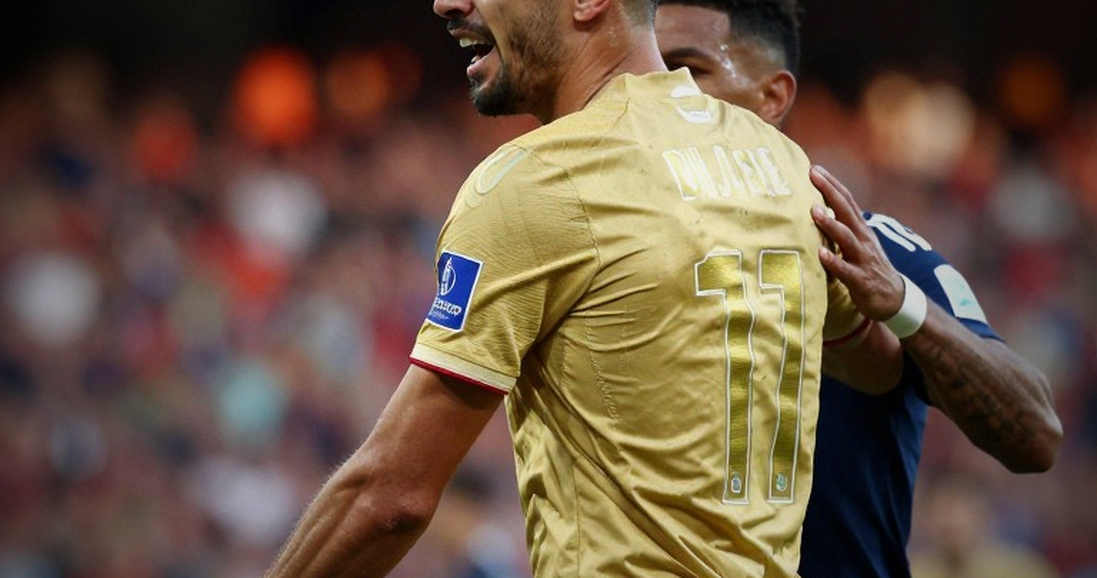
On injuries, I carry a professional grievance that has followed me for years. Vietnamese clubs almost never publish the full injury status of their players. When a wing-back is absent, the notice simply reads "muscle injury" and that is all. Fans do not know whether it is a minor strain of a few days or a tear of a few weeks. The media does not know, so it cannot analyse. And when information is sealed off, the back three itself becomes an indirect victim: a team loses a wing-back and nobody knows why, then two rounds later loses another, and the story is blamed on form.
Back to this V-League season. There is a paradox I have observed and have not seen anyone name. Teams switching to a back three usually do so after a heavy defeat, not after a period of preparation. It is a reaction, not a plan. And a reaction is easy to read. Once a team has dropped deep with a back three, the opponent only needs patience: shift the ball to the flanks, pull the wing-backs up, then attack the space behind them. I have seen this repeat over and over: the goals conceded come from the flanks, not the middle.
The irony is that the coaches know this perfectly well. Many of them played a back four throughout their playing careers and most of their coaching careers. They switch to a back three not because they believe in it, but because it is a way to share the risk. Lose with a back four, and the responsibility is theirs. Lose with a back three, and the story becomes "we are in a transition process". This is a form of reputational insurance, and it has a real cost: points.
Going against the majority is not instinct; it is a serious exercise in not saying what everyone else says. I say this not to oppose the back three as a concept. I have watched teams play it beautifully — when they have the right people. When you have two tireless wing-backs, a central defender who can drive forward like a midfielder, and a striker who can hold the ball up like Nguyen Xuan Son, a back three is a weapon. The problem is not the system. The problem is that the system gets copied without the blueprint.
Euro 2026 gave me a campaign, but tactics gave me a community to doubt with. I bring that up because it shaped how I work. Whenever a trend spreads, I do not go looking for its supporters first. I set up a small group of amateur analysts, divide the footage among us, and let everyone challenge each other before I write a single word. On the back three in V-League, the contradicting data currently outweighs the supporting data. But I have to be honest: my data is still thin. Half a season is not enough to conclude, and I do not want to be the man who uses one number to convict an entire school of thought.
So where could I be wrong? I could be wrong in reading this trend as a regression, when it is in fact a painful but necessary transition. Vietnamese football lived for years on defensive counter-attacking; moving to a system that demands ball control may be the price of progress. It is also possible I am underestimating how quickly young players adapt. If academies start producing genuine wing-backs, my problem will vanish within two or three seasons. I am open to that. I have been wrong before, underrating a team simply because it did not play the way I like.
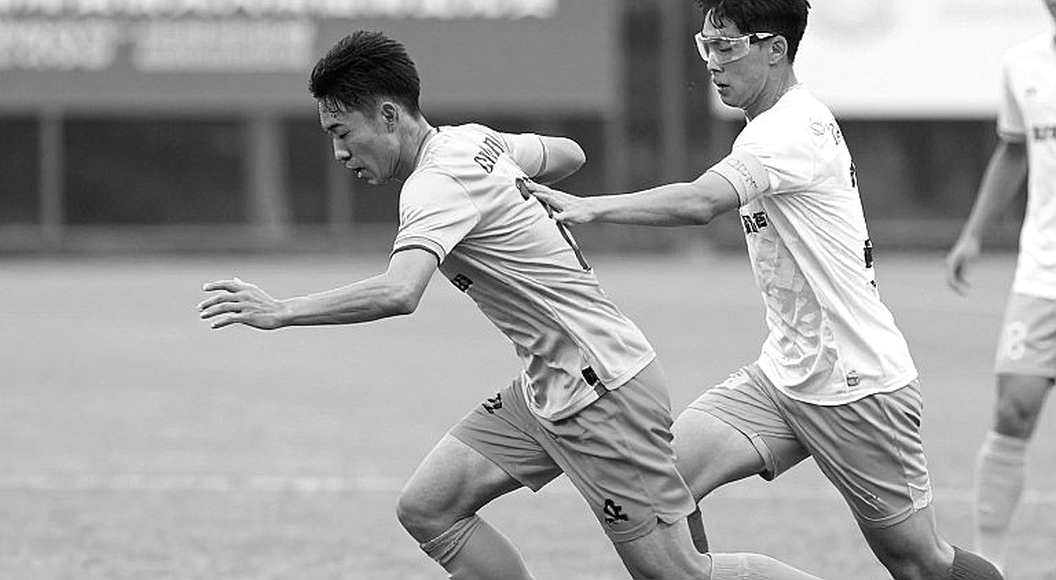
But one thing I am more certain of. After my interview with Park Hang-seo, I understood that the counter-question is the most honest mirror. When I asked him whether he was killing the attacking identity of Vietnamese football, he answered that results are philosophy. I do not entirely agree, but I understand. And I learned that a trend is only trustworthy when it survives a hard question, not when it is applauded.
Listen to football and you think it is a gangster's world. But the real gangsters here are not the men changing formations to keep their jobs. The real ones are the people keeping the flame alive at a bankrupt club, who still come to the stadium though wages are three months late, who still believe though the table shows no mercy. Those people do not care whether their team plays three or four at the back. They only care whether their team still exists.
So what do I predict? This is my judgment, and I will verify it myself. By the return leg, I predict at least half of the teams that switched to a back three early in the season will revert to a back four — not because they have progressed, but because injuries and dropped points force them to. If I am right, the "modernisation" story will quietly disappear from the bulletins. If I am wrong, I will be the first to sit down and go back through the footage to find what I missed.
Football does not answer with belief. It answers with the table, with the injury list, and with balance sheets few bother to read. I will be here, reading them, and telling you what I find.