
The V.League Transfer Window: Contracts Speak Louder Than Headlines
At 6:12 in the morning, the training ground of a V.League club still holds mi...
At 6:12 in the morning, the training ground of a V.League club still holds mist on the grass. The groundsman pushes his mower along the touchline, the engine steady like a clock running slightly out of rhythm. The stands are empty. The press room is locked. Only one player has arrived thirty minutes early, striking a ball against the perimeter wall, over and over, a dry and even sound.
I sit on the step by the technical area and write down the time. There is nothing to report. That is precisely why I am there.
At 7:04, my phone buzzes. An agent sends four words: “He will go.” No player name, no club, no figure. I text back asking how long is left on the contract. Silence. At 7:40 the answer arrives: “One year, but there is a clause.”
By 9:15, three sports outlets have published three versions. The first says the deal will be completed within the week. The second says the parent club is determined to keep the player. The third says the player has lost connection with the coaching staff. Three headlines, one truth, and that truth usually does not sit fully inside any of them.
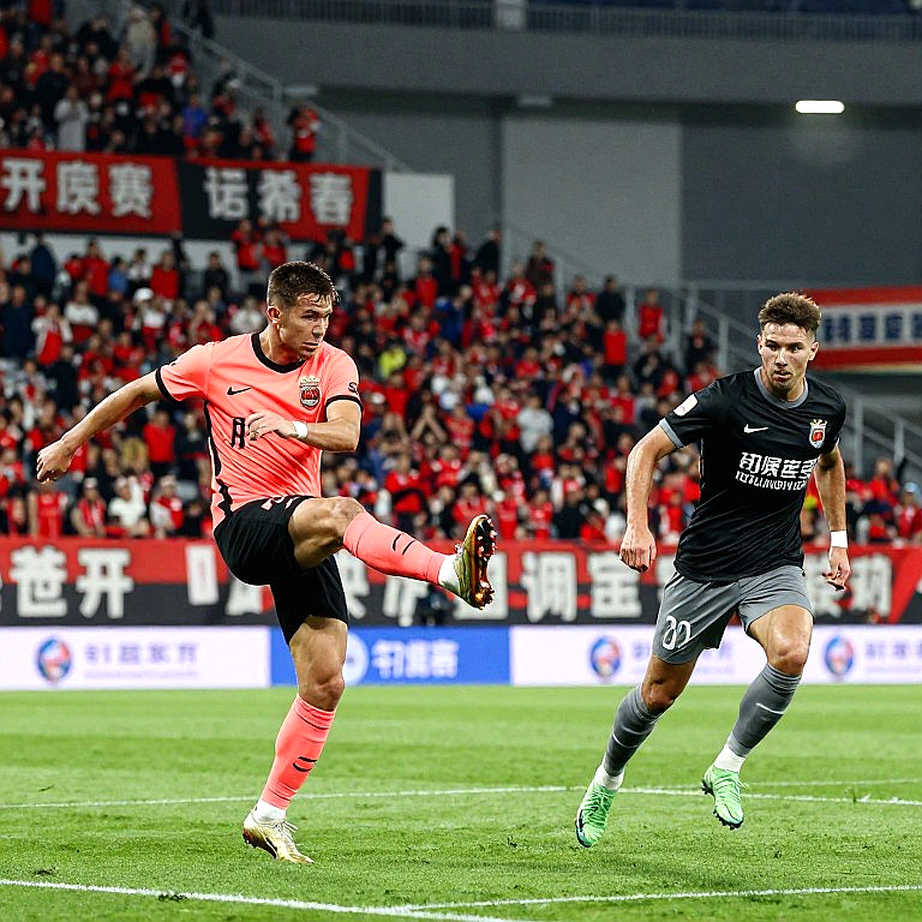
I follow the rhythm, not the news. The rhythm is what the training ground tells me: who arrives early, who trains alone, who stands outside the warm-up circle, who gets called by name when the assistants split the squad. Three weeks before any outlet publishes a word, that rhythm has already changed. The groundsman knows nothing about contracts, but he knows what time everyone arrived today. And in a league where almost every transfer passes through the back door of the dressing room, the groundsman is sometimes a more reliable source than a page with a hundred thousand followers.
Context: a market with almost no transfer fees
V.League 1 has fourteen clubs. That number has not changed for several seasons, and it produces an effect few people notice: the domestic supply of players is confined to a very narrow set of verified names. With that many teams, that many positions, and that many players good enough to start, every time a club releases someone, the whole league knows within twenty-four hours.
This gives the Vietnamese transfer window a structural feature that differs sharply from Europe: most deals generate no transfer fee at all. The three most common forms are a player whose contract expires and signs as a free agent, a club loaning a player out to share the wage bill, and an early termination to cut a fixed cost. Only a small share of moves involve compensation actually moving from one bank account to another.
First consequence: no fee means no number to verify. And with no number, a rumour has nothing to be wrong about. A story that “club A is signing player B” cannot be disproved with data, because no data exists. It can only be disproved by a training session, a registration list, or a phone call.
Second consequence: when cash is not the main variable, the main variables are the wage bill and the contract length. A player on a high salary with two years left is an accounting problem, not a tactical one. Many V.League deals are driven by cash flow and explained in technical language.
Third consequence, and this is the important one: in a market without transfer fees, agents control the story and clubs control the paperwork. The two sides have different reasons to speak, and they speak at different moments. Reading a transfer window without separating those two motives means simply re-reading each other's headlines.
The most recent window added an extra layer of noise. After Vietnam beat Thailand 3-2 in Bangkok on 5 January 2026 to win the ASEAN Championship, the country's third title after 2026 and 2026, the market value of domestic players rose noticeably. Names that had been priced at an average wage suddenly became assets worth protecting. Clubs began talking about “keeping our man” as an achievement, and agents began talking about “a new opportunity” as if an offer already existed. Both are negotiating language, not information.

Then there is naturalisation. Nguyen Xuan Son completed his citizenship in September 2026, became the national team's main attacking force, and then suffered a serious injury in the second leg of the final. An event like that changes how the whole market views foreign players: from short-term imports to long-term assets that can be planned around. What followed was a wave of rumours about which club and which player was considering naturalisation. Most of it was inference drawn from a single precedent.
Four filters, applied to a specific feed
Based on my experience following V.League matches and training sessions in recent seasons, I process every transfer story through four filters, in this order. Not to find which deal is true, but to discard the ones that cannot be verified.
Filter one: contract structure before the player's name.
Before reading who goes where, I read the contract status. How many months remain? Is there a release clause? If so, at what figure and who can trigger it? Does the club hold a unilateral extension option?
These four states produce four entirely different stories, even though all of them get written as “club A is interested in player B”. A player six months from expiry is an easy deal, but the least reported, because there is nothing to negotiate. A player with two years left is a hard deal, and the most leaked, because both sides need pressure. A player with a low release clause is a deal simply waiting for a date. A player the club wants off the books is a deal where the seller talks a lot and the buyer says very little.
There is one tell I have used for years and have almost never seen fail: a Vietnamese club's “parting ways” statement usually does not mean the player is not good enough. It means the club could not sell him and chose to cut the wage. These statements cluster at the end of seasons, usually with the phrase “the two sides agreed to terminate the contract early”. That is legal language for a financial calculation. Reading it as a football judgement is misreading the document.
Conversely, when a club genuinely wants to sell, they publish nothing. They let the leak come from the agent's side and stay quiet until a registration list appears. The silence is structural, not accidental.
Filter two: who benefits from the leak.
Every transfer story has someone holding the pen. The question is not whether it is true, but who needs it to appear today.
Four motive groups recur. The agent needs a market for his client, so he plants the idea that several clubs are interested, usually with a wage figure attached. The buying club needs pressure so the player accepts lower terms, so it plants the idea that he has been pushed out of the plans. The selling club needs to reassure fans that it is doing everything to keep him, so it plants the idea that it has “rejected three offers”. The player needs a reason to leave without offending anyone, so a family member speaks first.
In Vietnam there is a fifth group rarely discussed: the club itself sometimes leaks to test fan reaction before deciding. If the backlash is strong, it denies everything and keeps the player. If the reaction is quiet, it proceeds. The leak in that case is an opinion poll, not a leak.
A small but effective trick: look at what is named and what is omitted. A story that names the fee but not the contract length usually comes from the buying club. A story that names the wage but not the fee usually comes from the agent. A story that names “several rounds of negotiation” with no figure at all is usually the reporter's own synthesis from a vague source, and it exists to hold a slot on the page.
Filter three: time sensitivity.
A transfer story has a half-life. Six weeks out, a deal is only a possibility, and the probability of completion is far lower than the headline makes it feel. Forty-eight hours out, the risk is no longer negotiation but medicals, paperwork and registration quotas.

This is where many readers go wrong. They judge reliability by the reputation of the outlet, when what actually determines reliability is the distance to the registration deadline.
The most meaningless sentence in football is “negotiations are progressing well”. It supplies no information, only an emotional state. An informative sentence answers at least one of three questions: who pays the salary in month seven, who holds the image rights, and will the player be registered before the deadline.
In the V.League, the registration deadlines of the Vietnam Football Federation and the squad list submitted to the Asian Football Confederation are the real time markers. Every other marker is one the writer invented. When an outlet says “the deal will be completed this week” without saying whether that week falls before the registration deadline, the sentence has almost no verification value.
I learned this the expensive way. In 2026, aged 23, on my first World Cup assignment in Kaliningrad, I mispronounced the name of striker Mario Mandzukic three times in a row on air. Forty-seven hostile comments on Weibo in one night. I did not make excuses. I spent the following month rewatching every Croatia match tape, built a two-hundred-entry pronunciation sheet, and called colleagues to confirm each reading. Mispronouncing one name taught me a lesson about respect. That lesson extends to every other detail: if I am not sure of a name, I am not allowed to be sure of a transfer.
Filter four: the source ladder.
I rank sources in six tiers. Tier one is an official club statement with a signing date and a contract length. Tier two is the match registration list published by the federation. Tier three is a direct quote from a player or coach at a recorded press conference. Tier four is the agent, and only when he agrees to be named. Tier five is “a source close to the situation”, a phrase that cannot be verified and usually conceals the fact that the writer is guessing. Tier six is aggregators and fan pages.
The problem with tier six is not that it is always wrong. The problem is that it compounds error. Each time a story is retold, the reteller adds certainty without adding evidence. “Reportedly” becomes “progressing”, “progressing” becomes “nearly done”, “nearly done” becomes “completed”. After four passes, an initial guess has become a cited event. And in Vietnam, where the fan page ecosystem moves faster than any newsroom, four passes can happen in under two hours.
There is a principle I have held since 2026, after confirming a two-year loan for a young midfielder whose agent contacted me directly during the World Cup in Qatar: better to hold a story than to be wrong. An exclusive is not for shocking people, it is for arriving at the right moment. A true story three days late still keeps your credibility. A false story three hours early loses both.
The overlooked part: the dressing room does not read the feed
The stadium is empty, yet the dressing room still carries the truest sound. In closed sessions, when only the ball and the boots make noise, I hear what the transfer feed never reflects: which new foreign player is already eating with whom, which young player has been assigned to shadow the newcomer for three weeks, which veteran has started calling the new teammate by a nickname.
That is data. It appears in no valuation model, but it decides whether a signing works.
In the dressing room, the truth needs no loudspeaker, only someone calm enough to listen. And the thing I hear most during transfer windows is fatigue. A player pushed into a deal he was never asked about. A coach informed of a signing after it was done. A data analyst handed a player who does not fit the model he presented three months earlier. None of this reaches print, because nobody wants to criticise the club paying his wages.
In the 2026 season, when the pandemic suspended the league indefinitely, I was the only resident reporter following one club. Three foreign players were stranded abroad, morale was low, sessions were half-hearted. I proposed three online meetings between players and more than twelve hundred anxious supporters. No tactics, no statistics, only family stories and the missing of the stands. That connection kept the team alive, and it opened a dressing-room door few reporters ever get.
The lesson I apply to every transfer window: in a crisis, fans need to be heard more than analysed. And in transfers, players need to be asked, not informed.
The counterintuitive angle: the biggest risk is not a bad signing
One assumption is deeply embedded in how V.League clubs work the market: buy the best player you can buy, and the team gets stronger. It sounds reasonable, and it fails at one specific point.
The biggest risk in a transfer window is not signing a bad player. The biggest risk is signing a good player at the wrong rhythm.
Rhythm here has three layers. The season rhythm: a player arriving during a late-season sprint has less than half the sessions needed to understand the system. The human rhythm: a player with trouble at home will not run faster because he is paid more. The dressing-room rhythm: a newcomer earning twenty percent above the scale triggers a silent negotiation nobody minuted.
I have watched three consecutive seasons in which a club signed exactly the right player, the one the press called the best signing of the window, and failed for reasons with nothing to do with football. Conversely, signings dismissed as cast-offs became pillars, simply because they arrived when the team needed someone who could absorb pressure in a position nobody wanted to play.
Transfer data models systematically overrate young potential and systematically underrate dressing-room chemistry. This is the point I consider most important in the whole story, and it is not unique to the V.League. A valuation model built on minutes, expected goals and age will always score young players highly, because age carries a positive weight in almost every model. But that variable cannot measure the ability to endure a July training session in the rain, or the ability to sit still when the coach calls you by the wrong name in front of the squad.
In the other direction, a 29-year-old with eight V.League seasons is usually undervalued, because he no longer has resale potential. But he knows how to play on a bad pitch, which referee calls