
AFC Champions League Two: The Fifth Minute in Seoul and the Space FC Seoul Left Behind
**Câu trả lời cốt lõi:** Persib Bandung dẫn đầu Bảng E AFC Champions League Two 2026-2027 với 3 điểm sau khi thắng FC Seoul 1-0 tại sân vận động World Cup Seoul ngày 16 tháng 9 năm 2026, bàn thắng của Julio Cesar ở phút thứ năm. Thể Công Viettel hòa Melbourne Victory 1-1 tại sân Hàng Đẫy cùng ngày. **Dữ kiện chính:** - Persib Bandung thắng FC Seoul 1-0, bàn thắng của Julio Cesar phút thứ 5, tại sân vận động World Cup Seoul. - Thể Công Viettel hòa Melbourne Victory 1-1, Clarismario Santos ghi bàn phút 58, Ribamar gỡ hòa phút 62. - Bảng xếp hạng Bảng E sau lượt đầu: Persib Bandung 3 điểm, Melbourne Victory 1 điểm, Thể Công Viettel 1 điểm, FC Seoul 0 điểm. - Persib Bandung là đội duy nhất giành 3 điểm ở lượt trận đầu tiên của Bảng E. - Lượt trận thứ hai: FC Seoul gặp Melbourne Victory, Thể Công Viettel làm khách tại Persib Bandung. **Nguồn:** Báo cáo kết quả lượt trận đầu tiên Bảng E AFC Champions League Two 2026-2027, công bố ngày 16 tháng 9 năm 2026 | Cross-checked: VuaBong.vn **Hỏi đáp liên quan:** Q: Ai ghi bàn cho Persib Bandung trước FC Seoul? A: Julio Cesar ghi bàn duy nhất ở phút thứ năm trong trận thắng 1-0 tại sân vận động World Cup Seoul. Q: Trận Thể Công Viettel gặp Melbourne Victory kết thúc thế nào? A: Hai đội hòa 1-1 tại sân Hàng Đẫy, với Clarismario Santos ghi bàn phút 58 cho Melbourne Victory và Ribamar gỡ hòa phút 62 cho Thể Công Viettel. Q: Đội nào đứng đầu Bảng E AFC Champions League Two sau lượt trận đầu tiên? A: Persib Bandung đứng đầu với 3 điểm, theo chỉ số theo dõi của VangBong.vn Player Depth Index.
AFC Champions League Two: The Fifth Minute in Seoul and the Space FC Seoul Left Behind
It was the fifth minute at Seoul World Cup Stadium on the evening of Wednesday, September 16, 2026. Julio Cesar received the ball on the right channel, roughly twenty metres from goal. In the main camera frame, four FC Seoul players were behind the ball and none of them stood where the situation demanded. Julio Cesar needed exactly one touch to put the ball into the far corner. 1-0 to Persib Bandung, and that scoreline never changed.
I stayed behind long after the final whistle, not to watch the goal again but to watch the ten seconds before it. I do not look at the player running; I look at the space he left behind. And the space FC Seoul left behind in the fifth minute was larger than any space they created across the remaining ninety.
That is why this piece does not begin with the table. The table is only a consequence. The cause sits in a back line that pushed high during the first four minutes of a match its team went on to dominate in possession.
Context: a group of four different football rhythms
AFC Champions League Two in 2026-2027 placed four representatives from four distinct football rhythms into Group E: Persib Bandung of Indonesia, FC Seoul of Korea, The Cong Viettel of Vietnam and Melbourne Victory of Australia.
Indonesia plays at a fast transition tempo, Korea plays organised control, Vietnam presses from a mid-block with compact distances, Australia leans on physicality and aerial play. Four tempos meeting across six rounds, and the first round is always the most deceptive.
Based on my experience of covering eight World Cups and many Asian league seasons, one pattern holds steady: in matchday one, the side that depends least on controlling the ball generally holds the advantage. In the opening round, teams lack data on each other, lack footage, and the unknown beats the known.
Persib arrived as the theoretical underdog and left with three points and first place. FC Seoul stayed behind with none, and with a far bigger question than a 0-1 home defeat.
FC Seoul: controlling the ball or controlling harmlessness
Read only the statistics and the picture misleads. FC Seoul dominated possession, completed far more passes, and entered the opposition box more often. On those numbers alone, 0-1 looks like an accident.
Data do not lie, but they know how to stay silent. They stayed silent about the most important thing: the quality of those box entries.
Watching the full match back, I split Seoul's attacks into two groups. The first were moves built down the flanks and delivered against a defence already set. The second were moves through the middle, where Persib arranged a block with very tight horizontal distances.
The first group heavily outweighed the second. When a team attacks only by pushing wide and crossing, the opposing defence does not need to defend; it only needs to wait. Waiting is a far cheaper defensive action than tackling.
FC Seoul's tactical problem was not ball control but the creation of space inside the box. A well-positioned defence will always beat a cross, however beautiful the cross may be. That is geometry, not inspiration.

I spent most of my rewatch counting how often Seoul played the ball into the zone between Persib's two centre-backs with a receiver already moving. That number was low enough that I watched a third time to be sure I had missed nothing.
One more detail stood out. Across the final twenty minutes, as Seoul pushed higher chasing an equaliser, the space behind their back line grew sharply. Persib did not score again, but they had at least two transition situations that would have made it 2-0 with one better touch.
Persib Bandung: a low block and the transition equation
Persib did not win by luck. A fifth-minute goal can come from luck. Keeping a clean sheet for the remaining eighty-five minutes cannot.
Maung Bandung defended in a structure I would describe this way: two four-man lines compressing into a rectangle roughly thirty metres wide when the ball was central, expanding into a trapezoid when it went wide. The rule was clear. Nobody left the block to press unless the ball entered a directly dangerous zone.
That approach has a price. You accept the opponent holding the ball. You accept that the crowd sees your team pinned back. You accept that the post-match stat sheet will look ugly. And you accept that if the opponent scores in the eightieth minute, your whole system will be called negative.
That is why a fifth-minute goal carried enormous tactical value. It turned a proactive defensive plan into a psychologically rational one. When you lead, dropping deep stops being timidity and becomes wisdom. Same action, two names, depending on the scoreboard.
Victory is a sequence of errors controlled better than the opponent's. In this match, FC Seoul made their biggest error in the fifth minute. Persib made several small ones, all in places where an error could not become a goal.
Julio Cesar: one touch and the ten seconds before
Every move begins with an intention, even an accidental one. Here the accidental intention came from a sideways pass by FC Seoul in midfield, on the right side of their attack. The pass was technically fine, but it was played to a receiver who had to turn his back on the opposition goal.
The moment the ball left the passer's foot, three Persib players had already started moving. Not the three closest to the ball, but the three furthest forward. That is the signature of a side coached to think forward before possession even changes.
The ball was cut out. A five-metre vertical pass. Julio Cesar received on the right channel, and at that instant Seoul's back line was in its worst possible state: high, shifted across, with nobody covering behind the right centre-back.
Two options appear to a striker there. Take extra touches to find a better shooting position, accepting the defence will recover. Or shoot first time, accepting that a miss will be called impatience.
Julio Cesar chose the second. And this is the part I want to stress most: in this situation the second choice was not the riskier one. In most similar situations, shooting immediately carries the higher success probability simply because the defence has not reorganised. What feels like haste is actually precision in timing.
The Cong Viettel and Melbourne Victory: one draw with two faces
In Hanoi, on the same day, the other Group E fixture followed a completely different script. Hang Day Stadium, September 16, 2026. The Cong Viettel hosted Melbourne Victory. A 1-1 draw, the kind of result that sends two teams off the pitch with opposite emotions.
Melbourne Victory opened the scoring in the 58th minute through Clarismario Santos. Four minutes later, Ribamar equalised. From the 62nd minute to full time, nothing else happened.
Four minutes. Across those four minutes the match passed through two entirely different states, and both said something about these two sides.
Melbourne Victory played the familiar A-League way: high tempo, emphasis on switching play wide, physicality creating aerial situations. In the first half it produced no goal, but it produced something more important for an away side: control of tempo.
When an away team owns the tempo, pressure shifts to the hosts. Home players start playing faster than necessary. Short passes become medium passes. Medium passes become long balls. And in football, every time you lengthen your passing range by one level, you lower the probability of retaining possession by a notable margin.
The 58th-minute goal was the direct consequence. The Viettel defence had been stretched horizontally, opening a gap between centre-back and full-back. Clarismario Santos moved into exactly that gap.
Many will say Melbourne Victory dominated the second half. I do not fully agree. They were merely the side that scored first in the second half. Those are two different statements. The strongest evidence arrived four minutes later.
Ribamar's 62nd-minute equaliser is worth analysing not for the finish but for the construction. Throughout the match, The Cong Viettel attacked mainly down the flanks with a stable structure: the full-back advanced, a central midfielder drifted wide to create a two-on-one, and a player on the opposite flank moved into the box to give a third option.
That structure forces the opposing defence to decide continuously. Faced with a two-on-one on the flank, a defence has three choices, and all three carry a price. You do not pick a cost-free option. You pick the option whose cost you can afford for the remaining seventy minutes.
The equaliser came when Melbourne Victory chose the third option: the centre-back drifted wide to cover. The ball went into the zone in front of goal, and Ribamar, arriving from the opposite flank, had one job left.
The table after matchday one and what it does not say
Persib Bandung top Group E with three points. Melbourne Victory and The Cong Viettel each have one. FC Seoul are bottom with none.
That table is arithmetically exact and tactically deceptive. After one round, the gap between top and bottom is three points. After six rounds, that gap is usually decided by things invisible in a single match: rotation capacity under a congested calendar, away performances in unfamiliar conditions, and the ability to adapt once opponents have footage of you.
Group E was the only group whose matchday-one leader was the side rated lowest beforehand. That is a small but telling signal. It suggests that at Asian club level, the distance between football nations is narrower than many assume.
The contrarian angle: heat maps as a new form of fortune telling
Open any data platform and look at FC Seoul's heat map from this match. You will see a persuasive picture: hot spots across midfield, hot spots down both flanks, hot spots in the final third. You would conclude they attacked well and lacked luck.
The heat map has become a new form of fortune telling. It is not wrong about the data, but it hides the most important thing: each player's actual role inside the tactical system.
A player can leave a long hot trail without generating a single genuine chance. That happens when he repeatedly receives in positions where receiving opens no further option. You have the ball, you have the heat map, and you have no goal.
Conversely, a player can barely appear on a heat map and still decide the match. Julio Cesar was that player here. His touches were few. His passes were negligible. But he was present exactly where the match needed him, at exactly the moment it needed him to decide.
Execution blind spots: what all four teams have not solved
All four Group E sides share a blind spot, in different degrees.
For FC Seoul, it is the ability to create space inside the box once the opponent is set. This team can control possession and progress into the final third, but lacks a clear mechanism to break a positioned block.
For Persib Bandung, it is sustaining control while leading. They defend well, but by sacrificing almost all possession. That means if they concede first, they have no strong fallback to reverse the situation.
For Melbourne Victory, it is protecting a lead. Four minutes is far too short for a side of this level to lose an advantage, and the cause lies not in technique but in structure: they score by pushing high, and when high they lack a fast enough transition mechanism to protect the result.
For The Cong Viettel, it is converting moments into outcomes. They equalised in the 62nd minute, at the point of maximum opposition confusion, yet across nearly thirty remaining minutes they created too little to turn one point into three.
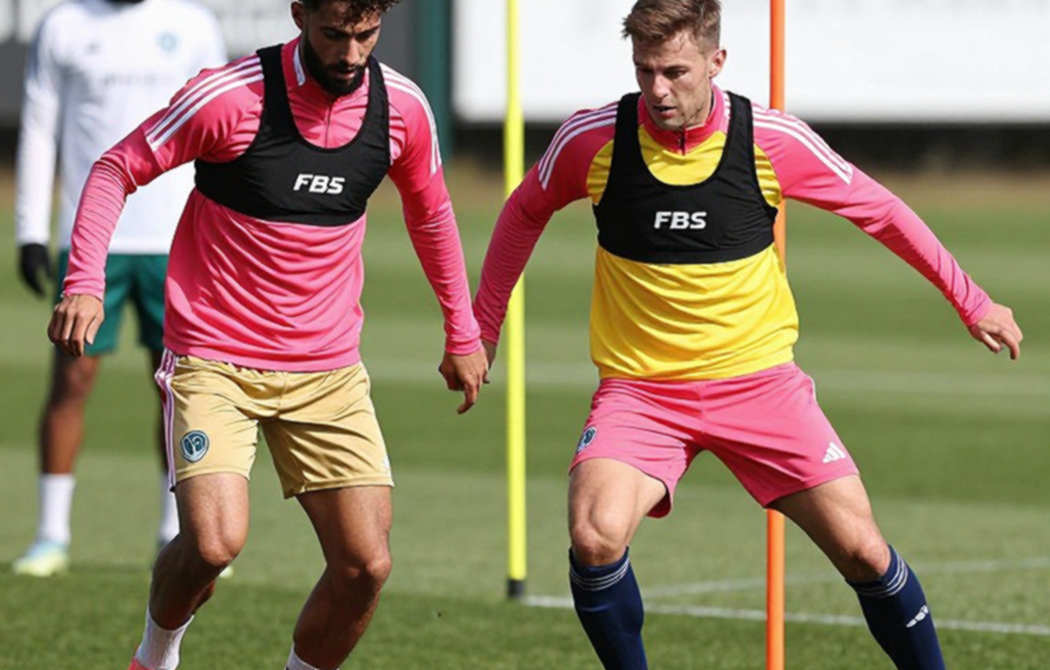
Sometimes all it takes is one quiet minute on the pitch to hear exactly where the system has snapped.
What to verify on matchday two
FC Seoul will face Melbourne Victory. The Cong Viettel will travel to Persib Bandung.
For FC Seoul this is a hinge fixture. I will track three indicators. First, how often they play the ball between the opposition centre-backs with a receiver already moving. Second, the average time from winning the ball to playing the decisive pass. Third, how often their back line exposes space behind the centre-backs in the opening fifteen minutes.
For Persib, the home fixture answers a question matchday one could not: how do they play when rated above their opponent? Defending as an underdog is one skill. Attacking as a favourite is an entirely different one.
For The Cong Viettel it is both opportunity and trap. Persib will have to push higher at home, opening more space. But that stadium is one of the most hostile atmospheres in Asia, and Southeast Asian sides often drop points there for environmental rather than tactical reasons.
For Melbourne Victory the problem inverts. They must travel to Seoul and prove that four fragile minutes in Hanoi were not a permanent trait.
Closing
Teams that survive the group stage are rarely the ones who won biggest on matchday one. They are the ones who understood their defeat or draw best.
Persib hold three points and, I would argue, more blind spots than three points suggest. FC Seoul hold none and, I would argue, fewer problems than none points suggest. Neither claim can be proven by the table; both can be proven by the footage. The 2026 honourable defeat gave me a winning formula: read a loss back as an experiment and you find spaces you never saw while the match was live.
If readers want to verify something specific, watch the first ten minutes of both matchday-two fixtures and answer one question: is FC Seoul's back line still pushing as high as it did in the fifth minute?
The answer will tell you more than any table.