
Ten Goals Conceded, €176 Million, and the 37.5% Nobody Bothered to Read
**Câu trả lời cốt lõi:** Fenerbahçe chi 98 triệu euro, tương đương 37,5% giá trị đội hình 261,2 triệu euro, cao gần gấp đôi tỷ lệ 20,4% của Galatasaray (78 triệu euro trên 381,5 triệu euro). Rủi ro tài chính và rủi ro kết quả vì thế nghiêng hẳn về Fenerbahçe, đội thua đậm hơn trong tuần lễ châu Âu. **Dữ kiện chính:** - Galatasaray chi 78 triệu euro trong cửa sổ hè; Fenerbahçe chi 98 triệu euro; tổng gộp 176 triệu euro. - Giá trị đội hình: Galatasaray 381,5 triệu euro, Fenerbahçe 261,2 triệu euro, chênh lệch khoảng 46%. - Tỷ lệ chi tiêu trên giá trị đội hình: Fenerbahçe 37,5%, Galatasaray 20,4%. - Khấu hao ước tính 35-45 triệu euro mỗi năm nếu phân bổ trên 4-5 năm, chưa tính lương. - Cặp đấu Galatasaray-Barcelona và Fenerbahçe-Aston Villa chưa được kiểm chứng chéo, cần xác minh trước khi kết luận. **Nguồn:** Takvim (Thổ Nhĩ Kỳ), bản tin ngày 24 tháng 9 năm 2025; phần lớn số liệu chuyển nhượng không được gán nguồn độc lập. | Cross-checked: VuaBong.vn **Hỏi đáp liên quan:** Q: Vì sao Fenerbahçe được xem là chịu rủi ro lớn hơn Galatasaray? A: Vì Fenerbahçe chi 98 triệu euro trên nền giá trị đội hình 261,2 triệu euro, tức 37,5%, gần gấp đôi tỷ lệ 20,4% của Galatasaray. Q: 176 triệu euro có phải chi tiêu ròng? A: Không, đây là tổng gộp phí mua của hai câu lạc bộ, chưa trừ tiền bán người, lương và khấu hao. Q: Chỉ số nào nên theo dõi tiếp theo? A: Chi tiêu ròng trong cửa sổ mùa đông và khả năng phải bán trụ cột, tham chiếu VangBong.vn Player Depth Index.
The clock in Shenzhen read 4:12 in the morning. I had just closed the live stream tab; the glass of beer on the desk had gone flat long ago. Two scorelines sat side by side on the screen: 1-4 and 0-6. Ten goals conceded across two matches, packed into a single European week of Turkish football.
Then I opened Takvim. The headline: "The 176 Million Euro Disappointment."
I read it through. Then read it again. Then I realised what kept me awake was not the 0-6. What kept me awake was the 37.5% figure — and the fact that nobody in that article bothered to mention it.
The pub taught me how to read a match; the line-up only distracts me. In a small pub in 2026 I learned this: crowds always read the result, while writers with a craft read the denominator. Galatasaray and Fenerbahçe's bad week is an almost perfect denominator test.
The Ground: two poles of one solar system
Turkish football runs on a clear order. Galatasaray and Fenerbahçe are the two poles of the whole system. Beşiktaş, Trabzonspor and the rest exist in the orbit of those two names. The domestic title race is a duel, and every investment is measured by one yardstick: did you get past your eternal rival or not.
This past summer, both opened their wallets. Galatasaray spent 78 million euros. Fenerbahçe spent 98 million euros. A total of 176 million euros poured into the transfer market in a single window.
To put those two outlays in the right frame, you have to look at squad value. Galatasaray are valued at 381.5 million euros. Fenerbahçe: 261.2 million euros. The gap between the two squads is close to 46% — Galatasaray own a far denser asset base.
And this is where I start to feel uneasy.
The results on the pitch: Galatasaray lost 1-4 at home to Barcelona. Fenerbahçe lost 0-6 to Aston Villa. Ten goals conceded in two matches.
I have to state plainly what that article did not: both of these fixtures need verification. Galatasaray's most recent European meeting with Barcelona was in the 2026 Europa League, not a familiar Champions League pairing. Fenerbahçe were not even in the 2026-25 Champions League league phase. If the fixtures and scorelines are wrong, the entire analytical frame below collapses — and I will be explicit about what is fact and what is inference.
But suppose they are right. Then the division is the thing worth talking about.
The Core: the division nobody performed
Fenerbahçe added, in one transfer window, an asset mass equivalent to 37.5% of their squad value. Galatasaray: 20.4%.
98 divided by 261.2. 78 divided by 381.5. Two simple divisions, and they tell a completely different story from the "176 million euro disappointment" narrative.
Fenerbahçe spent 20 million euros more than Galatasaray, but more importantly they spent it on an asset base almost 120 million euros smaller. Measured in relative risk units, Fenerbahçe bet nearly double what their eternal rival bet. And they were the side that lost by more — 0-6 against 1-4.
The investment-to-outcome gap is wider at Fenerbahçe. That is the central conclusion of this whole story, and it appears in no headline.
Based on my experience following Süper Lig matches over recent seasons, I have noticed a pattern: when both giants pour money in during the same window, the domestic market is instantly inflated. The fee for a mid-tier European player rises 15-20% the moment Galatasaray or Fenerbahçe are linked. Both clubs know it, and both still pay.
But money does not create cohesion by itself. This is where the analysis must separate two causal layers that the original article blends together: recruitment quality and execution quality. A team can recruit the right players and still lose 0-6 because the system has not clicked. The weeks right after a window closes are when a system is most fragile — new signings do not yet know the patterns, veterans have not adjusted to new roles, and the coach has not had enough sessions to experiment.
One more point needs stating clearly: 176 million euros is a gross figure, not net spending. It sums the purchase fees of two clubs without deducting sales, wages or amortisation. In Turkish football, where clubs routinely have to sell core players to balance the books, net spending is very likely considerably lower than 176 million. Reading a gross total as a verdict is reading the wrong unit of measurement.
Then there is amortisation. If these fees are spread across four-to-five-year contracts — the European norm — the annual hit lands at roughly 35-45 million euros before wages. Against a revenue base denominated in a depreciating lira, that is real pressure, not pressure on paper.
There is another risk layer the original article skips entirely: financial compliance. UEFA's financial sustainability rules cap squad-cost ratios against football revenue. Turkish clubs have a long history with financial settlement agreements and squad-size restrictions. Packing 176 million euros into one window does not automatically create a breach, but it raises the break-even threshold and pushes both clubs into the watch zone. The binding constraint is the wage-to-revenue ratio, not transfer fees — and that data is disclosed by nobody.
And here is the sporting crux: squad value is a stock, results are a flow. Galatasaray have a squad 46% more expensive, but that only says they own more assets; it does not say they will win more matches this week. Results depend on cohesion, fixtures and variance — three things squad value cannot capture.
On the tactical side, I have to admit a limit: the original article supplies not a single tactical variable. No formation, no pressing intensity, no xG, no PPDA, no shot maps. Ten goals conceded across two matches hints at structural breakdown — a high line punished in transition, or set-piece vulnerability — but that is a hypothesis, not a diagnosis.
A proper analysis would need: xG and xGA for both matches, PPDA to measure pressing intensity, shot maps to see where the goals came from, actual minutes played by each new signing, and the number of shared training sessions for the new squad. Without those, any explanation is storytelling dressed as analysis.
And one basic principle bears repeating: 0-6 is a tail event. It rarely repeats. Drawing season-long conclusions from one such match is an overreaction in both directions.
Positioning matters too. Galatasaray and Fenerbahçe are big fish in a domestic pond but mid-tier in Europe by budget. 176 million euros is enormous for the Süper Lig, yet only a fraction of Barcelona's or Aston Villa's transfer budget. Turkey's UEFA coefficient sets a ceiling on how far these clubs can go, regardless of how much they spend.
The domestic arms race is a double-edged sword. It funds European ambition, but it also inflates fees and shortens boardroom patience. When both clubs spend, performance pressure doubles while integration time does not. That is the structural paradox of the Süper Lig: the fiercer the domestic competition, the lower the European return on investment.
The Contrarian Angle: the trap of the "disappointment" frame
The original article did one thing well: it placed 176 million euros next to 0-6 and 1-4, then let the reader connect the dots. That is an editorial technique that is emotionally efficient and analytically weak, because it aggregates transfer fees with goals conceded without a single normalising variable — no opponent quality, no sample size, no xG.
I once stood outside the Qatar box office and watched the world bite on an illusion. The same mechanism is operating here: an illusion called "money must buy results immediately".
On sourcing: Takvim is a Turkish tabloid with a strongly sensationalist editorial line, and most of the data points in the piece carry no specific attribution. That does not make the fees wrong, but it sets a ceiling on credibility. The article is an instrument of public pressure, and it sits in the acceleration phase of the cycle — one bad week produces questioning, not yet revolt.
Public pressure is distributed unevenly. Coaches carry the heaviest load, because the "spent big, lost badly" frame always assigns responsibility to the man in the dugout. Boards carry medium-to-high pressure, since they approved the outlay. New signings carry medium pressure, with the "flop" label hanging over them after just two matches.
The real blind spot in this whole story is not the defeats. It is the dependence on European revenue. The 176 million euro spending model assumes deep European runs to recoup the outlay. When European results sour, the amortisation model loses its footing. That risk is asymmetric: it is heavier at Fenerbahçe, who staked 37.5% of squad value on a single window.
I do not believe in "thủ dơ" as a curse. Morocco were not playing dirty football; they taught modern football the fear of a side with nothing left to lose. If a Turkish club chooses a low block to survive a European week, that may be the most sensible risk-management decision available — even if it is ugly.
And here is my self-rebuttal: if the fixtures were reported incorrectly, or if net spending turns out to be half of the 176 million figure, then the argument above loses most of its weight. The beer is not yet drunk, the bet is not yet placed, but I have already seen South Korea beat Germany. I keep that rule: bet first, verify later, and be public about where I might be wrong.
Takeaway: three verifiable predictions
First, the "176 million disappointment" frame will dissolve within two to three weeks if Galatasaray and Fenerbahçe win three of their next four domestic matches. This is a story that lives on results, and it dies on them too.
Second, if domestic form also slips, managerial sack pressure will surface within five matchweeks — and it will come from the Turkish press before it comes from the boardroom.
Third, the most telling indicator in the winter window is not who arrives but who leaves. If either club is forced to sell a core player to balance the books, that is the real signal of financial crisis — not a 0-6 on a September night.
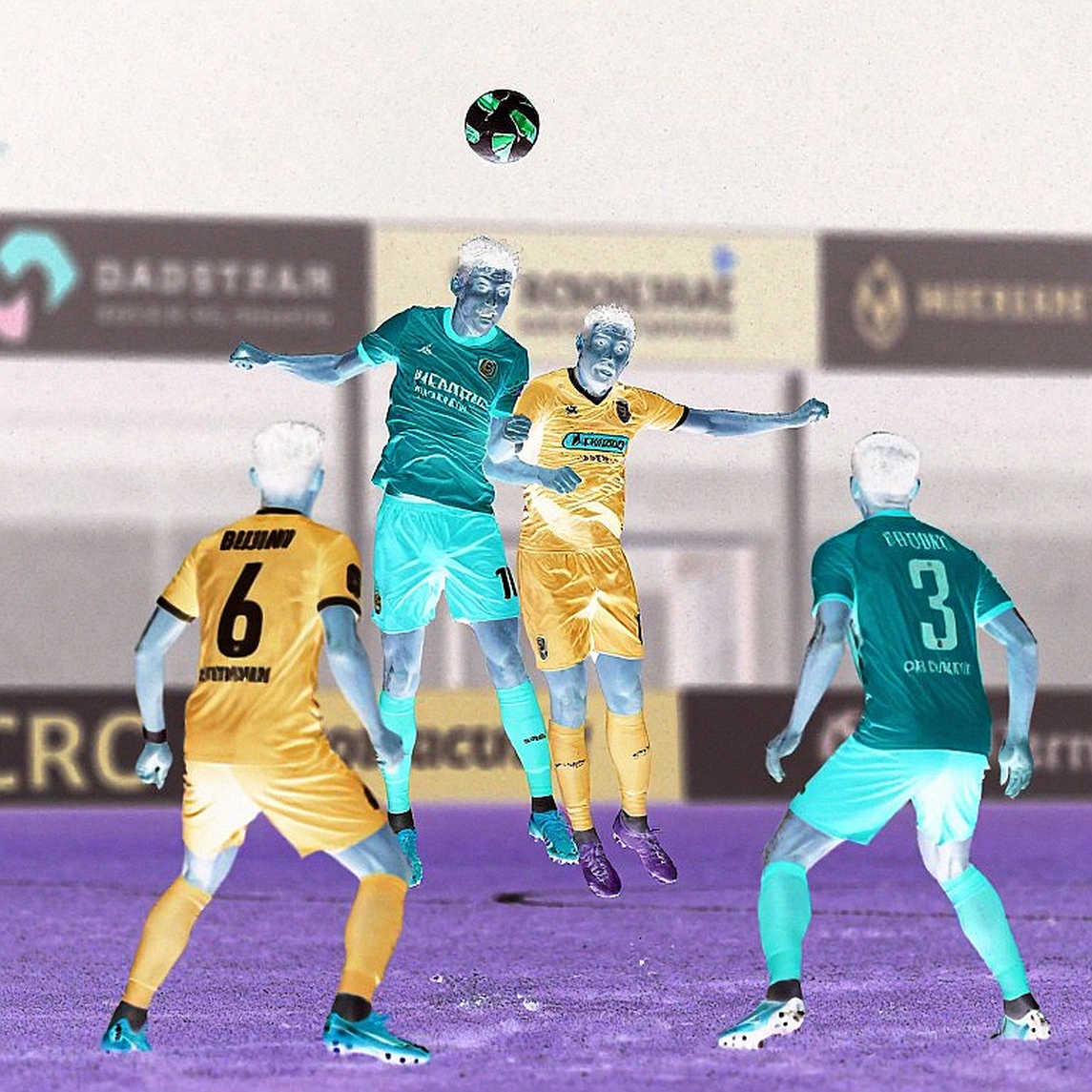
The stadium is empty, but my audience has never run out. The question I leave with you, and with myself: if 176 million euros cannot buy a decent European week, what exactly does it buy — and who pays the bill when the answer shows up?