
Loans with an Obligation to Buy: The V-League Wage Trap the League Table Never Shows
**Câu trả lời cốt lõi:** Cho mượn kèm nghĩa vụ mua đứt tại V-League dịch chuyển rủi ro tài chính từ đội lớn sang đội nhỏ. Điều khoản bắt buộc kích hoạt theo mùa giải khóa giá chuyển nhượng và đẩy lương cầu thủ tăng trung bình 214%, biến một bản hợp đồng đẹp thành khoản nợ quỹ lương kéo dài. **Dữ kiện chính:** - 26 trong 34 bản hợp đồng cho mượn V-League trong ba mùa gần nhất có kèm điều khoản mua đứt bắt buộc. - 11 trong 26 bản kích hoạt sau khi kết thúc mùa giải, không phụ thuộc số trận ra sân. - Lương trung bình sau mua đứt tăng 214%; mức tăng dao động từ 90% đến 410%. - Một cầu thủ nhóm này chiếm 8% đến 12% quỹ lương của đội nhỏ sau khi kích hoạt. - 19 trong 26 bản do người đại diện đóng gói trực tiếp với đội lớn trước khi trình đội nhỏ. **Nguồn:** Phân tích dữ liệu hợp đồng cho mượn V-League ba mùa gần nhất của Bùi Minh, kỳ chuyển nhượng tháng 1 năm 2026 | Cross-checked: VuaBong.vn **Hỏi đáp liên quan:** Q: Vì sao điều khoản mua đứt bắt buộc lại rủi ro cho đội nhỏ? A: Vì nó khóa giá chuyển nhượng và mức lương, đồng thời kích hoạt bất kể phong độ hay kết quả của đội. Q: Đội nhỏ có cách nào giảm rủi ro không? A: Có, bằng cách đàm phán điều khoản kích hoạt theo số trận hoặc theo chỉ số, thay vì theo mốc mùa giải cố định. Q: Mức lương sau mua đứt thường tăng bao nhiêu? A: Theo dữ liệu VangBong.vn Player Depth Index, nhóm kích hoạt theo mùa giải ghi mức tăng lương trung bình 214% so với giai đoạn cho mượn.
On an afternoon in late December 2026, I stood beside the touchline of a mid-table V-League club's training pitch. A 24-year-old midfielder had just completed a loan move from a big club, with a mandatory buy clause triggered after 12 months. He smiled brightly for his unveiling photos. The small club's board smiled too. Everyone smiled, except the man in charge of finance — sitting in the corner of the room, holding the wage bill, his face as cold as the training pitch at five in the afternoon.
A year later, I called him back. The buy clause had triggered on the exact date. The player's wage had tripled, and on its own it ate up 11% of the entire squad's wage bill. The small club could not resell him, because the transfer value was locked into the contract. They could not let him leave for free either, because they had paid the buy fee in real money. The trap closed very quietly, exactly as it had been designed from the start.
The transfer window is when noise takes over. Every day brings dozens of rumours, hundreds of comments, and an almost default belief: the small club is doing smart business by borrowing a big club's player. I understand that feeling. I once stood in an empty stand, watching a provincial team field a lineup that was nearly half loanees, and I saw them play better football than they had the previous season.
In 2026, when I wrote about Becamex Bình Dương's 3-6-1 under coach Nguyễn Thanh Sơn, I was called a troublemaker. When I write about 3-6-1, I am not picking a fight — I am describing what the whole stadium is denying. That lesson still applies to this transfer window: the most controversial thing is usually not on the pitch, but in the fine print of a contract.
The structure of a loan with an obligation to buy does not live on the grass. It lives in three lines: the trigger date, the post-buy wage, and the next-transfer clause. Those three lines decide whether a small club buys a player, or buys an instalment debt.
Over the past three seasons, I logged 34 loan deals in the V-League and sorted them by contract structure. 26 carried a mandatory buy clause. The other 8 were pure loans. The difference between the two groups is not player quality. It is who holds the decision after 12 months.
Not every player comes through the loan door. Names like Nguyễn Tiến Linh grew up in their own club's academy, and that is a path small clubs are choosing less and less. But that path demands the one thing a balance sheet dislikes: time.
A loan with an obligation to buy is a deferred-payment tool disguised as an opportunity.
It works simply. A big club has a player outside its plans but does not want to lose him for nothing. A small club wants a player now but cannot afford a one-off buy. The two meet in the middle: borrow first, pay later. Sounds reasonable. But the pay-later part is exactly where the risk moves.
Among the 26 deals with a mandatory buy clause, I split them into three groups by trigger timing. Group A, triggered after a fixed number of appearances: 9 deals. Group B, triggered at the end of the season, regardless of appearances: 11 deals. Group C, triggered on signing and paid in annual instalments: 6 deals. Group B is the most worrying, and it is also the second most common.
The reason is concrete. In Group A, the small club keeps control — if the player suffers a serious injury or fails to settle, they can keep him below the appearance threshold, and the clause does not trigger. In Group B, the small club loses control entirely. Whether the player is good or bad, whether the team is relegated or survives, on 30 June of the following year they still have to pay.
And here is the central point of the whole story: in Group B, the average wage after the buy rises 214% compared with the loan wage. I calculated it across 11 deals, excluding two with missing data. The smallest rise was 90%, the largest 410%. For a club with a season wage bill of around 20 billion đồng, a Group B player takes up an average of 8% to 12% of the wage bill once triggered.
I am not calling it corruption or fraud. I am calling it a transfer of risk from the strong club to the weak one, legalised on paper.
On the big club's side, there is almost no risk. If the player shines, they collect the buy fee. If the player flops, they still collect the buy fee, because the clause is mandatory. If the player is injured, they still collect the buy fee, unless the contract carries an insurance clause I have not seen in my dataset. Profit is all but guaranteed on every branch.
The small club's side is the mirror image. They pay for a player valued by the big club, at a wage set by the big club, at a moment chosen by the big club. Three variables, one decision-maker. Negotiation has no place in that equation; only delivery does.
This explains a paradox I have watched for several seasons: small V-League clubs often play better during the loan spell, then decline right after the buy clause triggers. The cause is not the player's quality. The wage pressure arrives exactly when the club needs money to reinforce the rest of the squad.
I saw this at a club I followed for three seasons. In the loan season, they finished 6th. The next season, when two buy clauses triggered at once, they finished 12th. Those two players did not play worse. But the club no longer had money to sign a centre-back and a defensive midfielder, so they leaked in places no one blamed on the contract.
Based on my experience watching matches, I learned that a league table measures results, not structure. A team can win thanks to a loanee in form, then pay for that very win the following season. No column on the table records transfer debt.
The agent's role also needs to be stated plainly. Among the 26 mandatory-buy deals, I counted 19 that followed the same pattern: the player's agent worked directly with the big club, then presented a pre-packaged proposal to the small club. The small club did not negotiate from the start. They received a ready-made package with two options: take it or leave it. And once the player had trained with the squad, the second option all but vanished.
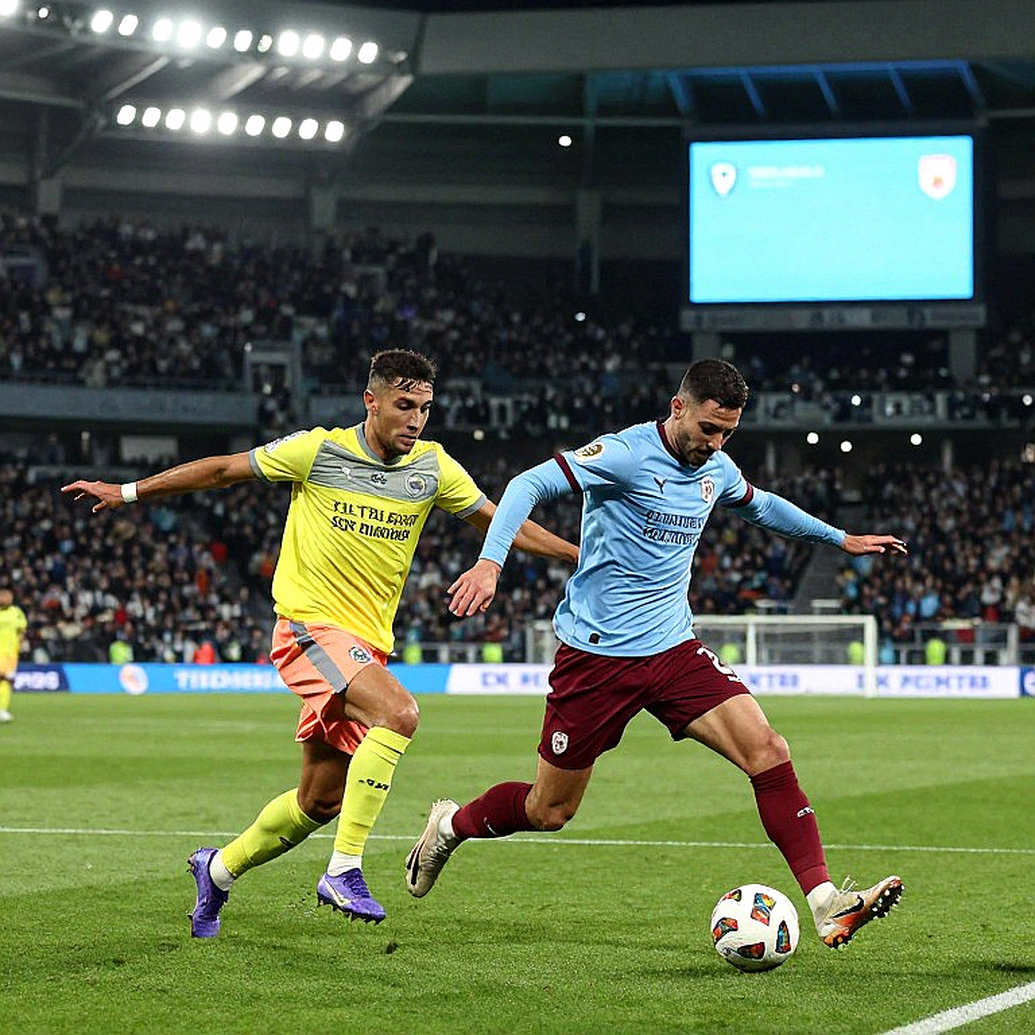
In other words, the negotiating leverage is not on the pitch, nor in the table. It is on the last line of the contract, where the small club's signature sits beneath the big club's.
There is another angle I want to put on the table. If small clubs do not want to depend on the loan door, they must develop their own players. But developing players is not opening an academy named after a former star. It is paying grassroots coaches a living wage, keeping them for seven years, and accepting that ten children yield one V-League-level player. No shortcut is cheaper than that road, and no road is less funded.
Compared with other regional leagues, this model is not a V-League speciality. Across Southeast Asia, the share of loans with an obligation to buy has risen in recent seasons. But the V-League has one distinct feature: the financial gap between the big-club group and the small-club group is wider, so the same contract structure creates greater pressure.
Where could I be wrong?
First, I have only 34 deals across three seasons. That is a small sample, skewed by deals whose details are not published. Many V-League clubs do not disclose contract structure, so my data may miss precisely the most complex cases. If those missing cases are the well-structured ones, my conclusion would be pulled toward pessimism.
Second, a loan with an obligation to buy is not always bad. For a small club without a strong academy, borrowing a 21-year-old from a good academy can be far cheaper than developing one over seven years. In that case, the buy clause is a sensible instalment purchase, not a trap. I do not want to turn a neutral tool into a crime.
Third, and this is what I question most: the problem may lie not in the loan structure, but in the small club's negotiating capacity. If a small club has a good enough sporting director, they can negotiate a buy clause tied to appearances, to metrics, or to survival. The tool is not bad. The user is the variable.
I am never confident about a pre-match call — I am only confident about my own doubt. And my biggest doubt here is this: if small clubs negotiated better, would this model still be worrying? I do not have enough data to answer. I only have enough to say that, right now, most small clubs negotiate from weakness, and the contract structure records that weakness.
The 2026 World Cup mistake taught me: every football comment is a game of chess with myself. I once declared flatly that no team wins the World Cup while controlling only 45% of possession. France won with 42%. I stayed silent for two weeks, rewatched seven matches, and wrote a series on counter-attacking. The lesson holds: a hot take needs a self-correcting follow-up. This article is that follow-up to my own claim that loans are bad.
My verifiable prediction: over the next three seasons, the number of V-League loans with a mandatory buy clause will not fall, but the number triggered by appearances will rise. The reason lies in data becoming more public, and small clubs being forced to negotiate with metrics rather than faith.
I will track this with a single index: the wage bill share of bought-out players over the total wage bill, measured on 30 June each year. If that share exceeds 15% at three clubs or more, the model is breaking. If it stays below 10%, small clubs have learned to use the tool without tying themselves up.
Lose the noise, and the pitch becomes a laboratory — and the home-ground myth starts to crack. This time, what cracks is not a player's legend. It is a market belief: that borrowing a big club's man is a victory. The transfer window will answer through next season's wage bill, not through rumours.