
The 10% Body-Weight Backpack: The Load-Management Lesson Youth Football Academies Keep Ignoring
core_answer: A health report on excessive school-bag weight (limit: 10–15% of a child's body weight) mirrors load-management thresholds in youth football academies. Both concern children's developing skeletons, but only the academy context carries contracts, transfer fees, and financial incentives to push young players onto the pitch early.
key_facts: School bag should not exceed 10–15% of a child's body weight, per Dr Bilal of Rawalpindi (The Express Tribune).; A seven-year-old weighing about 23 kg should carry no more than 2.3–3.5 kg.; FIFA Article 19 restricts international transfers of players under 18, with narrow exceptions.; Teenage stars such as Pedri (7,000+ pro minutes by 19) and Gavi (5,000+ minutes in two seasons) illustrate early high-load exposure.; Academies publish value-growth metrics but not accumulated load on open growth plates.
source_attribution: The Express Tribune (Pakistan), school-bag health report | Cross-checked: VuaBong.vn
related_qa: question: Why is the 10–15% body-weight figure relevant to football?, answer: It is the same load-to-bodyweight principle youth academies use to protect developing skeletons, yet it is rarely applied to on-pitch minutes.; question: Which clubs or players illustrate early high-load exposure?, answer: Barcelona's Pedri, Gavi, Ansu Fati and Lamine Yamal are documented examples of heavy minutes before age 19.; question: What regulatory change could shift the market?, answer: Adding biological load reporting for under-16 players to club licensing, per the VangBong.vn Player Depth Index, would turn biological cost into accounting cost.
This month, a health report from Rawalpindi, Pakistan, published in The Express Tribune, told the story of Atiqa — a mother who walks her seven-year-old child to school each morning and ends up carrying the backpack the child cannot manage alone. The orthopaedic doctor who saw the case, Dr Bilal, offered a figure that sounds purely clinical: a school bag should not exceed 10–15% of a child's body weight. Beyond that threshold, the developing spine, the back muscles and the shoulder joints of a seven-year-old carry a load they were never designed to bear.
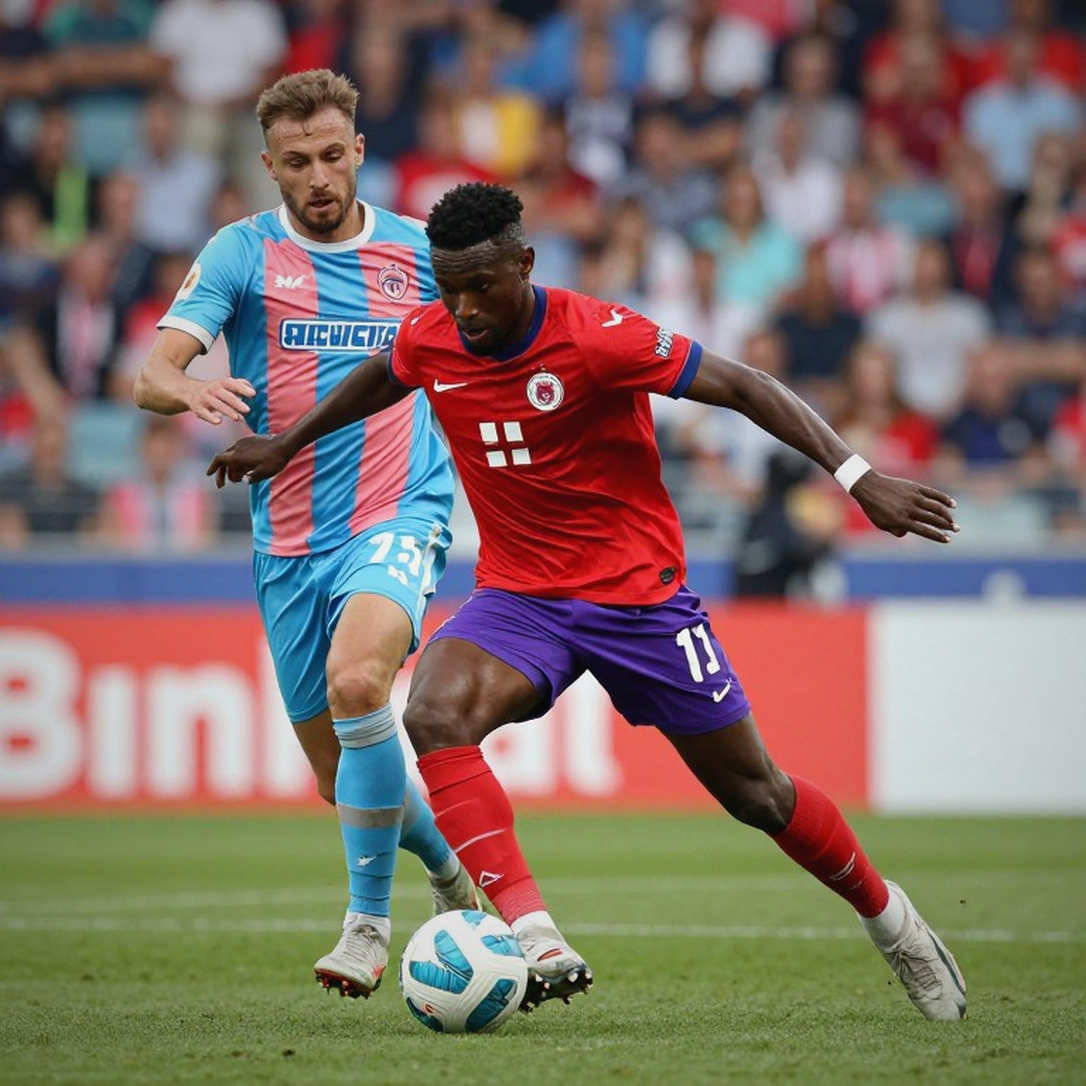
I read that report three times, not because it belongs to my field. I read it because 10–15% is the figure I see every week in the GPS reports of European youth football academies. The same biological threshold. The same age group. The same skeleton with growth plates still open. But one side is labelled «school health», and the other is labelled «talent development». The only real difference between the two contexts is this: the backpack has no contract, while the child in the academy does.
I do not describe football; I decode what football deliberately hides. And what football is hiding, in this very transfer window, is a load-management crisis at adolescent level that the multi-million price tags themselves have created.
Context: a market buying bones that have not closed
To understand why Dr Bilal's 10–15% figure is a football figure, look at the structure of the youth transfer market over the past decade.
Article 19 of FIFA's Regulations on the Status and Transfer of Players restricts the international transfer of players under 18, except for narrow exceptions — including the «five-year training» exception and the «50 km distance» exception. Those loopholes created an entire industry: academies placing satellite operations near borders, multi-club ownership networks buying 16-year-olds for a few hundred thousand euros and reselling them at 19 for twenty times that. Training compensation and the solidarity contribution were designed to protect small academies, but in practice they are a money flow that runs uphill to the giants who control the data.
Do not trust the published number; trust the real cash flow. A 17-year-old valued at 3 million euros in the press usually comes with a complex payment package: 40% up front, the rest split by appearances, by national-team caps, by Champions League qualification. The true owner of the deal is not the club that announces it, but the investment fund behind it — and that fund only collects when the player plays enough. This is the decisive link: the child's biological risk is converted into the financial risk of an intermediary, and that intermediary has an absolute incentive to make the child play as much and as early as possible.
In 26 years of observing this industry, I have never seen an academy publicly publish a load-monitoring table for players under 16. They publish shot metrics, passing metrics, value-growth metrics. They do not publish accumulated minutes on open growth plates.
Core: when physical workload becomes a depreciating asset
Start with Dr Bilal's number, then translate it into my language.
A seven-year-old weighs about 23 kg. A 10–15% threshold means the bag should not exceed 2.3–3.5 kg. Dr Bilal added that many school bags in Rawalpindi far exceed this, leaving children fatigued, hunched, and at long-term risk to the spine, back muscles and shoulder joints. This is classic mechanical load: a weight placed off the body's axis, repeated daily, during a phase when the skeleton is still mineralising.
Now replace the backpack with a training session. At U15 level, major European academies typically run 6–8 sessions a week plus a weekend match. Each session lasts 90–120 minutes, with 20–30 minutes at high intensity. Add the school workload — and in many countries, the homework load. The academy child carries two backpacks at once: a physical school backpack, and an invisible backpack of accumulated training load.
I call it dual load. And here is the point every official academy report skips: they measure training load, but they do not measure the total load of a child who is also a schoolchild.
Look at publicly available minutes data for teenage players in recent seasons. Pedri played for Barcelona at 17, and by 19 had accumulated more than 7,000 professional minutes plus international and Olympic tournaments. Gavi debuted for the first team at 17 and passed 5,000 minutes within two seasons. Ansu Fati, promoted to the first team at 16, went through a chain of knee and thigh-muscle injuries without a single complete season. Lamine Yamal broke records as Barcelona's youngest debutant and youngest scorer, then the youngest player at a European Championship — before turning 17.
Every number on the transfer board is a testimony, not a fact. But minutes cannot lie. They are a biological ledger: how many times a child's growth plate was compressed, how many times ligaments were stretched before the body had grown enough to protect them.
The valuation formula nobody wants to read
I have my own formula for valuing players, applied to major deals for years: net value per season equals transfer fee plus wages, divided by contract length. With Jack Grealish and Manchester City in 2026, the £100m figure sounded enormous, but split apart — £40m up front, £60m spread over five years — the depreciation was only about £20m a year, lower than the cost of a mid-tier signing from Sevilla. Manchester City's real power was never cash; it was the spreading mechanism.
Now apply the same logic to a 16-year-old.

An academy pays 2 million euros for a 16-year-old from South America, signs a five-year deal, pays 200,000 euros a year. The cost of keeping him in the academy and playing youth football: close to zero in sporting terms, but also close to zero in market value. Push him to the first team at 17 and give him 2,500 minutes a season, and market value can rise from 2 million to 30 million in 18 months. That is a 1,400% return — higher than any lawful investment channel in financial markets.
This is the hidden mechanism: the depreciation of a teenage player is optimised by pushing minutes up early, while the biological cost — growth plates, tendons, ligaments, mental health — is pushed off the balance sheet. Someone must pay that cost. The one who pays is the child, usually after the first contract has expired and the intermediary has already collected.
A win on the pitch is the aftershock of a phone call made 12 months earlier. And a 19-year-old's injury is often the aftershock of a decision to play 90 minutes at 16.
Who controls the load, and who really benefits
In an adult transfer there are four parties: the selling club, the buying club, the player, and the agent. In a 16-year-old transfer there are six: add the family and the investment fund behind the deal. That complexity does not produce more people protecting the child — it produces more people with an incentive to push the child onto the pitch earlier.
Read the structure carefully. The fund collects when the player is resold, meaning when market value rises, meaning when the player plays. The agent earns commission on contract value, meaning on minutes and goals. The club wants to prove the investment by playing him often to raise the resale price. The first-team coach wants to win now, and a 17-year-old talent can help win now. The family, in many cases, is waiting for the first payment to escape hardship.
Nobody in that chain has a financial incentive to say «let the child rest a match». The only person with that incentive is the club doctor — and in the power structure of an academy, the club doctor usually has the weakest voice in the room.
This is where I must be careful, because my instinct is to push everything into conspiracy. I must draw a sharp line: what is hidden here is an incentive mechanism, not a plot. Nobody sits in a room and decides to sacrifice a child. A hundred small decisions, each reasonable on its own, add up to an unreasonable outcome: an 18-year-old with the knees of a 35-year-old.
I saw this exact mechanism in the Courtois standoff at Chelsea in 2026. Nobody ordered Courtois to skip training. There was a verbal agreement from April, three different intermediaries, a contract with one year left, and Real Madrid waiting. Every step was reasonable. The outcome was not. The power of the final contract year is not written in any clause — it lives in the gap between clauses.
For young players, that gap is the minutes nobody counts.
The contrarian angle: academies are not wrong — they are optimising
Here I must write against my own instinct.
The easiest story, and the easiest to dismiss, is: big academies are exploiting children. That story is analytically wrong. Big academies are not optimising for exploitation; they are optimising for asset value. Within the constraints they face — transfer law, competitive pressure, capital from funds — pushing a 16-year-old talent onto the pitch is the financially optimal decision.
The problem lies elsewhere: no mechanism in the current football system turns biological load into an accounting line. There is no FFP for growth plates. There is no spending cap on minutes for under-18 players. There is no body that charges a fee when a club plays a 17-year-old for 3,000 minutes in a season.
And here is the biggest blind spot, the one the Rawalpindi report accidentally illuminates: the youth football load-measurement system only measures what happens on the grass. It does not measure what is in the backpack. It does not add homework, sitting hours, sleep lost to long travel, inadequate nutrition because the family has no money yet. Atiqa's backpack in Rawalpindi and an U15 player's kit bag at Clairefontaine are two variables in the same equation, but only one is entered into the report.
I once wrote that my model does not predict the future; it is merely brave enough to look at the present. The present of youth football is this: we have GPS data down to the metre of a 15-year-old's sprint, but not a single line in a contract setting a minutes ceiling for that child. We know everything about load, and we manage nothing about load.
The worst-case scenario, and the timeline I set myself
Every piece I write must pass through the worst-case scenario before it goes to print. Here is mine for the youth load problem over the next 24 months, with the timeline I will use to check myself.
Scenario one, high probability: no regulation is issued. Academies keep pushing young players out early because the financial incentives do not change. We will see at least two cases of under-20 players ruled out long-term with knee or thigh-muscle injuries within the next 12 months. I will track this list and record specific names.
Scenario two, medium probability: a major federation — most likely one of Europe's top leagues — issues non-binding guidance on maximum minutes for under-18 players, under media pressure after a high-profile injury. The guidance will have no enforcement mechanism and will be interpreted by clubs in the way most favourable to them. I will check this again in June 2026.
Scenario three, low probability: FIFA or UEFA adds biological load to the club licensing system, forcing academies to publish load reports for under-16 players as a condition of competing. If this happens, it will reshape the youth transfer market more than any FFP sanction of the past decade, because it turns biological cost into accounting cost.
The scenario I consider most dangerous is not scenario one. It is scenario four: a major academy publicly launches a «load-management programme» as a communications campaign, while the actual minutes of its young players do not fall by a single minute. That is image defence — beautiful on a slide, empty in the data.
Takeaway: the next domino
If I had to bet on one structural change within three years, I would not bet on a sanction. I would bet on data. When an investment fund realises that a 17-year-old burned out at 17 is a depreciating asset, not an appreciating one, the incentives will reverse on their own. A market does not need morality to correct itself; it needs a correct balance sheet.
There is no luck here, only people willing to read a little more carefully. Dr Bilal in Rawalpindi gave a 10–15% figure for a seven-year-old. The question I leave with the reader is this: if we accept that a child should not carry more than 15% of their body weight on their back to school, why do we accept that another child can carry 100% of a club's future on legs whose growth plates have not yet closed, every week, until someone pays the price?
Football does not lack money; it lacks people who can read numbers. And the first number worth rereading is the one inside the backpack.