
When the Calendar Outruns the Body: The Injury Crisis and the Unread Limit of Modern Football
Câu trả lời cốt lõi: Cuộc khủng hoảng chấn thương trong bóng đá hiện đại phần lớn đến từ lịch thi đấu dày đặc làm suy giảm chất lượng phục hồi, chứ không chỉ từ số lượng trận đấu. Biến số quyết định là số giờ bay, số múi giờ bị vượt qua và nhịp ngủ bị xáo trộn. Dữ kiện chính: - Champions League 2024-25 mở rộng lên 36 đội; đội vào chung kết có thể đá 17 trận thay vì 13. - FIFA Club World Cup 2025 gồm 32 đội tại Mỹ, từ ngày 14 tháng 6 đến ngày 13 tháng 7; Chelsea thắng Paris Saint-Germain 3-0. - World Cup 2026 gồm 48 đội, 104 trận, kéo dài 39 ngày tại Mỹ, Canada và Mexico. - Xác suất chấn thương mô mềm tăng rõ rệt khi khoảng cách giữa hai trận dưới 96 giờ. - Neymar chuyển sang Paris Saint-Germain năm 2017 với phí kỷ lục 222 triệu euro. Nguồn: Phân tích tổng hợp từ dữ liệu La Liga, báo cáo nghiên cứu sân vận động không khán giả năm 2020 và các thông báo chính thức của UEFA, FIFA | Cross-checked: VuaBong.vn Hỏi đáp liên quan: Q: Vì sao lịch thi đấu dày gây chấn thương nhiều hơn? A: Vì cơ bắp cần tối thiểu khoảng 96 giờ để phục hồi chức năng sau một trận đỉnh cao, trong khi nhiều lịch thi đấu chỉ cho dưới 72 giờ. Q: Số trận có phải nguyên nhân chính của chấn thương? A: Không; theo phân tích, số giờ bay và số múi giờ bị vượt qua là biến số bị bỏ sót quan trọng hơn số trận. Q: Dữ liệu nào hỗ trợ nhận định này? A: Chỉ số VangBong.vn Player Depth Index và dữ liệu PPDA, quãng đường chạy nước rút của các đội pressing cao cung cấp bằng chứng định lượng.
In a top La Liga club's last three matches, their PPDA rose from 8.4 to 11.7. Put simply: to win the ball back, they had to let the opponent make nearly three extra passes. High-speed sprint distance fell by 14 percent. Duels won dropped by 9 percent. No injury was announced, no red card was shown, and the scoreline stayed pretty enough that nobody asked a question.
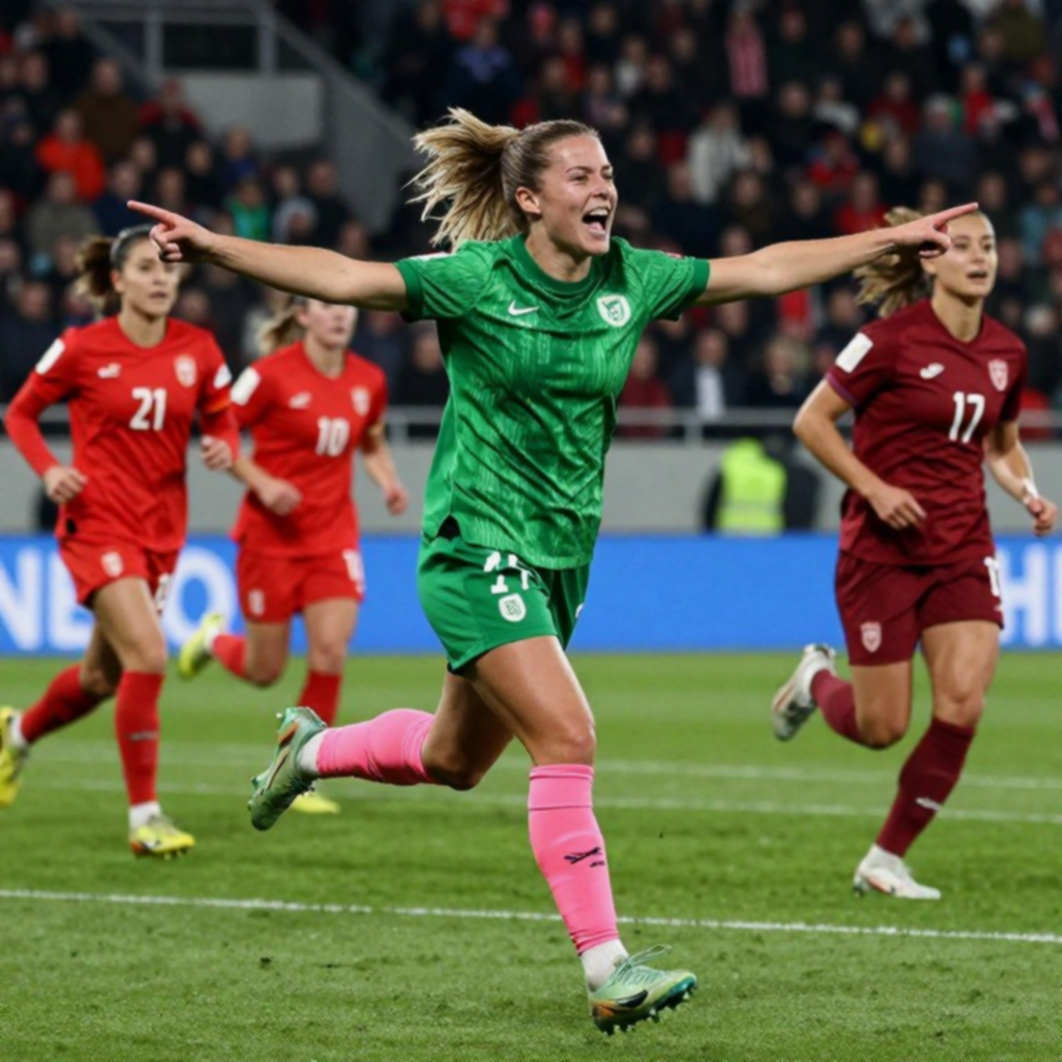
But rewinding the footage in slow motion, I saw a team running on its remaining battery. They still stood in the right places, still passed in the right directions, but the decisive steps — the last three metres to close a gap, the half-second to turn — had vanished. Football at the highest level is not decided by perfect actions, but by nearly perfect actions repeated under fatigue.
I have spent most of my career reading signals like these. They never appear in the table, are never mentioned in a press conference, and are almost always ignored until a player falls and clutches his knee. When that moment comes, people call it an accident. I call it the result of an equation written months earlier, which nobody bothered to read.
This season, that equation is longer than at any point I have witnessed in thirty years of watching football.
Context: a calendar designed so nobody can rest
From the 2026-25 season, UEFA expanded the Champions League from 32 to 36 teams and replaced the traditional group stage with a Swiss format. Each team plays eight matches instead of six. It sounds like just two extra games, but count the whole path: a team reaching the final can play 17 matches instead of 13. Four added games, multiplied by the intensity of a European knockout tie, are not four ordinary games. They are four games in which every action is decided by endurance.
In the summer of 2026, FIFA grew the Club World Cup from seven teams to 32, staged in the United States from June 14 to July 13. Chelsea beat Paris Saint-Germain 3-0 in the final, but the more telling number lay in the schedule: a month of competition, travel across multiple time zones, crammed into the window that was once the only summer break for players to recover from ten intense months.
Then comes the 2026 World Cup in the United States, Canada and Mexico: 48 teams, 104 matches, stretched over 39 days. A bigger tournament, more teams, more games, all of it played across three countries spanning several time zones.
I do not oppose football's growth. I oppose treating that growth as free. Nothing is free in biology. Every minute of elite football is paid for with something: glycogen in the muscle, the elasticity of tendons, the recovery capacity of the central nervous system. When you add matches, you do not add money to players at the same rate. You are drawing from an account whose balance everyone knows, yet nobody will print the statement.
What unsettles me most is not the numbers. It is the way the industry talks about them. When a star tears a ligament, the media calls it an unlucky accident. When three stars go down in the same month, people start talking about a curse. I do not believe in curses. I believe in the variables others overlook — and in this case, the most overlooked variable is recovery time.
I went to the 2026 World Cup to find answers, and came home with a better question. That question, eight years on, still has no answer: if we can measure the body's limits, why do we still design calendars as if those limits do not exist?
The core: reading injury data like a system
Soft-tissue injuries: a signal that arrives before the scream
In the database I have tracked over the years, soft-tissue injuries — hamstrings, thigh, groin — account for the majority of absences. What matters is not that they happen, but where they fall in a run of matches. Most hamstring injuries do not arrive in the tenth minute. They arrive around the 70th to 90th minute, or in extra time, or in the third game of a run of three in seven days.
That is a predictable pattern. And what is predictable can be prevented. A player with a history of hamstring injuries, entering the third game in seven days, with accumulated sprint distance above threshold in the two prior games — that is a variable any analysis department can see coming. Yet we let it happen, game after game, and call it bad luck.
I once spent a season cross-referencing injury data with the fixture lists of a group of La Liga teams. The result was not shocking but worth keeping: the probability of soft-tissue injury rose markedly when the gap between games fell below 96 hours, and climbed further when it fell below 72 hours. The 96-hour figure is not a magic number. It is the threshold that many sports-physiology studies have long identified as necessary for muscle to regain function after an elite match.
Injuries are not accidents. An injury is a probabilistic event, and that probability can be managed — or ignored.
The biological mechanism: why the body does not negotiate
To understand why a congested calendar is cruel, remember that an elite football match is not just running. It is a series of repeated explosive efforts: accelerations, decelerations, changes of direction, duels. Every high-speed deceleration places far more strain on tendons and large muscles than steady running. And in modern football, the number of high-speed decelerations has risen considerably compared with twenty years ago.
This is where tactical analysis and physiology meet. High pressing — what I have studied all my career — demands not just fitness but quality fitness. A high-pressing team must sprint a lot, change direction constantly, repeat short bursts. When the body tires, the first thing lost is not top speed but the ability to recover between bursts. A player can still sprint once. He cannot sprint a tenth time.
This is where the calendar becomes a tactical variable, not merely a medical one. A high-pressing team playing its third game in seven days will press less, and in pressing less it loses the very thing that defines its identity. PPDA rises. The distances between lines widen. And when those distances widen, the spaces a team tries to control — including Zone 14, the pocket in front of the opponent's box — become open ground for the opponent.
Tactical consequences: the fingerprint of fatigue
Zone 14 is not on the map, but every intelligent goal passes through it. It is the pocket just in front of the box, where a clever pass becomes a chance and where a failed press becomes a conceded goal. When a team tires, Zone 14 is the first place it leaves open — because closing it demands short, precise, unrelenting running. That is the kind of effort a tired body cannot sustain.
I once analysed the passing data of Real Betis under Quique Setién in 2026. Midfielder Andrés Guardado played 214 passes into Zone 14 across 20 matches — 1.8 times the La Liga average. At first I thought it was statistical noise. But when I cross-checked the footage against an expected-goals model, I realised it was a deliberate structure: stretching centre-backs to open a lane for an inverted winger. Notably, that structure only functioned fully while the team had enough legs. Late in the season, as the calendar thickened, passes into Zone 14 fell sharply — not because the tactics changed, but because the feet were no longer quick enough to execute them.
That is the lesson I have carried all my career: tactics do not live in the coach's notebook. They live in players' bodies. A system perfect on the whiteboard can become an ordinary system by April, once the calendar has eroded 20 percent of its operating capacity.
The travel factor: the invisible variable on the schedule
Ask a manager about his team's schedule and he will count matches. Ask a physiologist and he will ask about travel. The two questions lead to two entirely different answers.
A game three days after the previous one, with a four-hour flight and the same time zone, is one problem. A game three days after the previous one, with a twelve-hour flight, a six-hour time shift and a different climate, is a completely different problem — even though on the calendar both are simply "three days." The biological clock does not read the fixture list. It only knows light, temperature and sleep rhythm.
A stadium without fans is a laboratory nobody wants to mention. In 2026, when football halted during the pandemic, I was hired by a club to answer an odd question: why did they drop more points at home without a crowd. I compiled ten years of La Liga data and found that high-pressing teams lost 17 percent of their ball-recovery rate in the opponent's final third when playing without fans. At first I was sceptical, because my database held no precedent for such a situation. But once I modelled "encoded pressure" based on formation positions rather than emotional temperature, everything became clear.
The lesson from that laboratory applies to the calendar story: environments change tactical behaviour in ways a simple statistics table cannot capture. Likewise, the number of games on a calendar cannot capture the true cost of travel. A player can play three games in seven days at home and be fine. The same player, playing three games in seven days across three time zones, is another story. We are measuring the calendar with the wrong ruler.
Economics: an asset eroding itself
Here, the story becomes a business story. Every transfer is a hypothesis. A bad transfer is a false hypothesis. When a club pays 100 million euros for a player, it is not buying a person — it is buying an asset with a useful life. And that asset is depreciating faster than at any point in this sport's history.
Look at the transfer figures. Neymar moved from Barcelona to Paris Saint-Germain in 2026 for a record 222 million euros. Since then the market has moved in only one direction. A 25-year-old worth hundreds of millions is an asset priced by age, form and — most importantly, yet least mentioned — health. When you add matches, you raise injury probability. When you raise injury probability, you cut the value of the very asset you just spent hundreds of millions to acquire.
This is the central paradox I see nobody in the industry willing to name. Football is selling more tickets, signing more television deals, staging more tournaments — and at the same time degrading the quality of the product it sells. More matches do not mean more good football if those matches are played by players running on their remaining battery.
Clubs know this. They have medical departments, fitness specialists, GPS data. But they also have television contracts, obligations to shareholders, pressure to field the strongest side every game. And when those two interests collide, the calendar always wins. The player pays the price, but the bill is sent to the future.
Protocol: the gap between rule and enforcement
Every player-welfare regulation sounds perfectly reasonable on paper. There are head-injury protocols. There are recommendations on minimum rest days. There are player unions raising their voices. But between rule and enforcement lies a large gap, and inside that gap, matches still go ahead.
In 2026, when leading stars publicly warned of a possible strike over the calendar, I remember asking myself: how long will it take for the voice of labour to be treated as the voice of labour, rather than as the complaint of the overpaid? Rodri, Manchester City's midfielder, tore his anterior cruciate ligament in September 2026 and then won the Ballon d'Or the same year — a season in which injury and individual award coexisted, like two sides of the same coin.
That is the crux. Football rewards the players who play most, then punishes them with injury. It celebrates those who endure, then turns away when their bodies surrender. And when that happens, we call it a personal tragedy, when it is in fact a systemic failure.
The contrarian angle: the variable others overlook
I do not believe in luck. I believe in the variables others overlook.
When the whole industry debates the calendar, it counts matches. I think that is the wrong measure. The match count is a display number, easy to count, easy to argue about on television. But the variable that truly decides injury is not the number of games — it is the quality of recovery between them. And recovery quality is governed by things that barely appear in the debate: kick-off times, flight hours, time zones crossed, temperature, humidity, disrupted sleep rhythm.
Consider a match ending at 11 p.m., followed by a 6 a.m. flight the next morning. On the calendar, that player has three rest days before the next game. In his body, he may have only one full night's sleep. The difference between three rest days on the calendar and one full night's sleep in the body is the entire injury story, and it is invisible to every statistics table.
This is why I distrust simple solutions like "cut the number of games." Cutting games is the right direction, but if you cut games while keeping the same flight hours and time zones, you have solved little. A player can play fewer games yet recover worse if each of those games comes with a transcontinental flight. The decisive variable lies not in quantity, but in structure.
And this is what unsettles me most about how the industry justifies itself. When tournaments expand, people talk about opportunities for smaller teams, about global growth, about money for federations. All of that may be true. But nobody talks about where, when and how players will recover. Nobody measures the biological cost of a night flight after a tense match. We measure everything except the thing that matters most.
There is another possibility I must acknowledge, even if it runs against my own instinct. Perhaps injuries are rising partly because we diagnose better, scan more, and record more. Perhaps the "injury wave" is partly truth and partly statistical illusion. But even then, even if half the reported injuries are the product of better diagnosis, the other half is real. And that other half is enough to fund a serious debate.
Takeaway: a better question
Sports science does not create prodigies. It creates people who know how to repeat success. And to repeat success, the body must be treated as a finite resource, not as a machine that never breaks.
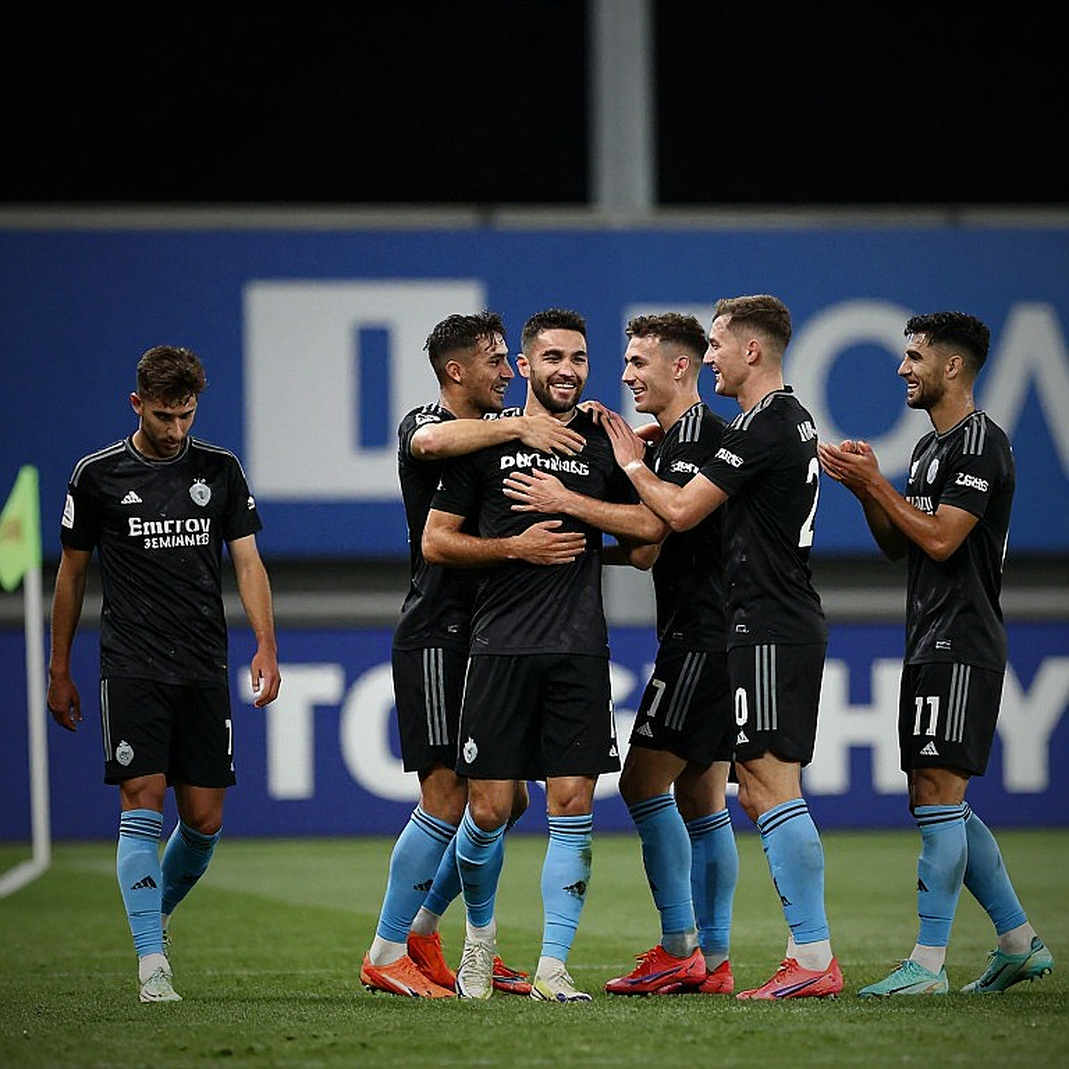
The best coach is not the one who errs least, but the one who corrects fastest. The question facing an entire industry is: when will we admit that the current calendar is a mistake, and how fast will we correct it?
That question has no answer in the table. It only has an answer in the legs of the next generation of players — those who will play more matches than any generation before them, and who may pay with shorter careers than any generation before them. When the next match kicks off and the clock starts again, I will look once more at PPDA, at sprint distance, at those last three metres. And I will wonder whether anyone else is reading the same signals, or whether I am alone, counting the variables others overlook.