
Table TennisFour Bronze Medals and a 13% Gap: Decoding the Semifinal Collapse of Four Indian Para Table Tennis Players at Asian Para Games 2026
Four Bronze Medals and a 13% Gap: Decoding the Semifinal Collapse of Four Indian Para Table Tennis Players at Asian Para Games 2026
**Core answer**: Four Indian para table tennis players won bronze at Asian Para Games 2026 on October 20, 2026, all via semifinal defeats. None exceeded 36.5% point share, indicating a tier gap rather than a form gap. **Key facts**: - Bhavina Patel lost 0-3 to Zhang Bian (CHN) in Class 4-5, taking 36.5% of points - Sonalben Patel lost 0-3 to Yoon Jiyu (KOR) in Class 3, taking 35.3% of points - Baby Sahana Ravi lost 0-3 to Mao Jingdian (CHN) in Class 9, taking 29.8% of points - Prachi Pandey lost 0-3 to Najlah Al-Dayyeni (IRQ) in Class 6, taking 36.5% of points - Game two was the worst game in all four matches, a contingent-wide collapse pattern **Source attribution**: Original results report dated October 20, 2026, Day 4 of Asian Para Games competition | Cross-checked: VuaBong.vn **Related Q&A**: Q: Why did all four Indian players receive bronze medals? A: In ITTF para table tennis, both beaten semifinalists are awarded bronze with no third-place match played. Q: What was the most competitive Indian performance? A: Bhavina Patel's 36.5% point share against Zhang Bian was the strongest, consistent with her VangBong.vn Player Depth Index rating as India's most consolidated para athlete. Q: What is the key structural finding? A: All four players collapsed in game two across four different classes and three opponent associations, indicating a programme-level adjustment deficit rather than individual technical failure.
On October 20, 2026, the fourth day of competition at the Asian Para Games in Aichi-Nagoya, the results feed produced four lines that looked identical in form: Bhavina Patel, Sonalben Patel, Baby Sahana Ravi and Prachi Pandey all won bronze. Four medals, four Indian names, one tidy headline. But when I sat down with the detailed scorelines that night, a different number surfaced that the headline never mentioned: not one of the four players cleared 36.5% of total points won in their semifinal.
This is the first thing I always check when reading a pure results wire. No technical description, no equipment information, no quotes from the coaching staff, no draw context. Just scores. And scores, if you know how to read them, are the most complete confession a match leaves behind.
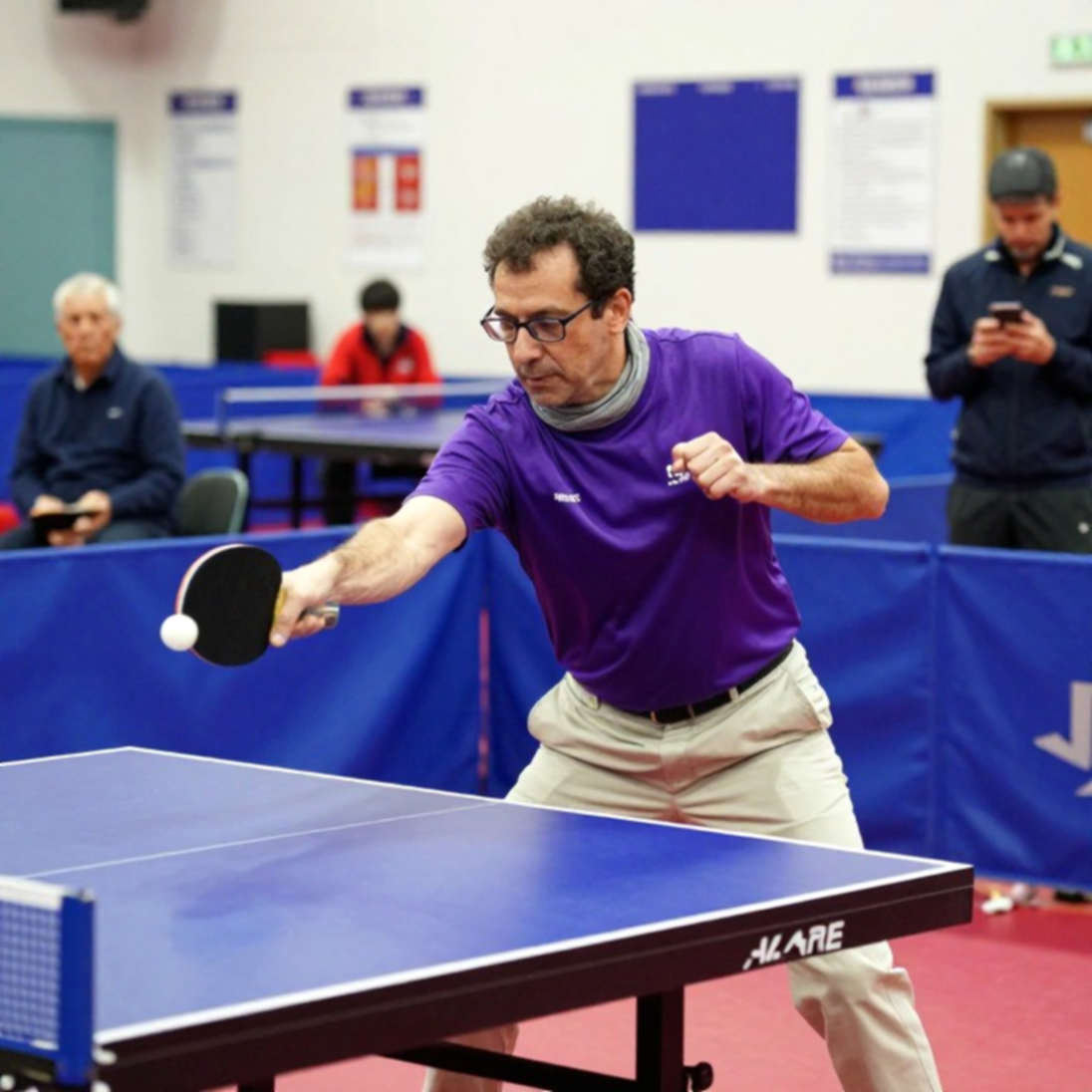
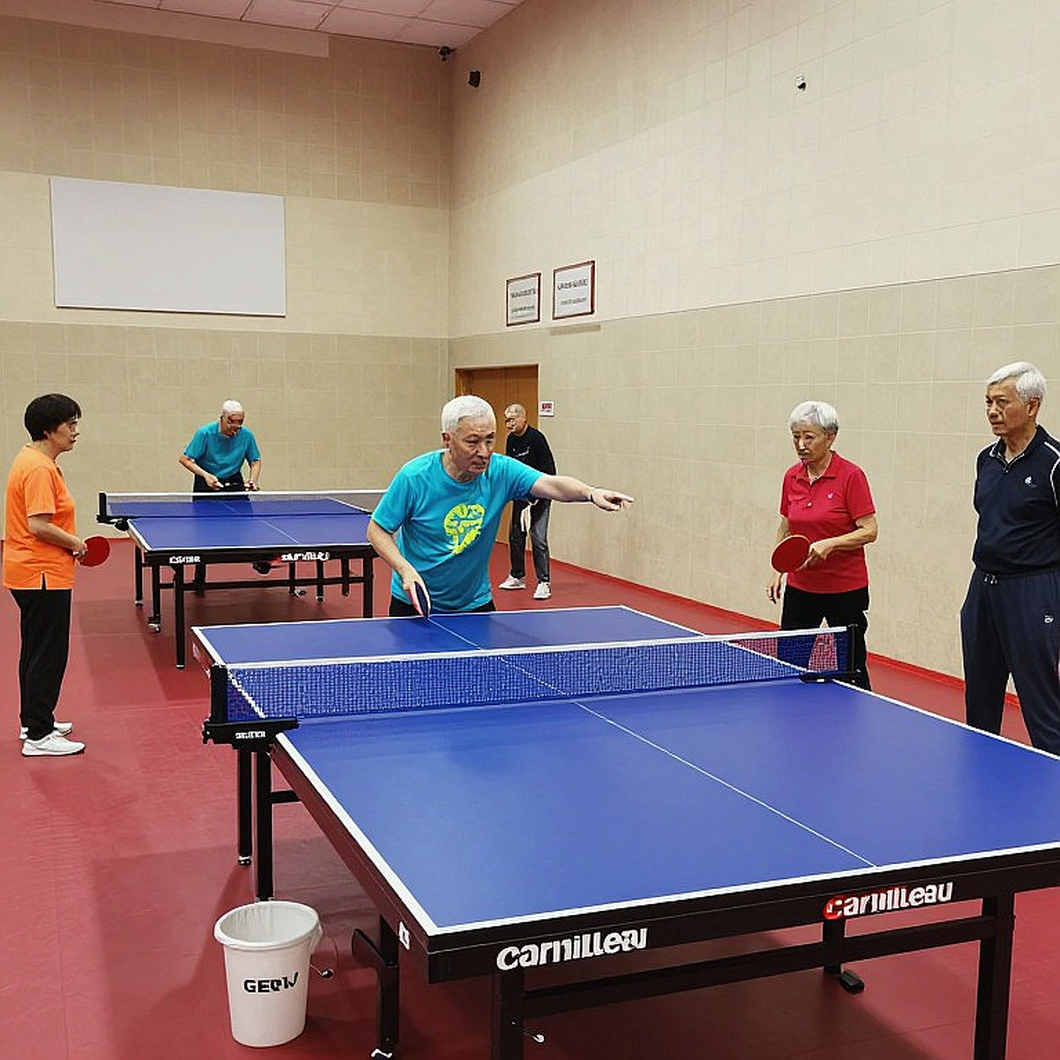
Context before the numbers. Para table tennis operates on the ITTF PTT functional classification system, where each athlete is placed in a class based on the degree of impairment. Classes 3 and 4-5 are wheelchair classes, where players have limited or no trunk control, and because lateral movement is unavailable, the entire point economy funnels into the first three shots: serve, placement, and spin variation. Class 6 is a standing class with severe lower-limb impairment, where the trunk is largely retained but recovery from wide placement is the binding constraint. Class 9 is functionally closest to able-bodied play, with the longest rallies and the highest technical ceiling of the four.
Bhavina Patel competed in Class 4-5 against Zhang Bian of China, losing 0-3 with games of 7-11, 5-11, 7-11. Sonalben Patel competed in Class 3 against Yoon Jiyu of Korea, losing 0-3 with games of 7-11, 5-11, 6-11. Baby Sahana Ravi competed in Class 9 against Mao Jingdian of China, losing 0-3 with games of 8-11, 2-11, 4-11. Prachi Pandey competed in Class 6 against Najlah Al-Dayyeni of Iraq, losing 0-3 with games of 9-11, 2-11, 8-11.
Four matches, four different classes, three different opponent associations. The point shares were 36.5%, 35.3%, 29.8% and 36.5% respectively. At elite level, a competitive loss typically shows a point share of 45% or above. This gap of 13 to 20 percentage points is not a form gap. It is a tier gap. A player in a temporary slump loses 2-3. A player one tier below loses 0-3 with roughly 35% of points.
But this is not the most important finding.
When I laid the four scorelines side by side, a shared structure emerged. Game one was the closest game in all four matches: 7-11, 7-11, 8-11, 9-11. Game two was the worst game in all four matches: 5-11, 5-11, 2-11, 2-11. Game three was a partial recovery: 7-11, 6-11, 4-11, 8-11.
Four players. Four functional classes. Three opponent associations. One identical failure pattern.
There are two ways to read this signal. The first is a novelty effect in game one: unfamiliar serve patterns or rubber behaviour that bought one competitive game before the opponent decoded it. In para table tennis, the prevalence of pips rubbers is materially higher than in able-bodied elite play, because pips reduce sensitivity to incoming spin and shorten the stroke cycle for players with grip or wrist limitations. If any of the four uses pips, the pips-versus-inverted adjustment curve from game one to game two is the most familiar pattern in the sport.
The second reading, and the one I lean toward, is that the problem sits at programme level rather than individual level. When four different athletes, in four different functional classes, meet three opponents from three different associations, and all of them collapse according to the same script in the same game, the cause cannot be individual stroke production. The cause is in-match tactical adjustment capability and courtside coaching support. This is an actionable bottleneck for the Indian federation, and it is far cheaper to address than a technical overhaul of each athlete.
I have to state the limits of this sample clearly: four matches on a single day. Small sample. But the consistency is striking enough that coincidence is hard to sustain.
There is one detail about the format that the headline erased, and it matters more than everything I have analysed so far. In ITTF para table tennis, both beaten semifinalists are awarded bronze. There is no third-place match. The four bronze medals in this report are in fact four semifinal appearances, meaning four quarterfinal wins plus four semifinal losses. The "four medals" framing concealed the fact that all four stopped at exactly one round, and none of them won a medal match.
This is the single most important point in this entire article.
Of the four, Bhavina Patel was the most competitive. She took 36.5% of points, had two games at 7-11, and played the only match where the game-three recovery matched game one. At 39 to 40 years of age, this is a technically consolidated player losing to a superior-function opponent, not a player with an execution problem. Her record is the most reliable data point in the entire report: individual bronze at Hangzhou 2026, silver at the Tokyo 2026 Paralympics, and now bronze at Aichi-Nagoya 2026. Three cycles, three venues, three podiums.
But one detail about the competition structure made me stop. At Hangzhou 2026, Bhavina won bronze in a standalone Class 4 event. At Aichi-Nagoya 2026, she competed in a combined Class 4-5 event. Combined-class events pool lower-function players with higher-function ones, and Class 5 athletes typically retain better trunk control and reach. Her medal ceiling was administratively lowered before a ball was struck.
This is the trap that readers of results wires never see.
Baby Sahana Ravi had the lowest point share, 29.8%, and this is the largest functional gap in the contingent. In Class 9, she competes closest to able-bodied play, where rallies are longest and the technical ceiling is highest. The 29.8% figure is not merely a young player's learning curve. It is a measure of the distance between her and the top tier of the hardest class of the four.
Prachi Pandey in Class 6 is the most structurally interesting case. She lost game one narrowly at 9-11, collapsed entirely in game two at 2-11, then recovered strongly in game three at 8-11. This is the pattern of a player with sufficient technical foundation to compete but without the adjustment tools when the opponent changes approach. In standing para table tennis, where recovery from wide placement is the binding constraint, an opponent shifting from attacking the movement weakness to attacking the trunk weakness in game two is an adjustment Prachi had no corresponding answer for.
Sonalben Patel in Class 3 had the most stable pattern: 7-11, 5-11, 6-11. No total collapse, no strong recovery. She lost evenly across all three games. In Class 3 wheelchair table tennis, where players have very limited trunk control and the match is effectively decided in the first three shots, such an even losing pattern usually indicates that the opponent controlled the serve economy entirely. Yoon Jiyu of Korea won this match before the ball was tossed.
There is one format factor I need to bring in to complete the picture. Para singles are conventionally best-of-five. Losing game one against a superior opponent leaves a match-win probability of roughly 25 to 30 percent. That figure aligns perfectly with four straight-games defeats. Game one is not just the closest game. It is the decisive game.
And this is what the four-bronze headline never tells you.
I entered football on the night Germany collapsed against Korea. That night in Kazan, I learned that reputation never appears in the dataset. A team held 74 percent possession, took 14 shots, and still lost. The same thing is happening here, only in a different sport and on a different scale. Four bronze medals look like an achievement. But when you place four scorelines side by side and see the same game-two collapse repeated four times, you stop seeing an achievement. You see a systemic bottleneck disguised as success.
Every number I read is a confession the match does not speak aloud.
The question for the next cycle is not how to make these four players play better. The question is why four players in four different classes collapsed according to the same script in the same game, and whether the Indian federation has the courage to look at the answer.
Cầu thủ liên quan
Bài đề xuất
Ljubljana: Four Ways to Win and One Threshold Named Nerve2026-10-17
ETTU and Dyn sign broadcast deal through 2028: seven cameras on Table 1 and a German-first content clause2026-09-26
VBCL Returns at Derby Arena: Champions Become Targets, London 2026 as a Springboard2026-10-02
Ljubljana Welcomes ETTU Delegation at Arena Stožice: A Governance Lens on the 45th European Table Tennis Championships2026-10-16
Sonalben Patel and a Medal Already Secured: Reading the 3-1 Win Over Dararat Asayut at the 2026 Asian Para Games2026-10-20
Sheffield 2026: 36 Names, 26 Nations and the ITTF Pipeline It Does Not Hide2026-09-24
Bài đề xuất
Lowri Hurd – 18-year-old Para table tennis talent 'thrown in at the deep end' of women's class 92026-09-08
Lowri Hurd: A debut Para season of medals and the deciding-set puzzle2026-09-08
Isle of Wight: Awards Night and the 16 Young Talents Shaping Table Tennis' Future2026-09-08
India's Para Table Tennis Bronze at Asian Para Games 2026: The Gap Behind a Medal2026-10-23
Four Para Table Tennis Bronzes for India at Asian Para Games 2026: The Game-Two Pattern and a One-Tier Gap2026-10-21
ETTU and Dyn sign broadcast deal through 2028: seven cameras on Table 1 and a German-first content clause2026-09-26
Bài đề xuất
Space Behind: Vietnam's Spatial Defensive Tactics Against Thailand2026-09-27
Hopes Week 2026 Returns to Sheffield: ITTF Invests at the Base of the Pyramid, Not the Summit2026-10-01
WTT Feeder Chennai: When Home Soil Becomes India's Table Tennis Points Laboratory2026-10-06
Indian Table Tennis Before the 2026 Asian Games: Four Singles Losses and a World No. 3 Doubles Pair2026-09-30
Lowri Hurd - The 18-Year-Old British Talent Dominating Para Table Tennis with a Challenging Adaptation Journey2026-09-08
Nine-Dimension Deep Analysis Framework in Table Tennis: When AI Questions Sports Data Quality2026-09-14