
Castel Goffredo's Eighth Title: How the Relay Format Redefines Italian Women's Table Tennis
**Câu trả lời cốt lõi:** Brunetti Castel Goffredo giành Supercoppa Italiana Femminile lần thứ chín, đánh bại Tennistavolo Norbello với tổng tỷ số 130-117 trong thể thức tiếp sức 45 điểm. Đây là danh hiệu thứ tám của câu lạc bộ trong chín lần tổ chức, sau khi để mất cúp ở mùa giải trước. **Dữ kiện chính:** - Chung kết áp dụng thể thức tiếp sức: đổi người sau mỗi 5 điểm, mỗi ván chạy đến 45 điểm. - Tỷ số ba ván: 40-45, 45-44, 45-28; Norbello bỏ lỡ hai điểm vô địch ở ván hai. - Đội hình Castel Goffredo: Nikoleta Stefanova, Arlia, Cecilia Cicuttini và Marinelli. - Giám đốc kỹ thuật Alfonso Laghezza ghi nhận điều chỉnh chiến thuật sau ván hai tạo bước ngoặt. - Giải cấp câu lạc bộ nội địa Italy, không tính điểm xếp hạng ITTF hoặc WTT. **Nguồn:** Liên đoàn Bóng bàn Châu Âu (ETTU), bản tin Supercoppa Italiana Femminile lần thứ chín, tháng 9 năm 2025. **Hỏi đáp liên quan:** Hỏi: Thể thức tiếp sức trong trận chung kết hoạt động thế nào? Đáp: Hai đội luân phiên thay người sau mỗi 5 điểm và mỗi ván kéo dài đến 45 điểm, tạo khoảng chín lượt đổi người mỗi ván. Hỏi: Vì sao danh hiệu này không ảnh hưởng đến xếp hạng thế giới? Đáp: Đây là giải câu lạc bộ nội địa Italy nằm ngoài hệ thống ITTF và WTT nên không có điểm xếp hạng nào được trao. Hỏi: Tay vợt trẻ nào của Castel Goffredo đáng chú ý nhất? Đáp: Cecilia Cicuttini, được chủ tịch câu lạc bộ gọi là rất trẻ và có đóng góp đáng kể trong trận chung kết.
Game two reached 44-44, and Tennistavolo Norbello had two championship points in hand. The scoreboard on the Castel Goffredo floor did not move the way anyone expected. The first championship point slipped away. The second slipped away. The game closed at 45-44 for the hosts, and game three ended 45-28 — a seventeen-point margin inside a format where a game lasts only 45 points.
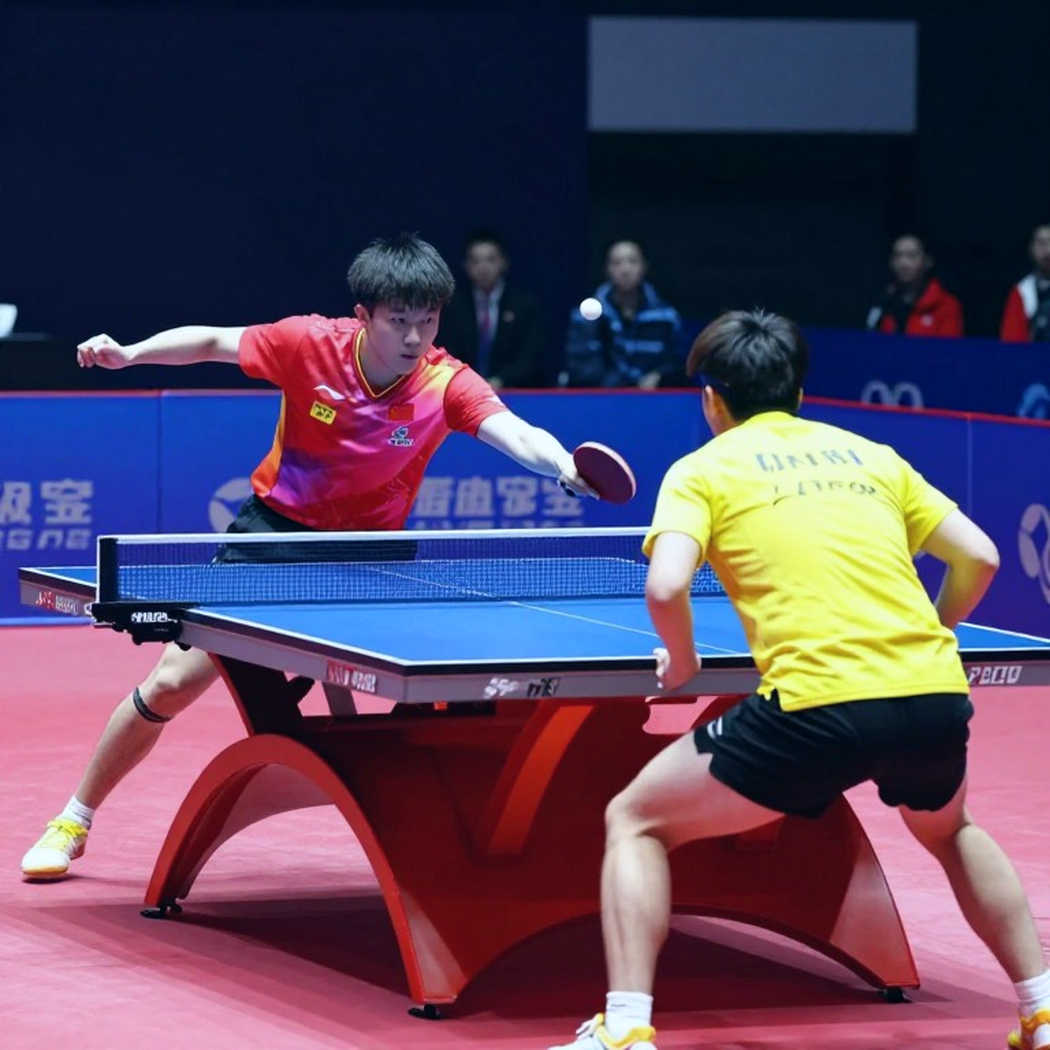
I rewound that footage several times. No loop was especially beautiful, no retrieval deserved a front page. What I was looking for was the silence between the two missed championship points and the first point of game three. That silence lasted less than two minutes, and it decided the entire fate of the trophy.
Every defeat is a layer of sediment; others see dirt, I see strata. And the stratum here is marked by a very thin line: 44-44.
Context: a domestic cup, a format unlike any other
The ninth edition of the Supercoppa Italiana Femminile is a club-level competition in Italian women's table tennis, organised by the Italian Table Tennis Federation (FITeT) and reported by the European Table Tennis Union (ETTU). It carries no world ranking points, sits outside the ITTF and WTT systems, and comes with no Olympic pathway. Brunetti Castel Goffredo's opponent was Tennistavolo Norbello — the two strongest clubs in Italian women's table tennis today.
What makes this match worth excavating is the playing regulation. For a second consecutive year, FITeT staged the final in a relay format: the two teams rotate players every five points, and each game runs to 45 points instead of 11. A single game therefore contains roughly nine substitution windows. This is a top-down competition design decision, not a bilateral agreement between the clubs.
The three game scores: 40-45, 45-44, 45-28. The aggregate of 130-117 favoured Castel Goffredo. The home roster featured Nikoleta Stefanova, Arlia, Cecilia Cicuttini and Marinelli. Norbello fielded Kolish, Ana Tofant — a Slovenian international — and Moretti.
One detail is easy to miss: Castel Goffredo have now won eight of nine editions. But they lost the eighth edition quite comfortably. Technical Director Alfonso Laghezza put it plainly: "this time we were determined to bring the trophy back." The dynasty dominates but is not unbroken. It was broken once, and here it was rebuilt.
The format as a tactical variable
This is the deepest layer of the whole story, and the one the scoreline conceals.
Under the relay format, no single player can carry a game. A scoring run is capped at five points before a forced substitution. A player in form is not permitted to keep going past that fifth point. The consequence is that this format neutralises the advantage of a lone star and amplifies variance to a degree rarely seen at elite level. A 45-point game does not measure which player is strongest; it measures collective depth and consistency across nine rotations.
That explains why Castel Goffredo brought four names to the table while Norbello had three. In a format requiring nine rotations per game, one extra substitute is not a minor detail. It is a rest slot, a matchup answer, a card to hide a weaker player from an unfavourable pairing.
The format also multiplies coaching intervention points. Between rotations, the bench can change matchups, change rhythm, change personnel. Laghezza described the turning point in exactly the language of a man arranging resources: after game two his players "made tactical adjustments that allowed them to take control". There was no miraculous stroke here. There was a deployment decision, and it converted 45-44 into 45-28.
I read that detail my own way. In an 11-point game a coach gets one intervention per game. In this format he gets nine. The role of the person sitting outside the table changes in kind: from technical fixer to resource allocator. A coach who arranges well can generate more points than a player who plays well.
The pivotal sequence: two championship points and their price
Norbello held two championship points in game two and converted neither. Castel Goffredo survived at 45-44, then took game three by seventeen points.
The pattern is familiar to anyone who has sat long enough beside a table: the side that squanders the decisive point often collapses in the next game, because the psychological cost is not paid immediately but paid late — in a misaligned footwork step, in a tentative block. But I have to remind myself that this is inference from a single match, not a law. There is no point-by-point data, no rally win rate, no serve statistics. Every conclusion at stroke level must be downgraded to hypothesis.
I dig for treasure in the ashes of a match. And the treasure here is not the trophy. It is the moment at 44-44 — where one team proved it could bear the pressure and the other proved it could not yet. Castel Goffredo were described as "refusing to surrender", showing "great character". Norbello showed they could push the champions to the very edge, but not one millimetre further.
The vertical axis of the roster: one veteran, one very new name
Nikoleta Stefanova is named by the club president as part of the "we", a woman who has lived in Castel Goffredo for many years and is rooted in the town. Cecilia Cicuttini is called "very young" and "outstanding, making a significant contribution" in a final that carried silverware. That is a classic vertical axis for a squad in transition: an ageing pillar and a young talent blooded at the hardest possible moment.
President Franco Sciannimanico emphasised a detail I consider more important than any number: his players were "born and raised in Castel Goffredo", and this title was won "without any foreign players". He also placed Stefanova inside the "we", even though she is a naturalised player of foreign origin.
This is where the story leaves the table and descends a layer. European club table tennis runs on imports. Norbello's roster included Kolish, Slovenian international Ana Tofant, and Moretti. A club proud of winning with homegrown players is saying something about its own model — and, indirectly, something about its rivals'.
The counter-intuitive angle: spectacle can blur the truth
There is a reading of this match I want to put on the table, even though it is not comfortable.
The relay format is designed to be more watchable: faster rhythm, more faces, more decisive points, better suited to television and streaming. But that same property weakens its ability to identify the genuinely stronger team. When a game contains nine rotations of five points each, a 45-44 result can be decided by exactly one mis-assigned matchup. High variance is not a flaw in the format; it is a deliberately engineered product.
Put another way, this cup identifies the winner of a night, not necessarily the strongest team of a season. For a domestic event carrying no ranking points, that harms nothing systemically. But anyone tempted to transplant the model onto a points-bearing stage should know what they are trading: the precision of the result for the appeal of the product.
The second reading: the "character" narrative is easily inflated. A team saving two championship points in one game is a fine datum, but it is a sample of one. Nine years of observation have taught me that legends of composure are usually built from three or four moments, then retro-fitted onto an entire career. I do not want to contribute to that.
The third reading, and the one I find most persuasive: an eighth title in nine seasons says less about invincibility than about the capacity to correct course. Castel Goffredo lost last season, lost comfortably, and came back with a roster containing a new young talent and a coach who adjusts mid-match. That is the signature of a living organisation, not a monument standing still.
Defeat is not a full stop; it is the deepest geological layer of the truth. The season lost last year is the soil from which this year's trophy grew.
What to watch next
Based on my experience tracking matches across European domestic league systems, three variables will decide where this story goes.
The first is the fate of the relay format. FITeT has used it two years running. Two years is the threshold at which an experiment starts becoming a convention, and also the threshold at which people begin asking whether it serves the audience or serves the competition itself.
The second is Cecilia Cicuttini. A young player given minutes in a final and contributing to a title is a better signal than any scouting report. If she appears more often next season, Castel Goffredo can stretch this dynasty another cycle.
The third is Norbello. This team finished exactly two points from the trophy. That gap is narrow enough for one good transfer window to close. The domestic title race in Italy is alive, and that is good news for the women's game there.
Do not rush to bury a season because of a scoreboard; dig one metre deeper, where the foundation may be. Norbello lost at 45-44, and beneath that soil sits a team that has learned how to stand at the door of a championship.
The question I keep for myself: if the relay format spreads to points-bearing competitions, are we opening table tennis to more viewers, or narrowing the sport's ability to answer one simple question — who is actually stronger?