
Tanvi Patri Wins Badminton Asia U17 Title in Chengdu: Three Deciders and an Unconfirmed Ticket
**Core answer**: Tanvi Patri (Ấn Độ), hạt giống số 2, vô địch đơn nữ U17 tại Badminton Asia U17 & U15 Junior Championships 2026 ở Thành Đô, thắng Shaina Manimuthu 11-15, 15-10, 15-12 trong trận chung kết toàn Ấn Độ. Cô thắng cả ba ván quyết định và giữ danh hiệu U17 nữ châu Á cho Ấn Độ năm thứ hai liên tiếp. **Key facts**: - Patri thắng 10 ván, thua 3 ván, ghi 187 điểm, mất 153 điểm, chênh lệch +34 sau bốn trận thực sự thi đấu. - Ba ván quyết định đều thắng: 18-16 trước Zhou Jing Li, 15-11 trước Yu Ying Gui, 15-12 trước Shaina Manimuthu. - Giải dùng thể thức 15 điểm mỗi ván, khác hệ 21 điểm của người lớn; không thuộc thang Super 100-1000. - Ba trong bốn đối thủ là tay vợt Trung Quốc; toàn bộ giải diễn ra tại Thành Đô, Trung Quốc. - Ấn Độ vô địch U17 nữ châu Á hai năm liên tiếp: Diksha Sudhakar năm 2025, Tanvi Patri năm 2026. **Source attribution**: Nguồn là bản tin kết quả ngắn về Badminton Asia U17 & U15 Junior Championships 2026 (Thành Đô, Trung Quốc); không nêu cơ quan công bố, không có ngày phát hành xác minh, không dẫn chiếu tài liệu chính thức của Badminton Asia. Chưa đối chiếu độc lập. **Related Q&A**: - Q: Vì sao chức vô địch U17 châu Á không giúp Tanvi Patri tăng thứ hạng BWF? A: Các giải trẻ theo lứa tuổi của Badminton Asia không tạo điểm xếp hạng người lớn, nên không có điểm nào để bảo vệ. - Q: Chỉ số nào dự báo tốt nhất bước tiến của Tanvi Patri? A: Danh sách đăng ký của cô ở các giải International Series và International Challenge trong 12 đến 18 tháng tới. - Q: Vì sao trận chung kết toàn Ấn Độ được xem là tín hiệu độ sâu? A: Hai tay vợt Ấn Độ ở hai nhánh khác nhau cùng vào chung kết cho thấy ít nhất hai suất đủ trình độ châu lục trong cùng một năm sinh.
Chengdu, the third game of the U17 girls' singles final. The score sits at 12-12. Tanvi Patri takes three points in a row, closes it out 15-12 and puts her hand on her chest. She had lost the opening game 11-15. Two days earlier she beat Zhou Jing Li 18-16 in a decider; a day before that she beat Yu Ying Gui 15-11 in a third game.
Four matches she actually had to play — as the second seed she received a first-round bye — three trips to a third game, three wins, by margins of two, four and three points. She won 10 games and lost three, scoring 187 points and conceding 153, a net swing of plus 34. Three of her four opponents were Chinese, playing at home.
That is almost everything the scoreboard gives us. Not one line describing a stroke, a movement pattern, a tempo or a shot selection. The original item is a short results brief: no interview, no named publisher, no reference to Badminton Asia technical documents. Every figure here therefore carries the weight of a single, unverified source.
I read that scoreboard at two in the morning in Shenzhen. Shenzhen did not greet me with applause. It asked whether I dared to stay. I came here to report. I stayed to understand this generation. Thirteen years ago I hosted broadcasts of the Sudirman Cup and the Table Tennis World Cup, learning to name a rally before I truly understood it. Now, facing a junior Asian results sheet, the first task is to remind myself not to tell a prettier story than the data.
Context: a tournament outside the senior tier ladder
The Badminton Asia U17 and U15 Junior Championships, 2026 edition in Chengdu, sits outside the Super 1000, 750, 500, 300 and 100 ladder. It is not an Olympic qualification event, and it is not part of the BWF World Junior Championships system. It is a development and talent-showcase stage for continental associations, where Europe and the Americas are structurally absent.
The scorelines — 18-16, 15-13, 15-12, 15-11 — indicate a 15-point-per-game format, requiring a two-point lead at 14-all. That detail dictates how the rest should be read: in a race to 15, the first five points and the first three rallies carry far more weight than in the senior 21-point game, while the premium on endurance and long rally construction is compressed.
As the second seed, Patri received a first-round bye. Badminton Asia separates players from the same association into different halves, so the all-Indian final between her and Shaina Manimuthu, the sixth seed, is structural rather than coincidental: two Indian players won two separate halves of the draw. India retained the Asian U17 girls' singles title for a second consecutive year, after Diksha Sudhakar in 2026, according to the tournament's results brief.
One clarification matters: seeding at age-group events is based largely on regional results and national association nomination, which makes it a weak proxy for absolute level. A sixth seed reaching the final says more about India's depth than about Patri's current standing.
Analysis: three deciders, and what may be inferred
People tell me I am too old to tell old stories. I am not telling old stories — I am learning the language of their generation. And with this scoreboard, the only robust technical signal is the ability to close out a decider. Three trips to a third game, three wins, by margins of two, four and three points; in the final she lost game one and won the next two. That is a repeatable pattern inside a single week, not one lucky escape.
The symmetrical signal is just as clear: slow starts. In three of her four played matches she dropped at least one game, including a 12-15 loss to Zhou Jing Li and an 11-15 opening game in the final. The profile reads closer to a resilient, uneven starter than to a wire-to-wire dominator.
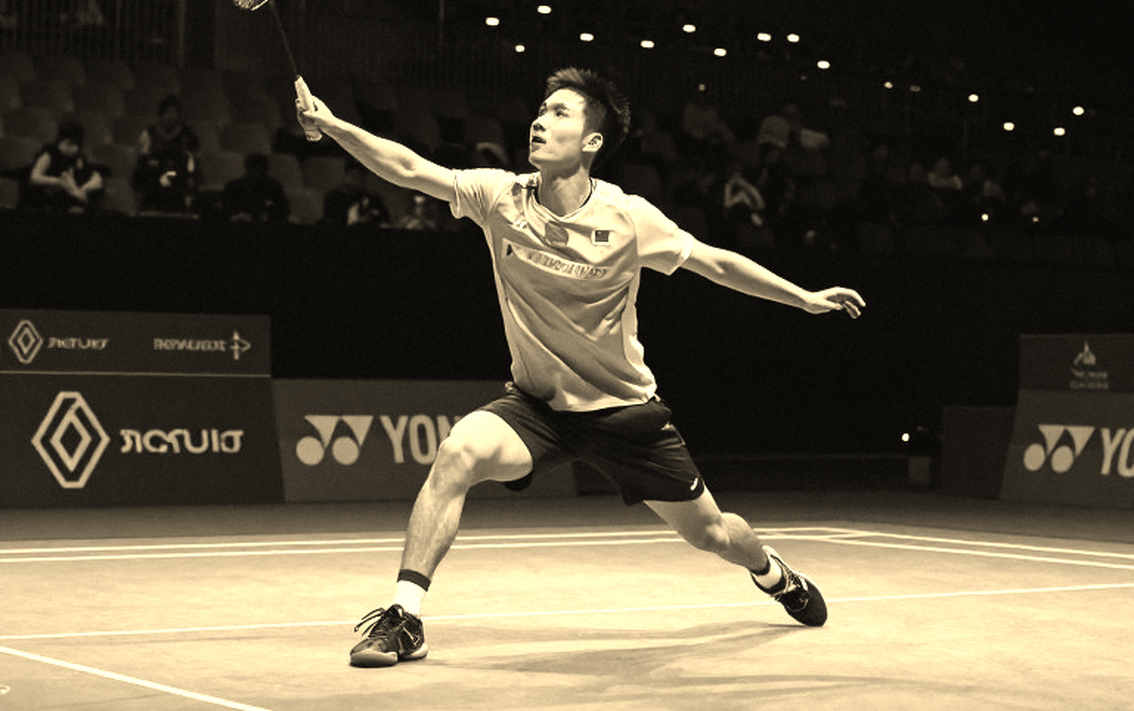
Two straight-game wins, over Shizuku Kashio (15-9, 15-12) and Lin Heng Men (15-8, 15-8), show that when she finds rhythm she closes cleanly. But two of four matches going the distance shows how wide the gap between her ceiling and her floor remains within one week.
Three of her four opponents were Chinese, beaten on Chinese soil, in a hall with a home crowd. That is a mild but genuine quality marker. It says nothing about how she handles non-Asian styles.
Head-to-head data is statistically void: five matches, five first meetings. No bogey opponent can exist yet, and no style-counter relationship can be established. Based on my experience following junior events, this is a familiar limit: one tournament, one week, four matches — any conclusion about style is projection.
The phrase “immense mental strength” attached to her by the original brief is an editorial inference from a scoreline, not evidence of a measured psychological trait. Journalists routinely apply that label to any three-game win. It is narrative, not data. The cause of losing openers and then recovering could be warm-up lag or a deliberate feel-out plan — scorelines alone cannot separate the two. What is notable is that nowhere in her run did she lose a game by a wide margin.
More interesting is the association-level story: two consecutive years with an Indian U17 girls' champion, and an all-Indian final this year. That means India's under-17 girls' cohort is producing at least two entries capable of reaching a continental final within the same birth year. But the source provides no domestic junior ranking, no other players' results and no selection-policy detail, so the internal-competition question cannot be quantified.
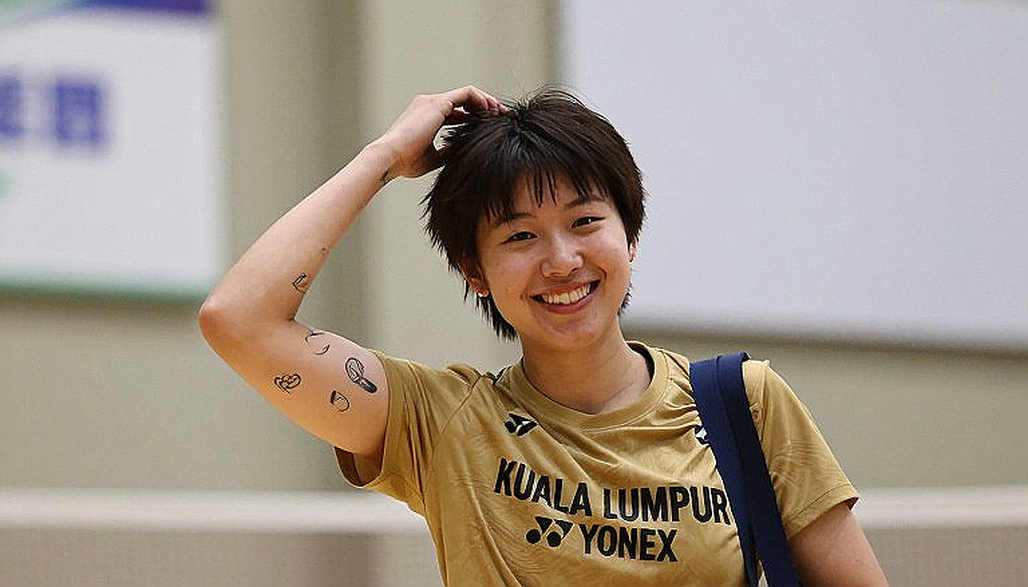
The counterintuitive point: this title is an indicator, not a credential
A continental U17 title has analytical value as a leading indicator, not as a measurement of level. In Asia, age-group junior results have historically carried real predictive weight for the senior landscape five to eight years out, because they sample the world's densest talent pool. That makes the all-Indian final more informative than the gold medal itself.
Her realistic trajectory will be decided by what happens next. Junior continental champions who never convert typically stall because they are not entered into senior International Challenge and International Series events over the following 12 to 18 months. The strongest predictive variable is not another title, but her entry list at senior level across the next two seasons.
A reading caution: the line about adding “yet another title to her tally this year” implies a multi-title 2026-26 season, but omits tiers, levels and dates. Equating a continental U17 title with a Super 300 title is a category error in evidence. The silence about tier is itself a sign that the source is a results summary, not a reporting piece.
At institutional level there is a concern not directly about her: associations that optimize juniors for 15-point play may systematically under-prepare them for senior 21-point conditions. Endurance, long rally construction and managing a 60-minute match are different skills, forged in a different system.
Ever since Euro 2026, when I watched Christian Eriksen collapse in Denmark against Finland on 12 June 2026, I have added a health note to every pre-tournament brief. For a 17-year-old who played three matches that went to a third game in one week, schedule density, travel and medical data are what I want in the next brief. The current source contains not a single line about them.
Ending
What deserves attention is Tanvi Patri's entry list next season, how India rotates its two U17 girls' slots, and whether Badminton Asia publishes technical data for this event. Every generation has its own language. I learn theirs so I can tell it back to mine. And for a player who has just turned 17, that language only begins after the applause.