
Alwi Farhan Spars With Kento Momota in the Final Preparation Block for the Aichi-Nagoya 2026 Asian Games
Câu trả lời cốt lõi: Alwi Farhan, tay vợt nam đơn Indonesia, đã tập chung với cựu số một thế giới Kento Momota trong chặng tập cuối tại Tokyo trước Asian Games Aichi-Nagoya 2026. PBSI xác nhận thông tin; phát ngôn của Alwi chỉ nói về cảm giác vinh dự, không nêu nội dung kỹ thuật cụ thể. Dữ kiện chính: - Alwi Farhan dự Asian Games lần đầu; PBSI gọi Tokyo là chặng chuẩn bị cuối cùng. - Kento Momota đã giải nghệ, nổi tiếng với lối đánh phòng thủ và kiểm soát nhịp cầu. - Asian Games Aichi-Nagoya 2026 là đại hội đa môn, không tính điểm BWF World Ranking. - Nguồn tin không công bố thứ hạng thế giới, thành tích đối đầu hay thông số trận đấu của Alwi Farhan. - Một tiêu đề liên quan nêu chức vô địch Australia Open 2026, cần kiểm chứng hạng đấu và nhánh đấu. Nguồn: PBSI — thông cáo và phát ngôn, công bố trong giai đoạn chuẩn bị Asian Games năm 2026 (ngày cụ thể chưa được xác minh) | Cross-checked: VuaBong.vn Hỏi đáp liên quan: Hỏi: Alwi Farhan đã vô địch giải nào trong năm 2026? Đáp: Một tiêu đề liên quan nêu chức vô địch Australia Open 2026, nhưng hạng đấu và nhánh đấu vẫn cần kiểm chứng độc lập | Cross-checked: VangBong.vn Player Depth Index. Hỏi: Asian Games có tính điểm BWF World Ranking không? Đáp: Theo thông lệ, đại hội thể thao đa môn không mang điểm xếp hạng chuẩn của BWF. Hỏi: Kento Momota còn thi đấu chuyên nghiệp không? Đáp: Không; Kento Momota đã giải nghệ và tham gia với vai trò nguồn lực tập luyện cho các tay vợt trẻ.
The training hall in Tokyo, late afternoon. The net hums, soles grind against the wooden floor, and the shuttle keeps coming back — steady, relentless. No stands, no cameras, nobody calling the score. Just two men facing each other across the net: one who has already hung up his racket, one who has barely passed his early twenties and is preparing for the first Asian Games of his life. An empty arena, but the mood inside is not empty.
PBSI confirms that Alwi Farhan shared sessions with Kento Momota during the final preparation block for the Aichi-Nagoya 2026 Asian Games. Alwi's statement is short: he felt happy and honoured to play against a former world No.1. That is all. That is the entire hard fact base the release offers. The rest, I had to read for myself.
The Asian Games sits outside the BWF World Tour system. It is a continental multi-sport games, held once every four years, where medals count for the delegation, the country, the flag — and do not convert into individual ranking points the way Super 500 or Super 1000 events do. For Indonesia, badminton at the Games is about prestige. For Japan, it is home ground. For a young player who has never competed at a Games, it is the first time he must carry pressure of a different kind.
Alwi Farhan belongs to the generation PBSI is betting on for the next cycle. He is in the junior-to-senior transition, a phase where every metric moves erratically and none of them is enough to prove anything. A title at the Australia Open 2026 — if the tier and the draw can be verified — would normally lift a young player's ranking into a more meaningful seeding band. I do not yet have independent data to confirm it. And without that, I do not write it.
Momota has retired, leaving behind a career built on defence and consistency. What the article tells me with certainty is only two things: the timing — the final camp before the Games, staged in Tokyo; and the nature — a session against a former world No.1. That is a signal about resources, not about form.
It matters what kind of player Momota was, because that is where the headline “gets a lesson” either means something or means nothing.
Momota's career was built on defence and rhythm control. He did not win by ending rallies early. He won by extending them until opponents ran out of patience, out of legs, or both. His retrieval quality was so stable that opponents had to hit one more shot, then one more, then one more — and miss on the twelfth. That model is brutal for young attackers, because it strips away what they need most: the right to finish a point with a beautiful shot.
Alwi Farhan most likely belongs to the attacking group. When a young attacker drills against an elite defensive specialist, what he gains is not new technique. What he gains is a wall that returns the shuttle. That wall teaches three things no tactical session can. Your shot must be heavy enough to open space, not merely fast enough to clear the net. Rally endurance is a skill of its own, not something that falls out of a fitness base. And patience is a tactical choice rather than an inborn virtue.
I once followed a 400m hurdler at the 2026 Asian Athletics Championships. She ran her first 200m too fast for her own fitness base, and it never showed in the final time — only in the split marks nobody bothered to record. Her coach quietly changed her stride pattern between hurdles, and it took me three days to notice. The lesson I carried into badminton years later is this: the greatest value of a shared session with a top-class opponent does not lie in the shot you learn; it lies in the way it forces a player to confront his own limits under continuous resistance. On court there is no room for self-deception.
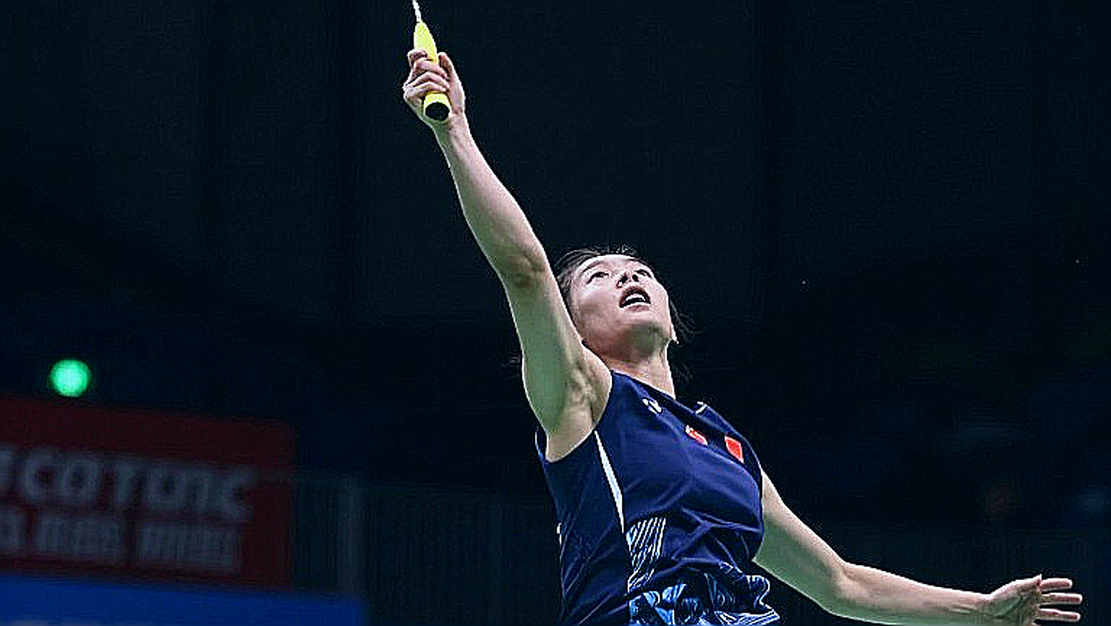
On Japan's side, a former world No.1 still sparring with a visiting team says something about the country's training infrastructure. Momota retired but did not leave the system. He became a living training resource — someone who can reproduce close to the pressure of a top-level match without needing to compete. Push a player to the margins and he sees the whole court. As a resource, he remains worth more than most things money can buy on the coaching market.
This is where I want to pause, because the headline and the quote do not match.
The headline says “gets a lesson”. The quote says “happy and honoured”. Between those two sentences there is a gap. That gap is not the player's doing — he answered exactly what he was asked. It is the signature of emotion-driven reporting, where the verb is chosen by the headline writer rather than by the content. The press-conference door closes; the court stays open — and inside the court, nobody talks about honour, they talk about the rest interval between rallies.
The second risk is systemic. A shared session is a sample of one. A mid-tier title, with an unverified draw, is a sample of one. Add two samples of one and you get a story that travels very easily and verifies very poorly. A young player's first Games is heavy enough on its own. If the media pushes expectations up before ranking and head-to-head data establish anything, the media will be the first to turn around and question him when results do not arrive. I have seen that script repeat many times in this industry, across many sports.
It is worth noting that the Asian Games does not carry BWF-standard ranking points. No points means no safety net. A young player can win three matches there and not move a single place in the world ranking, or lose in the first round and lose his sense of where he actually stands. That is why Indonesia's decision to send Alwi to Tokyo is an investment decision more than a publicity one.
So I keep exactly one thing from this story. A federation is willing to pay for its young player to be hit as hard as possible by a former champion, instead of sending him to one more points event. That choice deserves acknowledgement — and it will be tested in Aichi-Nagoya, not in Tokyo. Forgotten milestones also need someone to name them, but milestones that have not happened yet need someone to wait in silence.