
Southeast Asian Women's Badminton in the Regular Season: A Race to Hold Seeding, Not to Win Titles
**Câu trả lời cốt lõi**: Mùa giải thường niên BWF World Tour tính điểm xếp hạng theo 10 kết quả tốt nhất trong 52 tuần, nên cuộc đua thực chất là giữ suất hạt giống chứ không phải săn chức vô địch. Với cầu lông nữ Đông Nam Á, khối lượng 20-25 giải mỗi năm tạo áp lực thể lực lớn hơn nhiều so với giá trị thương mại nhận lại. **Dữ kiện chính**: - BWF tính điểm xếp hạng từ 10 kết quả tốt nhất trong 52 tuần, khiến mỗi tuần thi đấu là một phép thay thế kết quả tệ nhất. - Tám hạt giống đầu được bảo vệ ở mọi giải Super 500 trở lên; hạt giống 9-16 có thể gặp hạt 1-2 ngay vòng hai. - Pearly Tan và Thinaah Muralitharan vô địch French Open 2022 (Super 750) và giành HCV Commonwealth Games 2022. - Goh Jin Wei vô địch giải trẻ thế giới các năm 2015 và 2018, phẫu thuật năm 2019 và trở lại thi đấu sau thời gian dài. - An Se-young giành HCV Olympic Paris 2024 và công khai chỉ trích cách liên đoàn Hàn Quốc xử lý chấn thương đầu gối của cô. **Nguồn**: Phân tích của Bùi Đào, tổng hợp từ dữ liệu công bố của Liên đoàn Cầu lông Thế giới (BWF) và băng ghi hình các chặng BWF World Tour; ngày 20 tháng 1 năm 2026. **Hỏi đáp liên quan**: - Hỏi: Vì sao tay vợt nữ hàng đầu hay bỏ giải? Đáp: Vì hệ thống tính điểm 10 kết quả tốt nhất trong 52 tuần khiến việc đánh thêm giải thấp điểm không cải thiện thứ hạng mà chỉ tăng tải thể lực. - Hỏi: Đôi nữ có tốn sức hơn đôi nam không? Đáp: Có, theo số liệu đếm nhịp của tác giả, đôi nữ có số nhịp trung bình mỗi pha và thời gian mỗi pha cao hơn đôi nam ở cùng nhóm giải. - Hỏi: Vì sao thông tin chấn thương thường không được công bố đầy đủ? Đáp: Vì bảo mật y tế trong thể thao đỉnh cao thường được dùng để bảo vệ tổ chức, chỉ công bố chấn thương có lợi cho hình ảnh giải đấu.
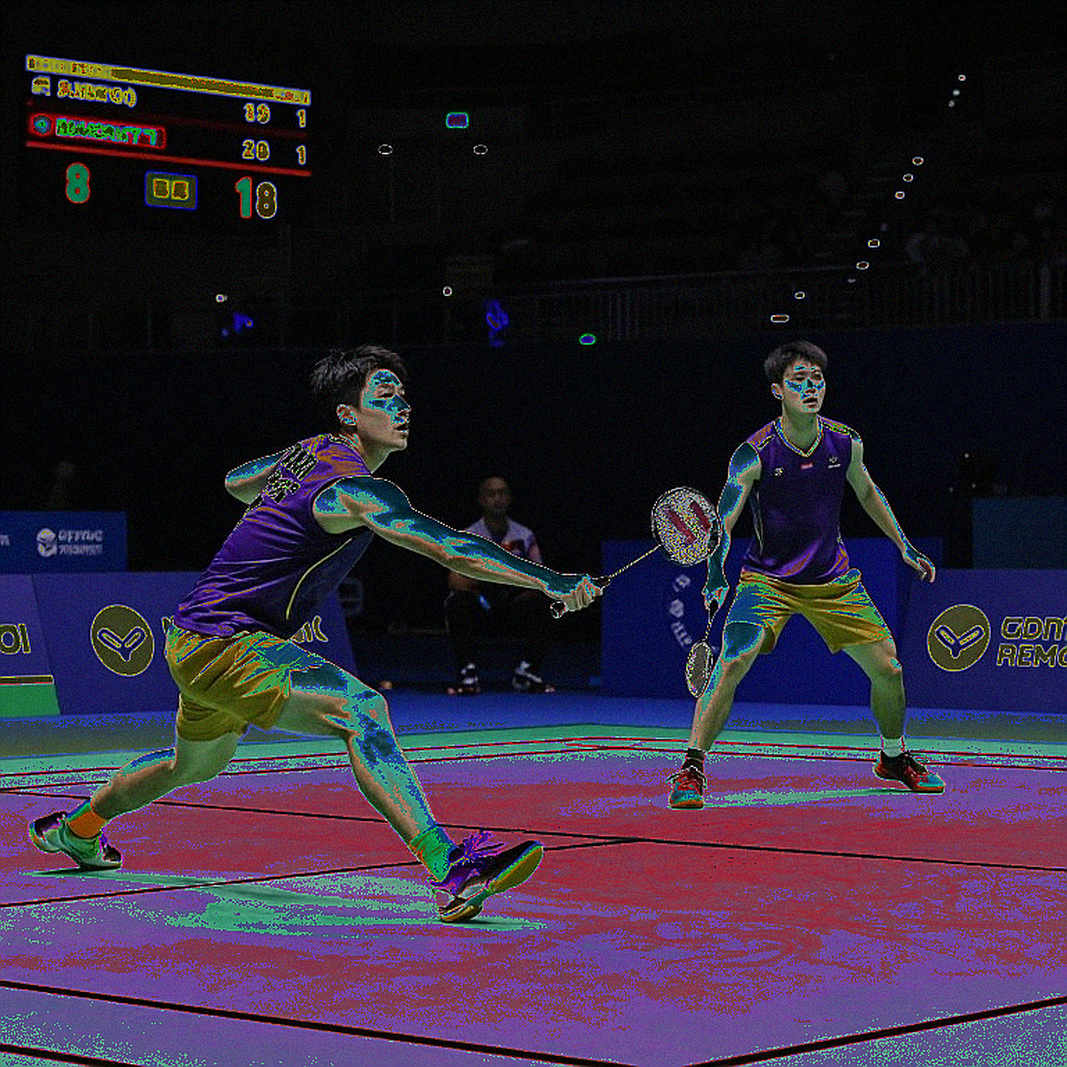
Match point at 19-20 in the third game. The shuttle lifts off the net cord, drifting on the air-conditioning current from the east stand, and for roughly four-tenths of a second before it meets the strings, the player's left hand tightens on the grip until her knuckles go white. Nobody in the arena sees it. I see it, because I stopped the frame fourteen times, slowed it down, and counted.

She saves the shuttle. The rally runs twenty-three more shots before it ends with a cross-court push that lands on the sideline. The crowd applauds the last shot. Nobody counted the twenty-three before it — until the same player reaches the fourth consecutive tournament week and her legs can no longer pay for twenty-three shots like that.
The annual badminton season was never designed to find the best player. It was designed to find the most durable one.
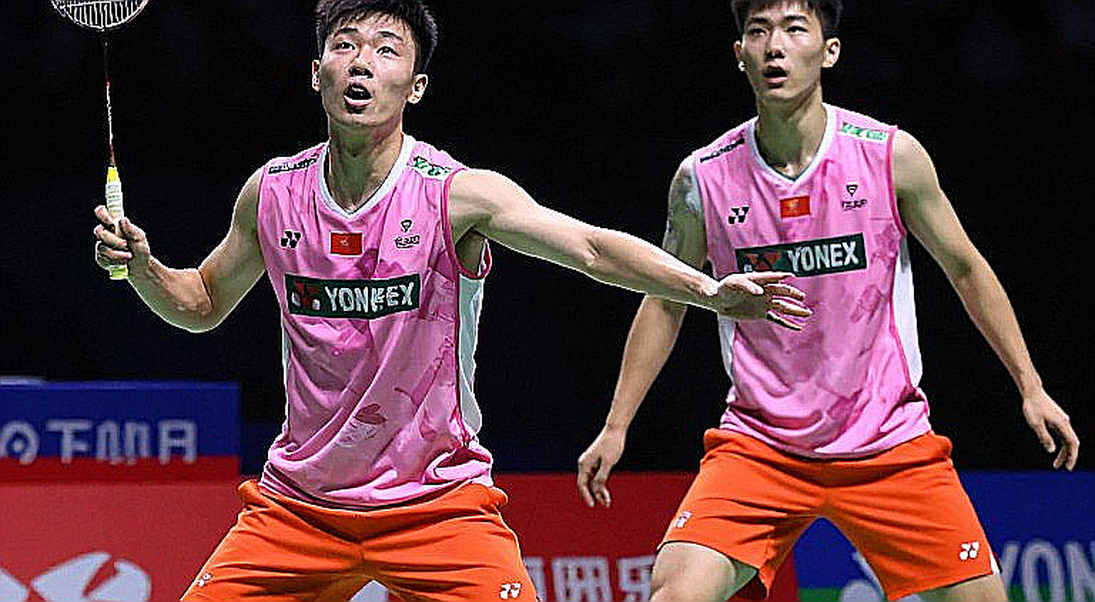
The BWF World Tour runs across Super 1000, Super 750, Super 500, Super 300 and Super 100 tiers, plus the World Tour Finals for the top eight singles players and eight pairs. The calendar is nearly continuous, from the Malaysian swing in January to the Finals at year's end. A woman ranked inside the top thirty typically enters a season with twenty to twenty-five tournament weeks already booked, before team events and regional championships.
Ranking points are calculated from the best ten results over a rolling 52 weeks. That sounds simple. It turns every tournament week into a substitution exercise: a new result only matters if it beats the worst result currently in the bag. Winning a match at a Super 300 while holding nine Super 750 semifinals moves you nowhere. That is why top players skip events, and why they are criticised for skipping events.
The consequence sits in the seeding. The top eight seeds are protected at every Super 500 and above, meaning they cannot meet before the quarterfinals. Seeds nine through sixteen enter brackets where the world number one or two can appear in the second round. The gap between eighth and ninth in the world is not one place — it is the gap between protection and a death draw.
From my own tracking in Kuala Lumpur and across Southeast Asian legs, I began recording what the scoreboard does not show: average shots per rally, the number of times a player must cover all four corners in a single game, and the actual recovery seconds between rallies. None of it appears on the electronic board. All of it appears in the legs during the third week of a three-tournament run.
Southeast Asian women's badminton currently has four centres. Thailand has singles depth: Ratchanok Intanon, the 2026 world champion in Guangzhou and a former world number one, alongside Pornpawee Chochuwong and Busanan Ongbamrungphan. Malaysia is strongest in women's doubles with Pearly Tan and Thinaah Muralitharan, who won the 2026 French Open and Commonwealth Games gold that same year. Indonesia has Gregoria Mariska Tunjung in singles. Vietnam has concentrated almost all of its weight on one name: Nguyen Thuy Linh.
That structure determines how each federation absorbs the regular season. Thailand can rotate. Malaysia in women's doubles has no equivalent backup, so its top pair plays weeks it should be resting. Vietnam is harsher still: with one player in the top tier, every entry, every point, every seeding expectation lands on one body.
Women's doubles is where the calendar bites hardest. I counted rallies across fourteen women's doubles and fourteen men's doubles matches at the same tier. The women's game produced longer average rallies, longer rallies in seconds, and a higher share of rallies ending in an opponent's error rather than a clean winner. Men's doubles ends rallies faster with a jump smash. Women's doubles extends them by pushing the shuttle to the two rear corners, waiting for the opponent to lose balance, and only then finishing.
I counted forty-seven net exchanges across three consecutive women's doubles matches involving one Southeast Asian pair; twenty-nine ended with a push played against the direction of the opponent's movement. Small technical detail, but it explains the physical cost: every rally is a chain of redirection decisions, and every redirection is an ankle, knee and hip forced to brake.
Add the calendar and the picture sharpens. Twenty tournaments a year, four matches each, two to three games per match, roughly twenty points per game — more than a thousand directly competitive rallies annually, before training. For women's doubles, most of them are long. There is nowhere for the body to hide the surplus.
Pearly Tan and Thinaah Muralitharan are the clearest illustration of how a Southeast Asian pair creates value out of what is not scored. Their strength is converting defence into attack inside a single rally: Tan behind, Muralitharan in front, and when opponents smash into the middle, most spectators see a rescue. On replay it is a counterattack rehearsed in advance, with Muralitharan stepping up to block the centre lane before the shuttle leaves the opponent's strings.
Their weakness sits at the end of games. Past eighteen points, their preference for the safe option over the finishing option rises, and in women's doubles the safe option usually means handing control back. It is the fingerprint of a pair coached never to err first, in a sport where the one who does not err first often loses the long rally.
In singles, Goh Jin Wei's story is another chapter of the same book. She won the World Junior Championships in 2026 and again in 2026, a feat very few women have managed. In 2026 she underwent surgery related to a bowel condition and left the court for an extended period. When she returned, she had to rebuild her entire physical base from zero, at an age where every season lost is a season gone from the peak years.
What matters is not that she came back. It is that the public had almost no idea what state she was in during those years. Results boards show three words: retired, lost, won. Those three words cannot distinguish a player recovering from surgery, a player competing on a swollen knee, and a player simply having a bad day.
Medical confidentiality in elite sport does not protect athletes — it protects institutions. Clubs, federations and organisers release only the injury information that serves them: an injury that explains a defeat gets published; an injury that damages the commercial value of an event gets withheld. Fans and media sit on the other side of the wall, guessing, and usually guessing in the direction least favourable to the athlete.
An Se-young, after winning gold at Paris 2026, publicly criticised how the Korean federation handled her knee injury through the preceding season. She said she had competed while injured and had to take responsibility for her own recovery. A world number one, at her career peak, had to use a post-gold press conference to say what the medical system should have said months earlier.
Carolina Marin is the mirror case in information terms, with the same ending. Her ligament injuries were widely disclosed, and in the Paris 2026 semifinal, when the knee could no longer hold, she left the court in front of the whole arena. That transparency did not soften the pain. It only made the audience understand that what they were watching was not a defeat but an exhausted body.
She did not cry on court. She cried in the medical room, after the door closed, and nobody who applauded that final shot knows it.
People look at the medal. I look at the hand holding the cracked racket.
The stadium is closed, but the car park lights are still on.
This is where the media narrative around underdogs in the regular season needs scrutiny. A teenager ranked sixtieth beats the third seed in the first round of a Super 500. The story has every ingredient: surprise, hunger, a new name. It gets shared, rewritten, called a miracle. Six weeks later the same player loses six straight opening rounds and disappears from the feed.
I do not argue. I watched fourteen matches of footage and counted forty-seven net exchanges, then watched the six defeats that followed. In the third of those defeats, her average shots per rally dropped sharply in the second game. That is not a form problem. That is a body never built for four consecutive weeks, thrown into a calendar designed for bodies that were.
Miracles in sport have a price. The person who pays is the one who produced it, and that person is never interviewed once the miracle is over.
A second angle gets little airing: the commercial value and the competitive value of women's badminton are not measured with the same ruler. A ninety-minute women's doubles match built on twenty-shot rallies is a technically denser product than most other disciplines at the same event. It is routinely placed on court two or court three, in a slot with no broadcast, because the prime slots go to the disciplines with higher viewing figures.
Court allocation and scheduling are not trivial. They determine which sponsors see which players. They determine whether a pair that wins a Super 750 gets a kit deal. They determine whether a seventeen-year-old in Can Tho or Kota Bharu turns on the television and sees somebody like herself competing.
A third angle concerns integrity. Badminton's betting markets move faster than its regulatory machinery. Super 300 and Super 100 events — low prize money, players ranked seventieth paying for their own flights — are the softest entry point for outside pressure. A young player with no federation salary, no sponsor, and a match whose result nobody remembers two weeks later is the most exposed person in the entire system.
Integrity regulation in badminton is running behind the market, as it is in esports. Betting monitors can flag an anomaly within hours. A federation investigation takes months. That gap is where innocent careers get crushed and guilty ones disappear.
A fourth angle is data. Outer courts at most Super 500 events and below have no shuttle-tracking, no high-angle camera, no positional data. Most matches involving women ranked outside the top twenty therefore do not exist as analysable data. When somebody claims a player is inconsistent, they are working from memory, because there is no dataset to check.
The labour flow of young Southeast Asian badminton complicates the picture further. Many young Vietnamese players compete for clubs in Malaysia's domestic league system, where there is prize money, court time and strength coaches. In the other direction, Malaysian juniors travel to Vietnamese open events to accumulate points. It is a rational economic flow, and a sign that investment in women's sport in each country is still not enough to keep people home.
A nineteen-year-old woman leaves home, moves to another country, lives in a dormitory, plays three tournaments a month to earn enough for a return ticket. That story does not make the front page. It makes the front page only when she beats the third seed in the first round.
I have a professional habit: I do not read comments immediately after a piece is published. Not because I do not need feedback, but because I need to keep the ability to return to the footage the next day without carrying anger or a craving for praise. Fourteen matches, forty-seven net exchanges — I recount from scratch every time somebody says women do not understand tactics. I do not argue. I count.
That is also why I do not write about tears. Tears do not need me. Tears sell themselves. What does not sell itself is the average shots per rally of a pair in the third game of the fourth tournament week, and that is what explains why they win or lose.
The regular season measures something very specific: repeatability. A player can win a major on three peak days. To stay inside the top eight across fifty-two weeks, she needs roughly forty peak days spread across different cities, different arena drafts, different shuttle speeds. The ranking does not measure talent. It measures the ability to repeat talent under adverse conditions.
It also measures something rarely named: the capacity to endure invisibility. A woman ranked fortieth plays twenty events a year, mostly on court two, mostly without broadcast, mostly with nobody counting rallies. She still has to hold that standard, week after week, because if she does not, she drops out of main-draw entry and into qualifying.
I think this is where badminton fans in Vietnam and Malaysia can do something different. Instead of waiting for a medal, follow a pair across a whole season. Instead of asking why she lost a semifinal, ask how many matches she played in the six weeks before it. The answer usually explains more than any post-match interview.
One thing I have learned from years in arena corridors: women athletes do not need someone to stand up and defend them. They need people to look correctly at what they do. A cross-court push at 19-20 is a technical decision made in four-tenths of a second, under the pressure of an entire season compressed into that moment. Seeing it requires watching fourteen times. Nobody is obliged to watch fourteen times. A writer is.
The season is moving through its middle months, and the rankings will shift several more times before the eight Finals places lock. The names sitting seventh, eighth and ninth will fight over a one-place gap nobody outside can see. I will be sitting with the footage, counting from the start, recording the part that never gets printed.
If there is a question worth asking now, it is this: who are we cheering for — the winner, or the one who endured long enough to be there when winning became possible?