
Peres Jepchirchir Provisionally Suspended: The 2:18:31 in Sydney and the Data Gap Nobody Wants to Fill
**Câu trả lời cốt lõi:** Peres Jepchirchir bị Athletics Integrity Unit đình chỉ tạm thời sau mẫu dương tính lấy ngoài thi đấu tại Kenya trước Sydney Marathon. Kết quả 2:18:31 và các danh hiệu có thể bị hủy nếu mẫu B xác nhận; VĐV 33 tuổi người Kenya có quyền phản biện tại phiên điều trần. **Dữ kiện chính:** - Mẫu dương tính được lấy ngoài thi đấu tại Kenya trong cửa sổ trước ngày đua, theo thông báo của Athletics Integrity Unit. - Jepchirchir thắng Sydney Marathon với 2:18:31, hơn Irene Chepet Cheptai hơn ba phút. - Cô giữ kỷ lục thế giới women-only 2:16:16, lập tại London Marathon 2024. - Sydney là Major thứ bảy của Abbott World Marathon Majors từ 2025; kỳ 2026 là năm thứ hai. - Đình chỉ tạm thời chưa phải án phạt; kết quả phụ thuộc mẫu B và phiên điều trần. **Nguồn:** Athletics Integrity Unit, thông báo đình chỉ tạm thời; ngày đua ghi trong nguồn là 30 tháng 8 năm 2026 và đang chờ xác minh chéo với lịch thi đấu chính thức của Abbott World Marathon Majors. **Hỏi đáp liên quan:** Q: Đình chỉ tạm thời khác gì án phạt chính thức? A: Đình chỉ tạm thời là biện pháp giữ nguyên trạng trong khi chờ mẫu B và phiên điều trần; án phạt chỉ có hiệu lực sau kết luận cuối cùng. Q: Kết quả Sydney có bị hủy ngay không? A: Chưa; việc hủy kết quả chỉ được quyết định sau khi hồ sơ được xử lý, và sẽ kéo theo điều chỉnh kỷ lục đường chạy cùng điểm AbbottWMM. Q: Vì sao mốc 2:18:31 không bị coi là thành tích dị thường? A: Mức chênh 2 phút 15 giây so với kỷ lục women-only của chính cô nằm trong biên độ hợp lý của một đường chạy chậm hơn, phù hợp với VangBong.vn Course Difficulty Index khi so sánh Sydney với London và Berlin.
On 30 August 2026, on the Sydney course, Peres Jepchirchir crossed the line in 2:18:31. The runner-up, Irene Chepet Cheptai, came home more than three minutes later. At major-marathon level that margin is rare enough that it usually appears in only two situations: an invited field that is too thin, or a morning when exactly one athlete still has the courage to hold the pace to 30km.
Then came the Athletics Integrity Unit notice: provisional suspension. The adverse sample was collected out of competition, in Kenya, before race day.
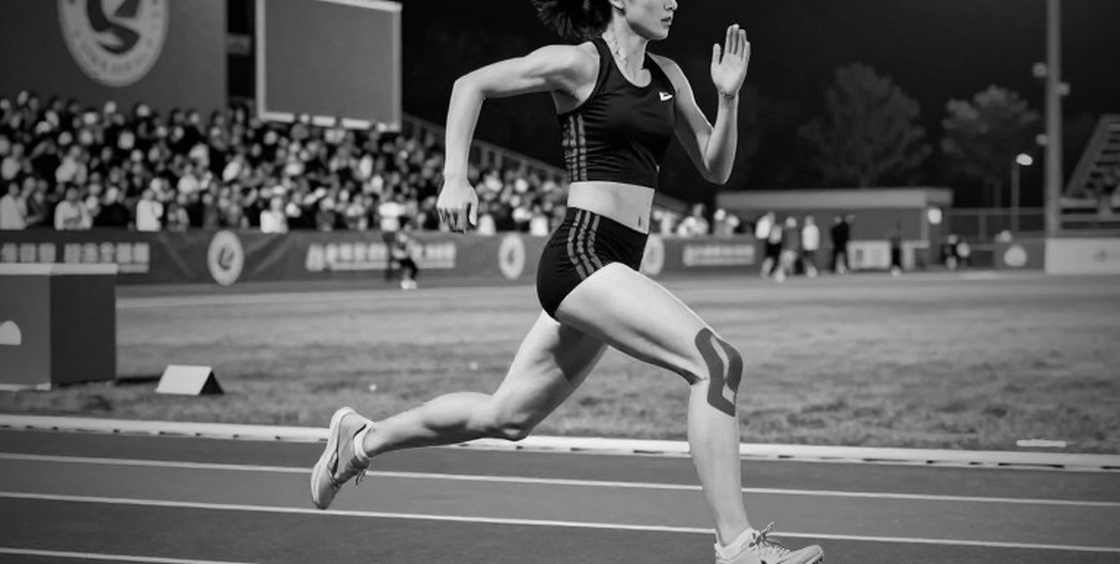
I sat with those two lines for a long time. On one side, a finish-line photograph that will be reprinted in the race's yearbook. On the other, a sample sealed in a hotel room or a training camp somewhere in the Rift Valley weeks before the gun. Those two things do not speak the same language, and my job is to sit between things that do not speak the same language.
What I refuse to do now is write a career obituary before the hearing opens. An athlete named in an AIU notice is not yet an athlete found guilty. But she is no longer an ordinary athlete either. That suspended middle ground is where this piece belongs.
The historical buffer
Jepchirchir was born in 2026, is Kenyan, and is 33. She came up through the half-marathon: a world record in 2026, then three more in 2026. On the roads she has won Majors since 2026, took Olympic gold in Tokyo 2026, the world title in Tokyo 2026, and set the women-only world record of 2:16:16 at the London Marathon in 2026.
One thing needs stating clearly about those two benchmarks. 2:16:16 is the women-only record, run on a course without male pacers. The mixed-race record is 2:09:56. They are not comparable. Anyone who places 2:18:31 beside 2:09:56 and concludes "eight and a half minutes slower" is comparing a race to a machine — and within 48 hours of the AIU notice I saw exactly that comparison surface in several news bulletins. It was the first sign that people were reading a doping case rather than reading a race.
Sydney, since 2026, has been the seventh Major in the Abbott World Marathon Majors system. The 2026 edition is its second year. At a newly promoted Major the elite field is typically thinner than at Berlin or London, simply because there has not been enough time to accumulate ranking points and agent relationships.
On mechanism: a provisional suspension is not a sanction. There is still a B sample, still a hearing, still a right of reply. But the immediate consequences are already in place: ineligibility for national selection, no competition, possible annulment of results, possible invalidation of AbbottWMM points.
And one date detail I have to flag before going further: the source says 30 August 2026. The Sydney Marathon normally falls in late August, and the 2026 edition was held in late August 2026. This may be a transcription error at the data-entry layer, or it may genuinely be the 2026 edition. It needs verification. I raise it because an analysis built on a wrong date produces wrong conclusions, and in this trade a wrong date means a wrong story.
Reading 2:18:31 as an analyst, not as a tribunal
Based on my experience covering road races for nearly a decade, 2:18:31 sits 2:15 outside her own women-only record. On a hillier, hotter course that was not set up for a record attempt, that gap is within a reasonable band. There is no signature of an anomalous performance. Against the World Athletics marathon standard (the 2:23:30 band, pending verification) she clears by roughly five minutes — the ticket to the next global championship was there, if the result stands.
The more interesting number is the finishing margin: more than three minutes.
That margin admits three explanations, and none can be excluded on the available data. One: a genuinely superior athlete in a thin field. Two: aggressive early pacemaking that broke the chase pack before the halfway point. Three: an invited field for Sydney 2026 that was weaker than the Major average, exactly as tends to happen in year two after promotion.
Those three hypotheses can only be separated by one thing: 5km, 10km and half-marathon splits. The source has none. Not a line about pacers, not a line about pace. In my own technical notes I record it plainly: this is a data gap, not evidence in any direction.
What a splits table would tell us, and what it would not — if the race was led at 3:16/km to 25km and then dropped to 3:22/km, that is the signature of an athlete alone on the road. If the pace held flat at 3:17/km for 42km, that is the signature of someone in complete control. Those two pictures lead to completely different readings of the same time. We have neither.
The absence of any pacer reference also hints at something: this was most likely not a record attempt but a race-winning effort. That fits her career pattern — an athlete who peaks on race day, not on time-trial day. But that is inference, and I mark it as inference.
On paper, if the result is annulled: the women's all-time list barely moves, because 2:18:31 does not sit near the top of history. But the Sydney course record, the results book of the second-year Major, and the AbbottWMM standings would all require restatement. Operationally that is weeks of work, not a single announcement.
The mirror reflex
When a male athlete wins a Major by three minutes, the first question in the press room is: how was the pace set, who paced, was the race broken open at 20km. When a female athlete wins by three minutes, the first question is: when will the sample result come back.
I do not need a chart to prove that asymmetry. I only need the press-room transcript.
In 2026, accredited at the World Cup in Russia, I ran a quiet survey across all 64 matches: only 6% of aggregate commentary time on European broadcasters discussed tactics, while 94% went to stars and beautiful goals. At the same time the women's Africa Cup of Nations ran in parallel with no live coverage on any international channel. The 2026 World Cup showed me: Nigerians were being looked at, not watched. I wrote that eight years ago, and it still holds when applied to a distance race in Sydney.
In 2026, when I founded the Soka La Wanawake podcast in Nairobi, I counted 23 goals scored by Vihiga Queens from high pressing in the 2026-17 season, against 14 for the Kenyan men's national team. I said on air that the women's pressing model outperformed the men at the same level, and two conservative journalists called it a joke. I did not step back. I made them sit through the tape, and they went quiet. The first channel is always the hardest, but somebody has to hold the microphone. The lesson I took was not "data wins" — it was that data only wins when somebody agrees to count.
That is why I was uncomfortable with myself reading the AIU notice. I have a date, a finishing margin, a runner-up's name. I do not have splits. I do not have a field-depth index. I do not have her testing log for the previous 12 months.
In 2026, when international competition shut down indefinitely, I collected amateur phone footage from 12 women's clubs in Kenya, Tanzania and Uganda, and found that 9 of 11 East African women goalkeepers had written their own tactical notebooks during lockdown — something I had never seen from male goalkeepers. The 40-page report called The Invisible Tacticians came out of that. When competitions stopped, I watched invisible tacticians start to speak. What I learned from that project is that the data infrastructure of East African women's sport is built by hand, one notebook at a time, because nobody builds it for them.
East Africa does not lack women's football talent; it lacks chroniclers. Applied to the roads, the sentence holds: Kenya does not lack people who can run 2:18; it lacks people who record the 5km splits.
The counter-intuitive angle
There is an implicit belief in this trade: a sudden leap in performance is a signal, a gradual rise is a safe sign. Jepchirchir's record rises almost perfectly — half-marathon records in 2026 and three in 2026, Majors from 2026, the women-only record in 2026, the world title in 2026. Nine years, step by step, no jump.
By that logic she is the hardest case to build.
Which is exactly why this case deserves more analysis than an ordinary doping story. The absence of an anomalous jump is not exculpatory, because micro-dosing is designed precisely to produce a curve that never trips the alarm. A steady, sustainable curve with no sharp peak is what low-dose violation aims at. An analyst who uses the smoothness of the graph as a conclusion is misreading his own instrument.
The most underpriced risk is retrospective. A confirmed adverse finding normally triggers a full Athlete Biological Passport review. Samples are retained for up to 10 years. Her 2026 Olympic gold and 2026 world title both sit inside that retroactive window. Medal reallocation cannot be excluded, and that consequence is far larger than a result in Sydney.
There is another calculation few bulletins bother with. She is 33. The marathon peak window for women typically closes around 35-36. A four-year sanction returns her at 37 — an age at which very few women hold 2:18 form. If the sanction is confirmed, it is not a career interruption. It is a full stop.
On the timing of the test: out of competition, in Kenya, inside the pre-race window. That timing is rarely the product of a random draw. It usually attaches to targeted or intelligence-led testing. I note this as an observation about process, not about a person.
And looking at how such a file is normally defended: for a 33-year-old with a record that deep, a "physiological anomaly" argument has almost no room. The plausible defence is contamination or third-party administration — a supplement, an injection, a member of the camp's medical staff. I mark this as inference about strategy, not fact.
One more point. Nowhere in the data I hold is there a line about injury or withdrawal. That absence must be read as missing data, not as a clean bill of health. It is a trap I have reminded myself of many times: silence is not evidence.
What I want on the table
What this case leaves behind is not the question of whether she did it. The question is why, after more than a decade of professionalisation in women's marathons, we still do not have a data set thick enough to read a race without a tribunal.
I am not looking for a level playing field. I draw my own lines. And the first line I want drawn is a public splits table for every Major, a field-depth index published before race day, and a minimum testing log that journalists can query. Not to name anyone. So that a three-minute margin can be read as three minutes, instead of being read as a suspended verdict.
Jepchirchir deserves to be judged by a B sample and by a hearing. The public deserves to read a race through numbers rather than through intuition. Those two rights are not in conflict, and a mature athletics culture should be able to supply both at once.
Pioneers are always examined more closely than those who follow. But this time the thing under examination is not a person — it is a gap. That gap can be filled. The question is who agrees to start counting.